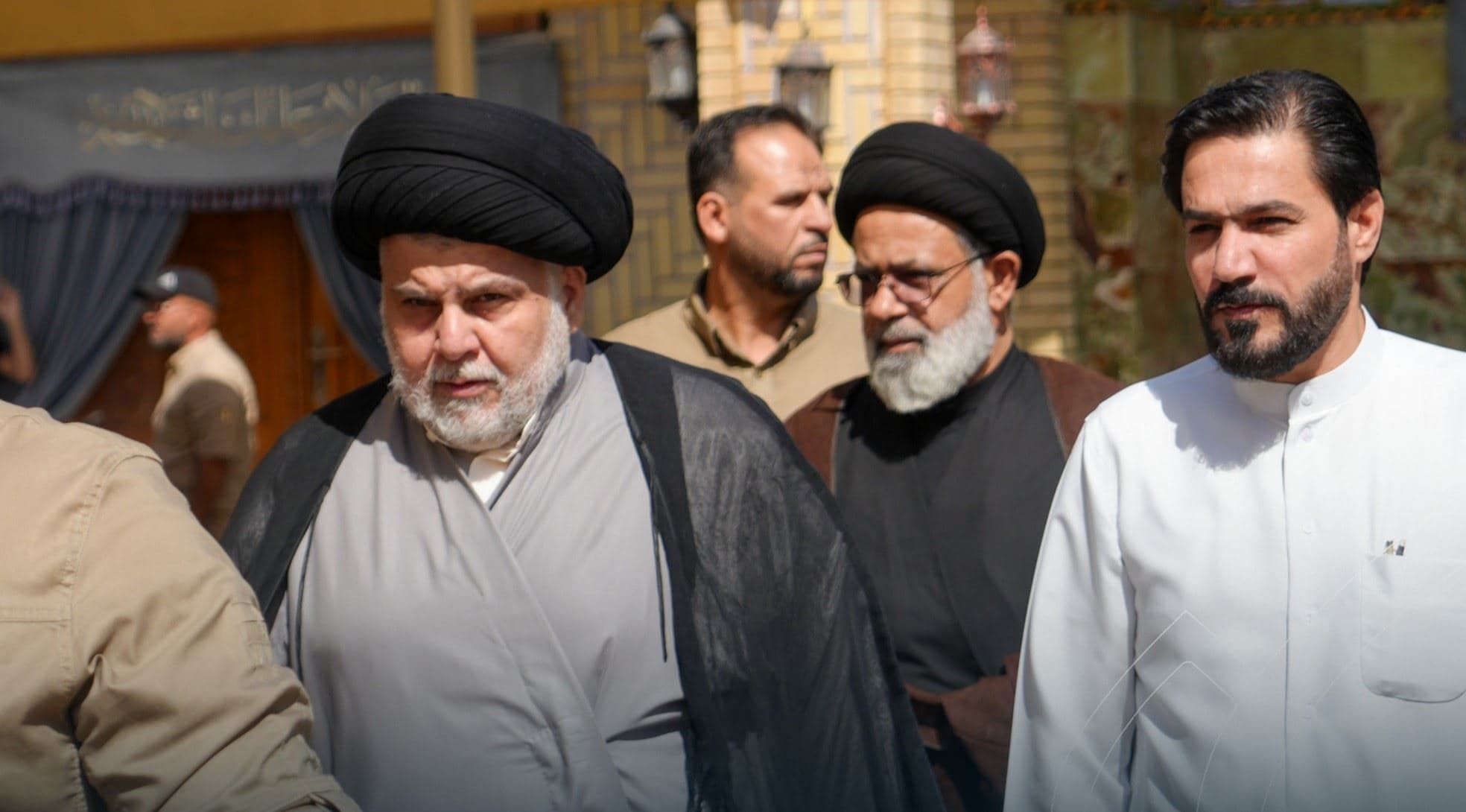
ERBIL, Kurdistan Region - Influential Iraqi Shiite cleric and politician Muqtada al-Sadr on Tuesday issued a strict directive barring his followers from participating in any type of demonstration or armed display. The announcement followed protests by Sadr loyalists in Baghdad and southern Iraq, triggered by reports of an attempted assassination targeting the cleric.
In a handwritten note shared on his office’s official Facebook page, the head of the National Shiite Movement - formerly the Sadrist Movement - stated, “To prevent the corrupt from seizing the opportunity and to ward off the strife sought by the corrupt, all armed displays are forbidden.”
Sadr specified that this ban applies to both his movement’s armed wing, Saraya al-Salam - Peace Brigades in Arabic - and all members of the National Shiite Movement. He warned that violations would be met with punishment.
In a message seemingly directed at loyalists, the influential Shiite cleric and politician added, “All gatherings and demonstrations, even peaceful ones, are forbidden … unless by direct order from us.”
Instead, he urged his supporters to take to social media to counter what he called “the actions of the corrupt,” advising them not to respond to “any verbal attacks” directed at him personally.
The timing
Sadr’s statement came just hours after videos went viral on Iraqi social media showing Sadrist loyalists demonstrating outside Baghdad’s heavily fortified Green Zone - home to government institutions, diplomatic missions, and residences of many Iraqi politicians. In the videos, protesters are heard chanting against “those who threatened [to assassinate] Sadr.”
A similar but significantly larger demonstration took place in Iraq’s southernmost Basra province late Monday.
The rallies followed a video message posted by US-based Iraqi journalist Ali Fadhil on X on Sunday, in which he alleged that Yasser al-Maliki - a lawmaker for the State of Law Coalition led by ex-premier and Sadr’s top political rival Nouri al-Maliki - was purportedly involved in a plot to assassinate Sadr using a drone during a visit to his father’s tomb in Najaf.
Fadhil claimed the plan further involved “two [Iraqi] armed factions’ leaders.”
In a seeming display of defiance, Sadr’s office published pictures of the cleric visiting his late father’s grave - the purported location of the allegedly planned attack - on Monday.
In an indirect response to the accusations against him, Yasser al-Maliki, said in a Monday statement on X that certain actors were trying to “spark sedition” and “disrupt the serenity of Iraq and confuse the political scene,” but that Sadr’s stances had neutralized their attempts.
“The Iraqi societal consciousness has become more firmly established,” the lawmaker added.
Boycott vs ballot
These developments come as Iraq prepares for legislative elections on November 11 and amid widespread fears among Sadr’s political rivals about the potential impact of his stance - and his next move - on the vote.
Sadr’s bloc emerged as the largest parliamentary force in the October 2021 elections, winning 73 seats in Iraq’s 329-member legislature. However, his attempt to form a “national majority” government with Sunni and Kurdish allies was blocked by the rival Shiite-led Coordination Framework, which insisted on maintaining Iraq’s post-2003 consensus model.
The prolonged deadlock ultimately prompted the Sadrist lawmakers to resign en masse in June 2022.
After a 21 months hiatus from the political process, Sadr in May renamed his movement as the National Shiite Movement - a move that was widely interpreted as a precursor to re-enter the Iraqi political scene.
However, former Sadrist lawmaker Rafi Abduljabbar Azzawi told Rudaw in mid-February that the name change “does not necessarily indicate a shift” in Sadr’s stance on participating in the upcoming elections.
In March, Sadr announced his movement would boycott the 2025 elections, citing widespread corruption and the flawed nature of Iraq’s political system.
“So long as corruption is prevalent, I will not participate in a flawed electoral process that only aims to secure ethnic, partisan, and sectarian interests, far from the suffering of the [Iraqi] people and the unfolding disasters in the region,” he said in a handwritten response shared via the X account of Salih Mohammad al-Iraqi, known for channeling Sadr’s views.
He also forbade his supporters from voting or running in the upcoming elections, noting, “As I had previously directed them [loyalists] to vote in the elections, today I forbid them from both voting and running” in the 2025 ballot.
Weeks later, Sadr appeared to have softened his stance.
In mid-March he called on followers to prepare for the country’s 2025 elections, calling on them to vote carefully and warning that poor electoral choices could deepen corruption and poverty in the country.