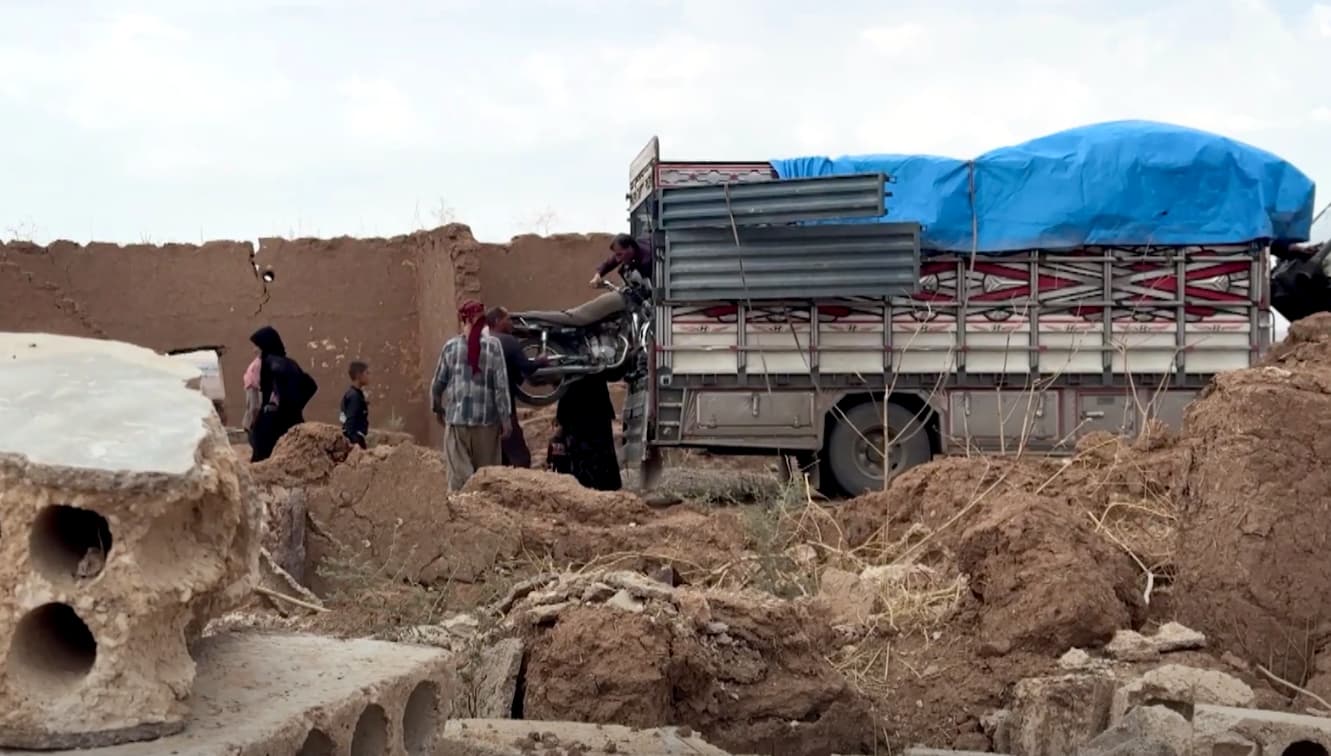
QAMISHLI, Syria - Kobane, a Kurdish city in northern Syria, is facing what aid groups warn could become a full-scale humanitarian catastrophe, as a tightening siege by Damascus forces and allied armed groups has cut off food, water, medicine, and communications.
The siege has already claimed the lives of six children last month and displaced tens of thousands across Kurdish cities in northeast Syria (Rojava). Electricity and internet services have been down for weeks, isolating Kobane and plunging families inside the city - as well as those who have fled - into fear and uncertainty.
Displaced Kurds in Qamishli, the provincial capital of Rojava’s eastern Hasaka province, say they are enduring sleepless nights, unable to reach loved ones trapped inside the besieged city amid a deepening humanitarian crisis.
“My sister Maryam, her husband, and her daughters and children have remained there,” Fatima Hussein, a displaced woman in Qamishli, told Rudaw on Sunday. “We have had no news until now; we don’t know what their situation is like,” she said.
Hussein added that her relatives "have no internet, no electricity, and no food or water. There is a lot of fear; there is so much fear where they are.”
She further noted that her relatives told her “they were a little afraid, but we say we will resist. We want all of us to be together. Let our people be, let everyone rise up together. Either we will all rise together, or we will all die together.”
Kobane has not only been deprived of basic necessities but is also under a strict internet blockade, leaving hundreds of parents without information about the whereabouts or condition of their children.
“My son is about 22 years old, and my daughter is 23 years old. Their names are Hozan and Delal,” Mohammed Meko, another displaced resident, told Rudaw. “Now, as for us, we are all [worried] about them; our thoughts are always with them. They are left with no money. Their situation is very difficult there.”
The siege follows a large-scale offensive launched by Damascus and allied armed groups in mid-January against the Kurdish-led Syrian Democratic Forces (SDF). The campaign targeted areas in eastern Aleppo, Deir ez-Zor, Raqqa, and Hasaka that had remained under Kurdish control for nearly a decade.
The now retaken areas had been liberated by the SDF from the Islamic State (ISIS) after the group declared a so-called caliphate across parts of Iraq and Syria in 2014.
For hundreds of displaced Kurdish families, nights now pass without sleep as they stare at their phone screens, waiting for a sign that their loved ones in Kobane are still alive.
The SDF announced on Friday that it had reached an agreement with the interim government in Damascus on the future of Rojava and the integration of its civilian and military institutions into the state.
Following the agreement, the Syrian army halted its assaults on Kurdish areas, though families who have lost loved ones say their suffering continues.