
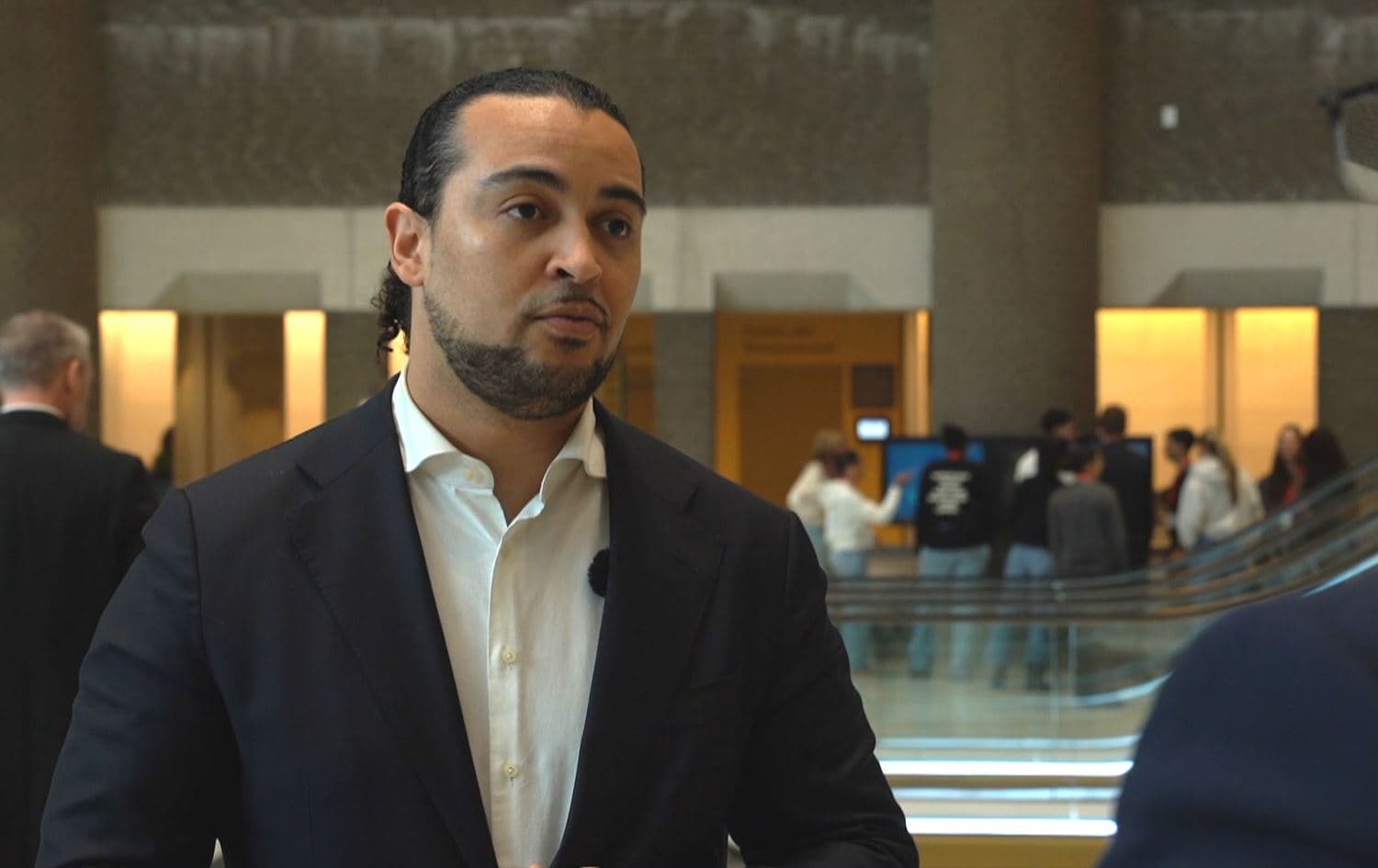
ERBIL, Kurdistan Region - A Dutch lawmaker has called on the European Union to suspend financial assistance to Syria’s interim authorities, arguing that continued aid should be conditional on clear and verifiable guarantees that Kurds and other minority communities are protected amid ongoing violence and displacement.
Don Ceder, a member of the Dutch parliament, made the call amid renewed fighting and displacement in the Kurdish enclave of northeast Syria (Rojava).
In January, the Syrian Arab Army and Damascus-affiliated factions launched a large-scale offensive that seized wide areas of territory and key infrastructure previously controlled by the Kurdish-led Syrian Democratic Forces (SDF). The clashes forced SDF units to withdraw from several areas, including Kurdish-majority neighborhoods in Aleppo, parts of Hasaka province, as well as Deir ez-Zor and Raqqa. According to United Nations estimates, about 100,000 people, most of them Kurds, were displaced by the fighting.
In an interview with Rudaw, Ceder criticized the EU’s approach toward Damascus, saying it has been overly trusting despite mounting evidence of abuses. “We must immediately suspend our financial aid until their security is guaranteed,” he said, adding that “in recent days, we submitted a draft resolution to parliament to suspend financial aid to Syria until we get full guarantees that minorities are protected.”
His remarks came after European Commission President Ursula von der Leyen announced in January that the EU would allocate 620 million euros to support humanitarian assistance and the rebuilding of Syrian state institutions through 2027.
Ceder said he and other Dutch lawmakers raised concerns during a recent parliamentary debate, pressing the foreign minister to adopt a tougher position in support of Rojava and other communities in Syria. “We as the Christian Union have said no financial aid should be sent if we don't reach clear agreements about minority issues,” he said.
He pointed to violence against Alawites, Christians, Druze and Kurds as evidence that commitments made by Damascus have not been honored. “This is dangerous and irresponsible,” Ceder said, referring to continued European financial support. “I think the European Union should be less warm with Damascus than it currently is.”
Since interim President Ahmed al-Sharaa took office, Syria has seen repeated waves of violence. Monitoring groups reported that clashes in mid-July left nearly 800 people dead in the Druze-majority province of Suwayda, while almost 2,000 were killed in Alawite-majority coastal areas in March. Many of the civilian killings were attributed to Damascus-affiliated forces.
Ceder said European governments moved too quickly to engage with Syria’s new leadership following the fall of former President Bashar al-Assad. “I said given al-Jolani's past with al-Qaeda, we should wait to see what he does,” he said. “Now, a year later, my words proved true.”
Abu Mohammed al-Jolani was the nom de guerre of Sharaa, who joined al-Qaeda in Iraq in 2003 before later leading the Islamist Hay’at Tahrir al-Sham (HTS), which toppled Assad’s government in December 2024. The US and EU later lifted their terrorist designation of HTS after the group dissolved and formed Syria’s interim authorities.
Ceder said it remains unclear whether Damascus controls the militias accused of abuses or whether the violence is occurring with the government’s knowledge. “In both cases, it's important that the European Union be less pure-hearted and must make very clear agreements before sending them money,” he said.
Beyond suspending aid to Damascus, Ceder said Europe should increase humanitarian assistance to Kurdish areas. “There, people are hungry and cold,” he said.
He also warned that instability in Syria could pose direct security risks to Europe, particularly if Islamic State (ISIS) detainees are released. “The Dutch foreign minister admitted the danger is very great,” Ceder said, noting that some militants could return to Europe using valid passports.
Ceder rejected Damascus's assurances that granting cultural rights alone would be sufficient for the Kurds. “Talk without action is easy,” he said. “We must get guarantees that all minorities in Syria are protected.” His statement is in reference to an announcement in mid-January by Sharaa saying that he had signed a “special decree” guaranteeing Kurdish “rights and certain particularities.”
He said Western countries have a moral responsibility toward the Kurds. “We supported them, and they heroically fought against ISIS,” he said. “But now, when they ask us for help, we turn our backs on them. This is betrayal.”
The SDF has been the main on-ground ally of the US-led coalition against ISIS in Syria until Damascus joined in November.
Asked whether the Netherlands has done enough in recent weeks, Ceder was blunt. “No, it's very little,” he said, adding that stronger, coordinated pressure at the European level is needed.
Hemin Abdullah contributed to this report.