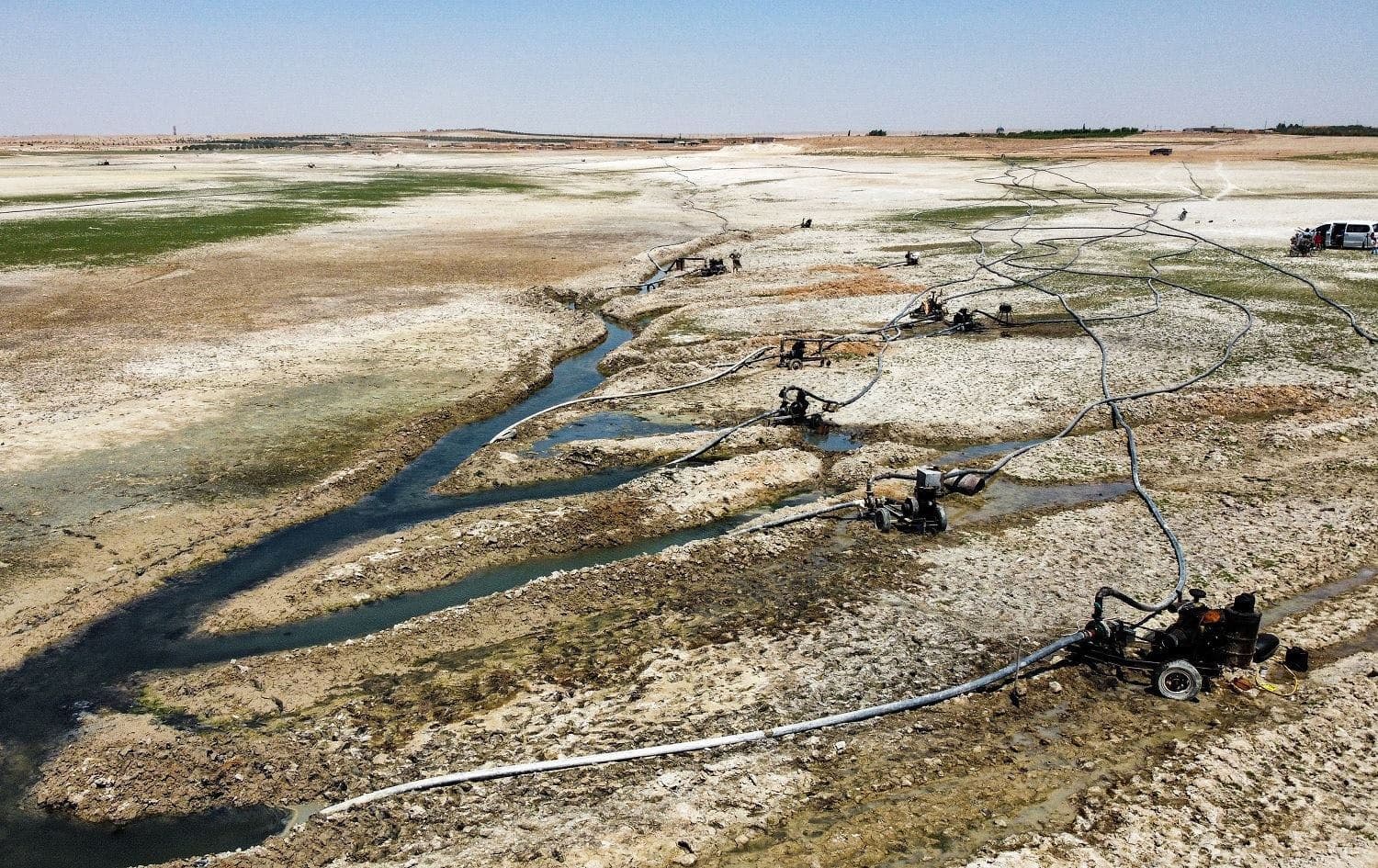

ERBIL, Kurdistan Region - Amid a prolonged water crisis in northeast Syria’s (Rojava) Qamishli city, farmers have resorted to using sewage and wastewater for irrigation, fueling a rise in illnesses and environmental degradation, a local environmental group told Rudaw on Sunday.
Farmlands around Qamishli have long served as a vital part of the agricultural economy of Rojava, which has long been seen as the breadbasket of Syria.
However, Sarbaz Farman, director of the Warshin Association for Environmental Protection (WAEP), sounded the alarm on Sunday stating that crops irrigated with untreated wastewater have led to a surge in diseases among locals.
“Tens of residents from Qamishli have been hospitalized with diarrhea and poisoning” after consuming contaminated produce, he said.
One of the key sources of irrigation for Qamishli farmlands is the Jaghjagh River. A tributary of the Khabur River flowing from Turkey into Syria, the river has been turned into a black, foul-smelling channel. Since the late 1980s, the Turkish city of Nusaybin has diverted its discharged raw sewage into the river.
According to Farman, the contamination has led to an ecological imbalance, with excessive algae growth, a proliferation of harmful bacteria and long-term soil and groundwater pollution.
Despite the health risks, many farmers continue to use the Jaghjagh river water to irrigate crops, especially cotton and vegetables. The practice is causing severe intestinal diseases and other illnesses among residents who consume the produce.
Farman noted that while the roots of the crisis stretch back decades, the situation has become critical in recent years. He thus urged “coordination between the municipalities of Qamishli and Nusaybin to treat wastewater at the source,” especially as “the recent drought has only deepened the problem,” he said.
Syria has been grappling with a severe drought chiefly driven by low rainfall and upstream damming. The latter has sparked concerns of widespread crop failure and food insecurity. The United Nations Food and Agriculture Organization (FAO) in late May warned that as much as 75 percent of Syria's local wheat crops could fail this year, risking a massive deficit that could affect millions.
To address the crisis in Qamishli, Farman relayed that activists are urging the Democratic Autonomous Administration of North and East Syria (DAANES), which governs Rojava, to implement wastewater treatment projects, restore the Jaghjagh River, and introduce environmental protection laws.
“There are no active international environmental organizations in our areas,” he explained, emphasizing the need for “strategic water, electricity and waste management projects.
“It is also time to launch a green belt campaign and enforce regulations to protect our rivers and streams,” Farman said.