
ERBIL, Kurdistan Region - A senior official from the Kurdish administration in northeast Syria's (Rojava) ruling body and the spokesperson for the main opposition group on Saturday rejected US Special Envoy for Syria Tom Barrack’s assertion that decentralization has never worked in the Middle East. Their pushback comes as minority communities across Syria increasingly call for some form of decentralized governance in the aftermath of Bashar al-Assad’s collapse.
"Decentralization has never really worked anywhere in this region," Tom Barrack told reporters on the sidelines of the Doha Forum on Saturday when asked if decentralization is possible in new Syria. He cited the Balkans, Lebanon, Iraq, and Libya as examples where he claimed decentralization has failed.
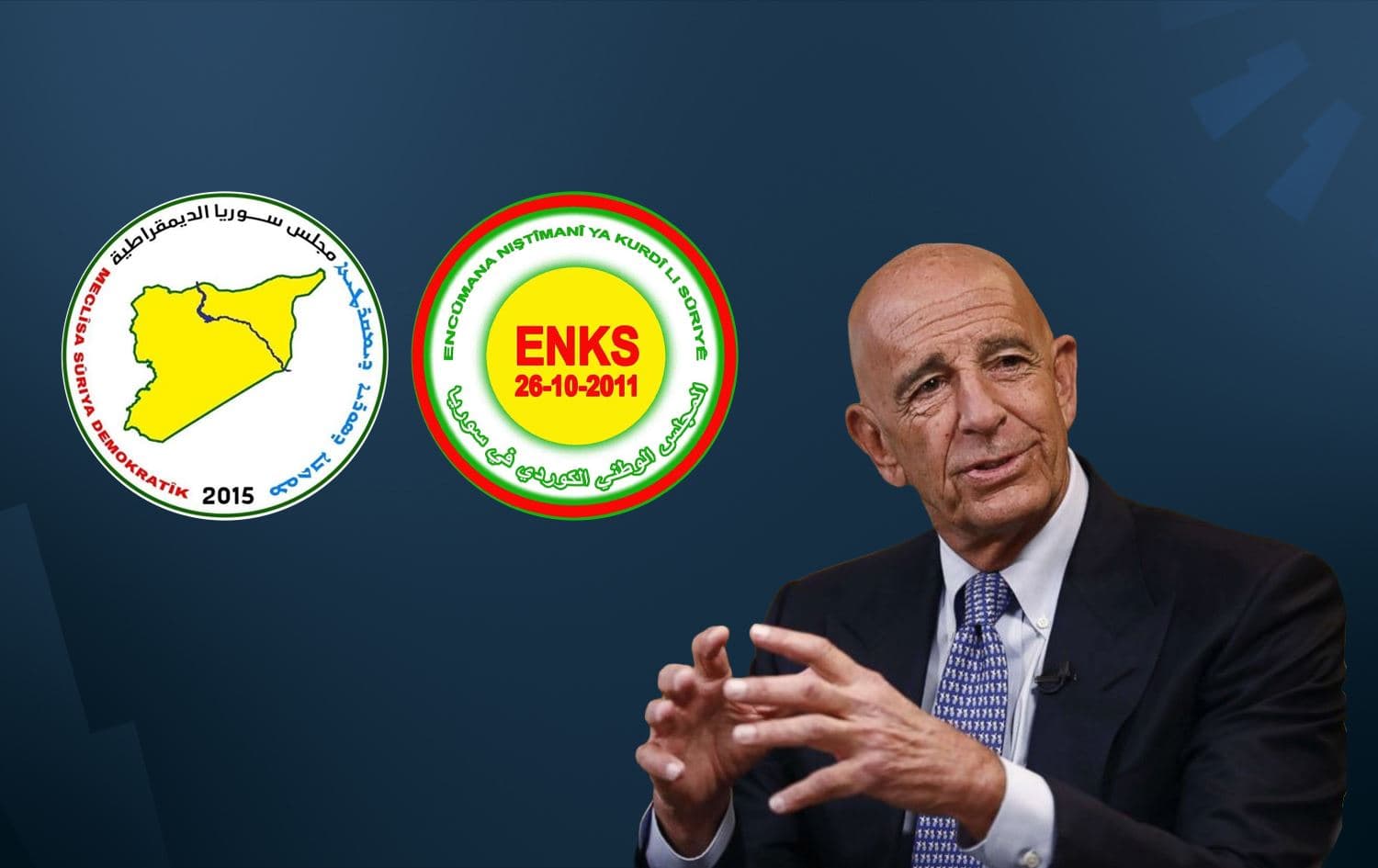
"When it is said that decentralization has not succeeded in the Middle East, we are facing a hasty conclusion that ignores the roots of the political crisis in the region. What has failed in the region is not decentralization, but on the contrary, it is the strict centralist model that has monopolized the state, marginalized society, and created the weakness we see today," Hassan Mohammed Ali, co-chair of Public Relations Office for Rojava's ruling Syrian Democratic Council (SDC), told Rudaw.
The SDC is the civilian body of the Syrian Democratic Forces, which acts as the de facto military force in Rojava.
"It is important to note that those 'decentralization experiences' that existed in the Middle East were never decentralization in the institutional sense that is known," he added. "A model of governance cannot be judged because it was not implemented, nor can an idea be described as failed before being given a real opportunity for implementation."
The interim government in Syria, led by former jihadist leader Ahmed al-Sharaa, came to power with a pledge of inclusivity but has come under fire from Kurds, Christians, Druze and Alawites who say they have been sidelined. Minority communities have criticized the transitional constitution that centers on Islamic jurisprudence and the centralization of power in Damascus.
"So when you look at how do you have Kurds, Druze, Alawites, five different varieties of Islam, six different varieties of Christianity live side by side, they can do it," Barrack said. "They have to decide how they want to be.”
Syria’s post-civil war transition has been marred by violence. Deadly clashes broke out in mid-July between Druze fighters and Sunni Bedouin tribes in southern Suwayda province. The conflict escalated with the involvement of Syrian government forces before a ceasefire was announced on July 19. The death toll neared 2,000, including around 765 Druze civilians who were “executed in the field by defense and interior ministry forces,” according to the UK-based Syrian Observatory for Human Rights.
Earlier, in March, violence broke out in Alawite-majority coastal regions after Assad loyalists attacked security forces aligned with the country’s interim leadership. According to the Syrian Observatory for Human Rights, the clashes resulted in 1,700 deaths, most of them Alawite civilians. Many casualties were attributed to government or pro-government forces.
Fasyal Yousef, spokesperson for Rojava's main opposition umbrella group, the Kurdish National Council (ENKS/KNC), also rejected Barrack's remarks.
"It was not decentralization that created the destruction, but rather the strict centralization practiced by the regimes of those countries, the deprivation of peoples of their national rights, their rejection of democracy and pluralism, and the crises and divisions they left behind, for which the peoples of the region are still paying the price today," he said in a Facebook post.
"The solution is clear and simple: Democracy, decentralization, and empowering peoples to manage their own affairs... not a return to the old prescriptions that have proven to fail, no matter how long the dialogues continue in Syria and other countries about the form of government," he added.