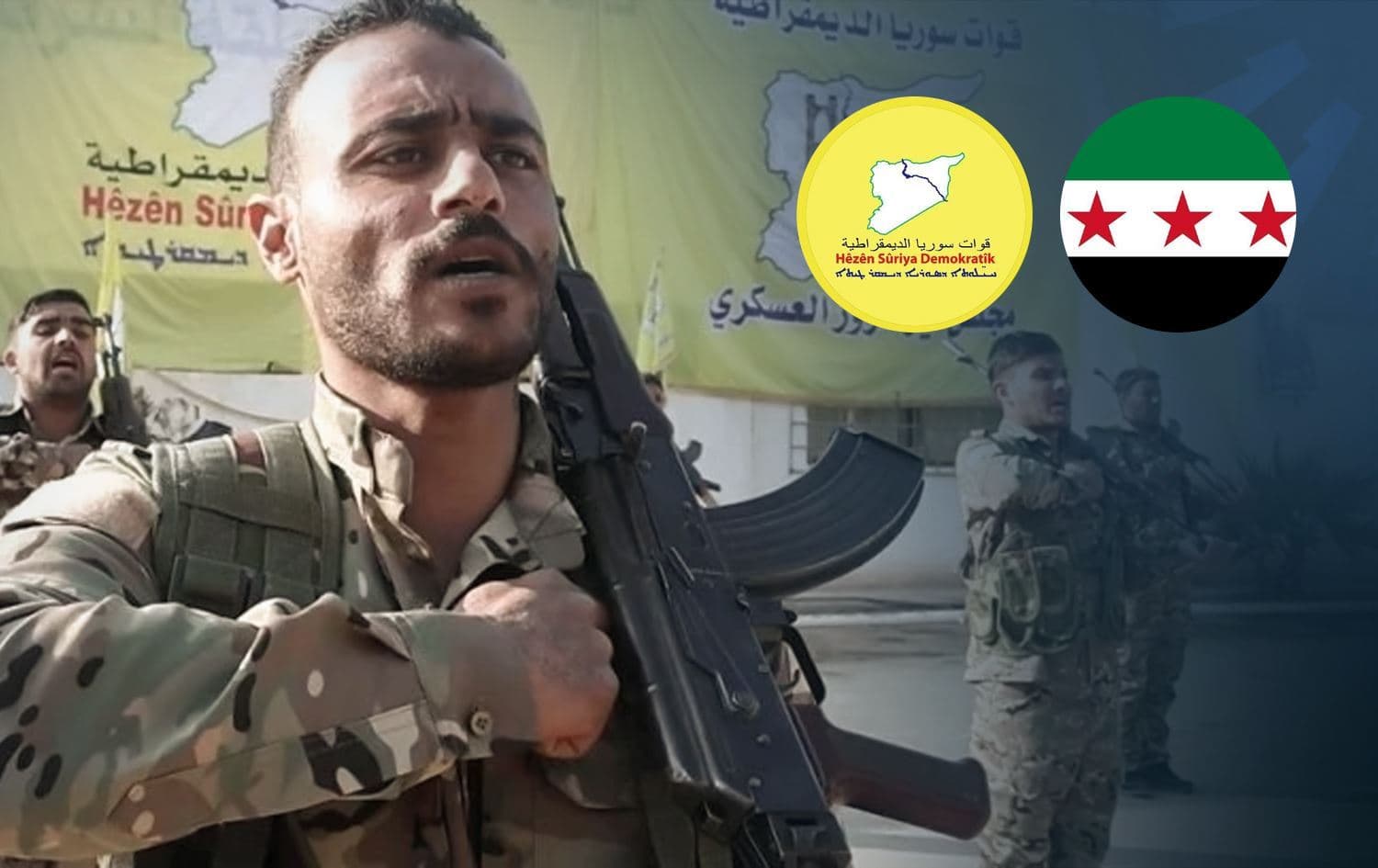

ERBIL, Kurdistan Region - The Syrian government is set to release around 100 prisoners affiliated with the Syrian Democratic Forces (SDF) as part of a reciprocal exchange with the Kurdish-led forces, a senior commander of the Kurdish Internal Security Forces (Asayish) told Rudaw on Tuesday. The move comes days after SDF Chief Mazloum Abdi revealed that nearly 1,100 “civilian and military” detainees from northeast Syria (Rojava) remain in Damascus custody.
Mahmoud Khalil Ali, widely known as Siamand Afrin, said the release is part of a reciprocal arrangement.
“Under a new agreement, the Syrian government is scheduled to release 100 SDF prisoners this evening [Tuesday], in exchange for the SDF releasing 100 government forces prisoners.”
In a similar vein, Abbas Hussein, the Damascus-affiliated director of the Political Affairs Department in Hasaka, said in a statement that the predominantly Kurdish city “will witness the release of the first batch of detainees from SDF prisons under the supervision of the presidential team, with the governorate’s internal security directorate responsible for receiving them.” He noted that the batch “includes a number of civilian detainees as well as some SDF members.”
Hussein added that “this step will be followed by additional batches in the coming period as part of addressing this humanitarian issue and gradually closing the file,” affirming the Syrian state’s “commitment to ending the suffering of many families and resolving the matter in a way that promotes stability and restores reassurance to the community.”
The exchange follows the January 29 “comprehensive agreement” inked between the SDF and the transitional Syrian government, which allowed government forces to enter the Kurdish cities of Hasaka and Qamishli in Rojava.
The agreement also called for the formation of three army brigades from SDF forces to integrate under the Syrian state and the gradual integration of the Democratic Autonomous Administration of North and East Syria (DAANES) into state institutions.
The January 29 accord came after weeks of intense fighting during a Damascus-led offensive aimed at recapturing territory previously held by the SDF in northern and northeastern Syria.
The SDF, which serves as the de facto military force in Rojava and key partner of the US-led coalition against the Islamic State (ISIS), had maintained control over those areas after having liberated them from ISIS.
The Syrian offensive led to the gradual withdrawal of the SDF from areas they held in eastern Aleppo, Deir ez-Zor, Raqqa, and the predominantly Kurdish Hasaka province.
Since the agreement, negotiations between the Kurdish-led forces and the interim government in Damascus have continued to address unresolved issues, including detainees and missing persons, which SDF Commander, Abdi, recently described as a “central issue.”
Abdi on Saturday told a committee representing the prisoners’ families that he had been officially informed of the presence of “1,070 civilian and military prisoners” from Rojava in Damascus custody.
He emphasized at the time that “this dossier has the highest priority for follow-up and action, and it cannot be compromised under any circumstances,” noting that “efforts are ongoing intensively to address it according to a specific timeline” and that “the return of prisoners to their families will take place in the coming period.”
A previous exchange saw the release of 59 SDF prisoners last Thursday.
In a related development, Sipan Hemo, a senior SDF commander, was appointed deputy defense minister for Syria’s eastern region, Damascus-run media reported Tuesday.
The Syrian Arab News Agency (SANA) cited Asim Ghalioun, head of the Defense Ministry’s Media and Communication Directorate, confirming the appointment.
RELATED: Prominent SDF commander appointed deputy Syrian defense minister