


Syria

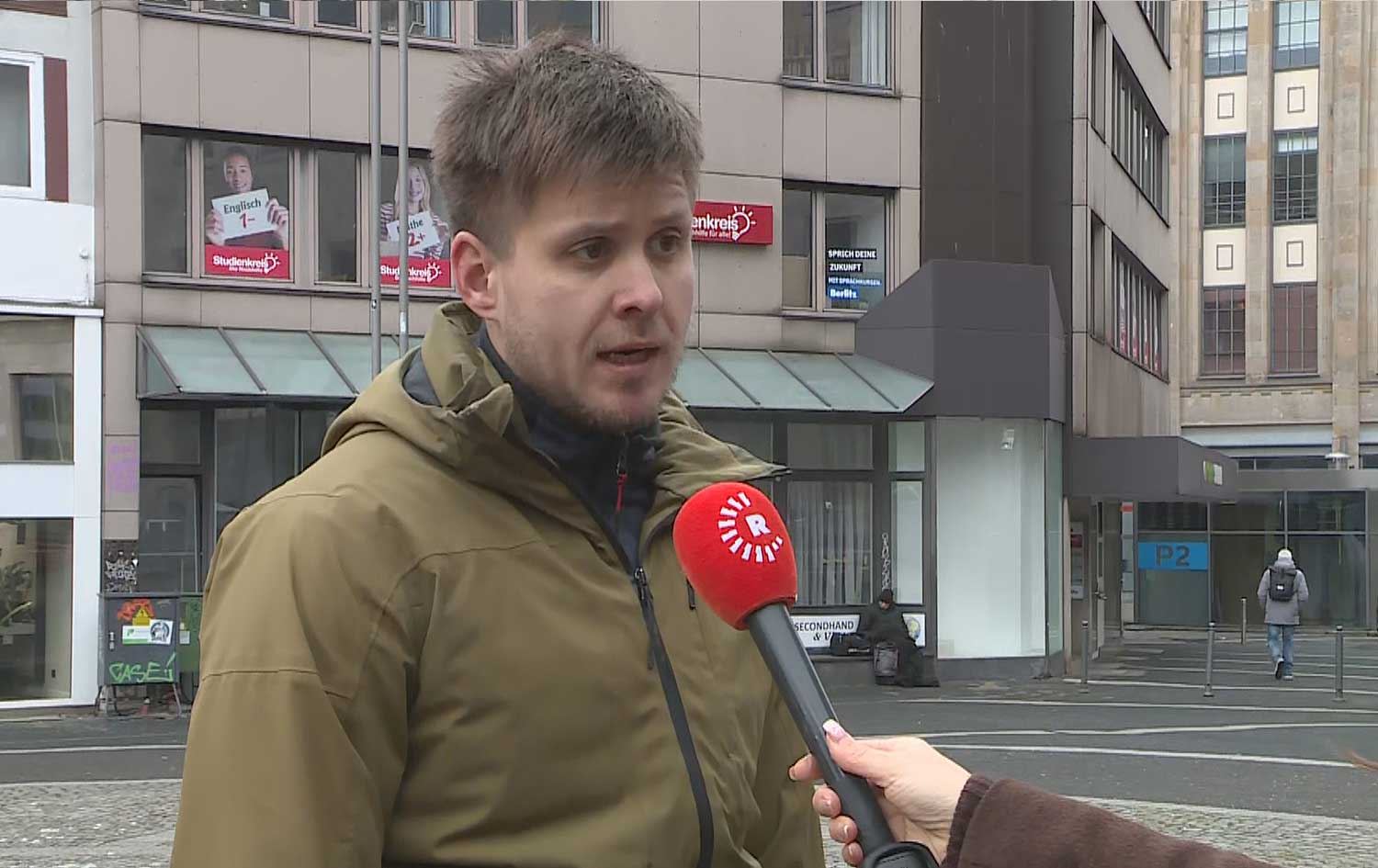
Max Lucks, a German Green Party MP, speaking to Rudaw in Dusseldorf on January 8, 2026. Photo: Rudaw
ERBIL, Kurdistan Region - A German MP has criticized his government’s Syria policy, calling for stronger protections of minority groups, Kurdish participation in political decision-making and possible sanctions against Syria’s interim President, Ahmed al-Sharaa.
Max Lucks, a German Green Party MP, is ramping up pressure on Berlin as the Syrian Arab Army clashed with Kurdish Internal Security Forces (Asayish) during a “limited military operation” in northern Aleppo’s Kurdish-majority neighborhoods. The fighting, which has included armed factions allied with Damascus, stoked fears of ethnic cleansing among Kurdish leaders in Syria and Iraq. Eight civilians have been killed and 57 injured, Asayish reported Thursday.
“We had hoped that [Sharaa] would bring a bit of stability, but now we see that these attacks are disrupting the peace in that area,” Lucks told Rudaw’s Alla Shally on Thursday in Dusseldorf. “The [German] federal government must see this reality.”
The German foreign ministry said on Wednesday that Germany is calling on “all sides to cease hostilities and return to the negotiating table. Peace and stability in northeastern Syria can only be achieved through political agreements"
“We are following reports of violent clashes and civilian casualties in and around Aleppo with great concern,” the ministry told Rudaw.
However, Lucks criticized Germany’s response to recent violence. “To say in such a situation that we are only watching with ‘great concern’ and yet we are not acting - that is dangerous,” he said, calling for coordinated pressure through Brussels and a clearer position on Aleppo and northeastern Syria.
Lucks said the Green Party’s parliamentary bloc recently submitted an inquiry to boost protection for minorities in Syria, particularly Kurds.
“In the federal government's response to this inquiry, we saw once again: The federal government is not interested in the facts in Syria or the situation in Syria,” he said.
Lucks claimed that Berlin “partly denies the targeted violence carried out by [Sharaa’s] troops against ethnic and religious groups recently submitted an inquiry focusing on minorities in Syria, particularly Kurdish minorities."
The Green Party will continue pushing for stronger domestic policies and an independent mandate at the UN Human Rights Council to address “the situation of ethnic and religious minorities in Syria,” Lucks said. Current policies and protections are insufficient, he argued.
“Changing this foreign policy toward Syria means finally exerting pressure on [Sharaa] and also considering sanctions against him - for example, because of the crimes we have seen in Aleppo,” he said.
Stability is dependent on an inclusive government, Lucks argued. Negotiations between Kurdish officials and Damascus to integrate the Kurdish-led autonomous administration in northeast Syria (Rojava) and the Syrian Democratic Forces (SDF) into federal institutions are ongoing.
“Humanitarian corridors are very important, but of course they are not enough,” he said. “What ensures the protection of the population in Syria is when the Syrian Kurds and also the SDF are heavily involved in a political transition process.”
“The SDF in Syria is an anchor of stability for the region and for the people there,” Lucks said. He criticized Berlin’s stance as “dangerous, also from a humanitarian perspective.”
“We will not abandon the people in Aleppo, we will not abandon the people in the Kurdish northeast of Syria. We stand by their side - that is fundamental,” he added.


Comments
Rudaw moderates all comments submitted on our website. We welcome comments which are relevant to the article and encourage further discussion about the issues that matter to you. We also welcome constructive criticism about Rudaw.
To be approved for publication, however, your comments must meet our community guidelines.
We will not tolerate the following: profanity, threats, personal attacks, vulgarity, abuse (such as sexism, racism, homophobia or xenophobia), or commercial or personal promotion.
Comments that do not meet our guidelines will be rejected. Comments are not edited – they are either approved or rejected.
Post a comment