


Syria

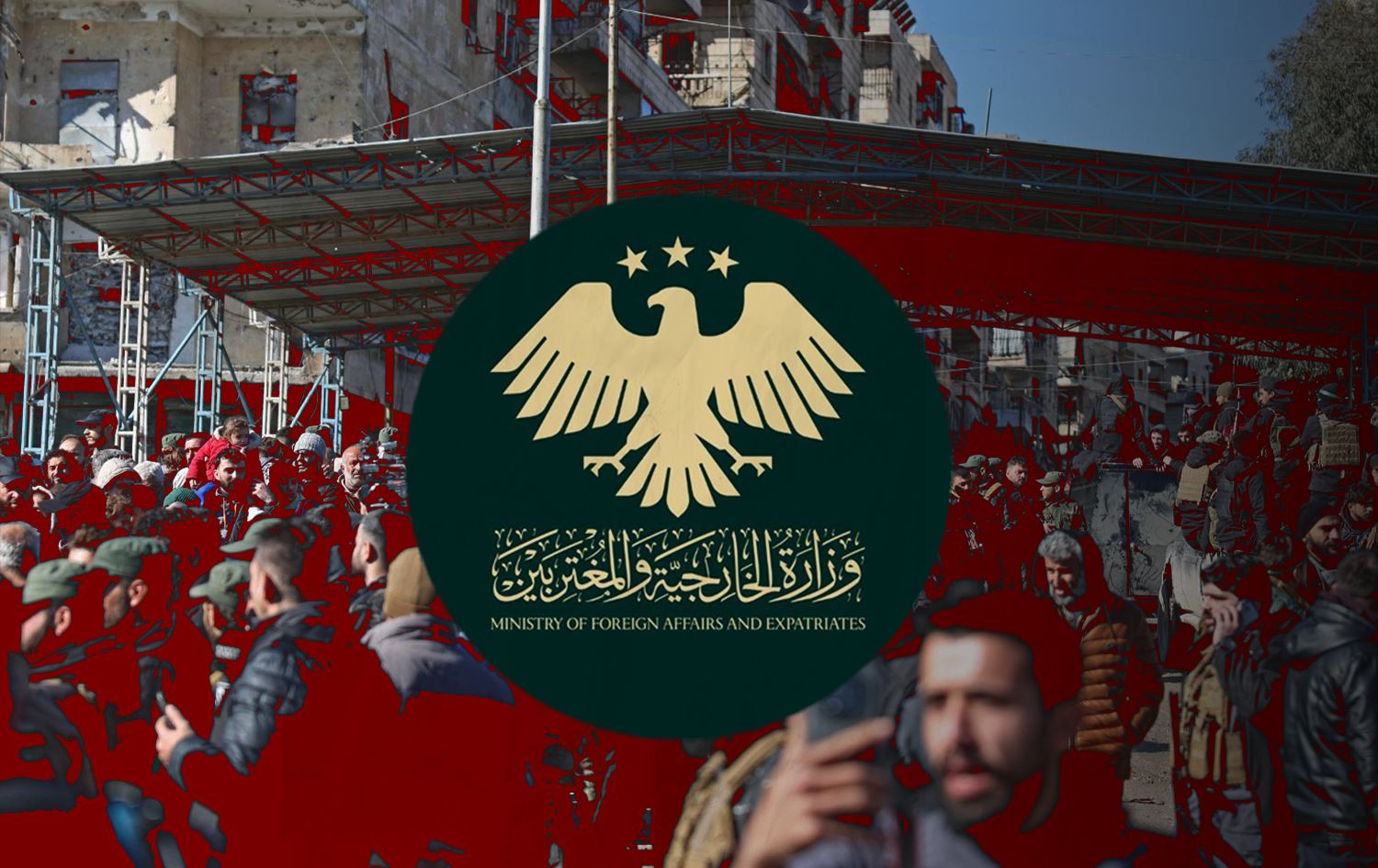
Syrian foreign ministry logo and photo of people leaving Kurdish quarters in Aleppo. Graphic: Rudaw
ERBIL, Kurdistan Region - The Syrian foreign ministry on Saturday said the army’s recent operation in the Kurdish-majority neighborhoods in Aleppo is not aimed at changing demographics in the diverse city.
In a lengthy statement, the ministry thanked the international community, including President Masoud Barzani, for their peacemaking efforts following several days of clashes between the Syrian Arab Army and Kurdish forces in Aleppo.
The ministry said it carried out a “limited and targeted law-enforcement operation” in Aleppo’s Kurdish-majority neighborhoods of Ashrafiyeh and Sheikh Maqsood, where fighting intensified Saturday. The Syrian Arab Army announced the operation, which aimed to expel local Kurdish forces, ended on Saturday. Kurdish forces said they were continuing to fight and held pockets of the neighborhoods.
The Erbil-headquartered Barzani Charity Foundation, which has an office in the Kurdish city of Afrin in northwestern Syria, has reported that an estimated 150,000 residents had fled and were displaced to Afrin, raising fears that Kurds could be depopulated from the neighborhoods. Many residents were originally from Afrin and were expelled by Turkish-backed armed groups in 2018 after the militants controlled the city from Kurdish fighters.
The Syrian army’s operations in Aleppo aimed to expel Kurdish fighters from Arab-majority Aleppo neighborhoods to Tabqa in the Kurdish region of northeast Syria (Rojava). Fighters and local officials pledged to continue fighting until residents were guaranteed safety and political representation.
The Syrian foreign ministry said the attacks were "based on the principles of necessity and proportionality and do not target the Kurdish community, which is considered an integral part of Aleppo’s social fabric and an active partner in national institutions."
The Syrian ministry thanked Barzani, US, Saudi Arabi, Qatar, Turkey, UK and France for "their active and constructive role in supporting Syria’s stability and in upholding the unity and sovereignty of its territory, contributing to the strengthening of security and peace across the region as a whole."
Barzani, leader of the Kurdistan Region's ruling Kurdistan Democratic Party (KDP) and the Region’s former president, on Wednesday warned that there was a "serious threat" to civilians living in Aleppo, cautioning that there is also "the danger of ethnic cleansing against Kurds in that area."
Barzani discussed Kurdish rights with Syria's interim President Ahmed al-Sharaa on Friday, but it is unclear if they discussed the violence in Aleppo that began on Tuesday.
The US, supported by France, brokered a temporary ceasefire and talks between the interim Syrian government and Kurdish officials as fighting flared this week.
Kurdish officials in Rojava accused the Syrian Arab Army of committing war crimes in Aleppo, including ethnic cleansing by forcing out Kurdish communities and bombing hospitals which have special protections under international humanitarian law. Syrian officials said Kurds were launching attacks on Syrian forces from the neighborhoods. The Syrian Arab Army detained men fleeing Sheikh Masood with their families, claiming they were suspected Kurdish fighters.
The United Nations has warned that the fighting has limited the flow of aid to the area and said at least three hospitals have been hit. As many as two dozen people have been killed.
In a lengthy statement, the ministry thanked the international community, including President Masoud Barzani, for their peacemaking efforts following several days of clashes between the Syrian Arab Army and Kurdish forces in Aleppo.
The ministry said it carried out a “limited and targeted law-enforcement operation” in Aleppo’s Kurdish-majority neighborhoods of Ashrafiyeh and Sheikh Maqsood, where fighting intensified Saturday. The Syrian Arab Army announced the operation, which aimed to expel local Kurdish forces, ended on Saturday. Kurdish forces said they were continuing to fight and held pockets of the neighborhoods.
The Erbil-headquartered Barzani Charity Foundation, which has an office in the Kurdish city of Afrin in northwestern Syria, has reported that an estimated 150,000 residents had fled and were displaced to Afrin, raising fears that Kurds could be depopulated from the neighborhoods. Many residents were originally from Afrin and were expelled by Turkish-backed armed groups in 2018 after the militants controlled the city from Kurdish fighters.
The Syrian army’s operations in Aleppo aimed to expel Kurdish fighters from Arab-majority Aleppo neighborhoods to Tabqa in the Kurdish region of northeast Syria (Rojava). Fighters and local officials pledged to continue fighting until residents were guaranteed safety and political representation.
The Syrian foreign ministry said the attacks were "based on the principles of necessity and proportionality and do not target the Kurdish community, which is considered an integral part of Aleppo’s social fabric and an active partner in national institutions."
The Syrian ministry thanked Barzani, US, Saudi Arabi, Qatar, Turkey, UK and France for "their active and constructive role in supporting Syria’s stability and in upholding the unity and sovereignty of its territory, contributing to the strengthening of security and peace across the region as a whole."
Barzani, leader of the Kurdistan Region's ruling Kurdistan Democratic Party (KDP) and the Region’s former president, on Wednesday warned that there was a "serious threat" to civilians living in Aleppo, cautioning that there is also "the danger of ethnic cleansing against Kurds in that area."
Barzani discussed Kurdish rights with Syria's interim President Ahmed al-Sharaa on Friday, but it is unclear if they discussed the violence in Aleppo that began on Tuesday.
The US, supported by France, brokered a temporary ceasefire and talks between the interim Syrian government and Kurdish officials as fighting flared this week.
Kurdish officials in Rojava accused the Syrian Arab Army of committing war crimes in Aleppo, including ethnic cleansing by forcing out Kurdish communities and bombing hospitals which have special protections under international humanitarian law. Syrian officials said Kurds were launching attacks on Syrian forces from the neighborhoods. The Syrian Arab Army detained men fleeing Sheikh Masood with their families, claiming they were suspected Kurdish fighters.
The United Nations has warned that the fighting has limited the flow of aid to the area and said at least three hospitals have been hit. As many as two dozen people have been killed.


Comments
Rudaw moderates all comments submitted on our website. We welcome comments which are relevant to the article and encourage further discussion about the issues that matter to you. We also welcome constructive criticism about Rudaw.
To be approved for publication, however, your comments must meet our community guidelines.
We will not tolerate the following: profanity, threats, personal attacks, vulgarity, abuse (such as sexism, racism, homophobia or xenophobia), or commercial or personal promotion.
Comments that do not meet our guidelines will be rejected. Comments are not edited – they are either approved or rejected.
Post a comment