


Syria

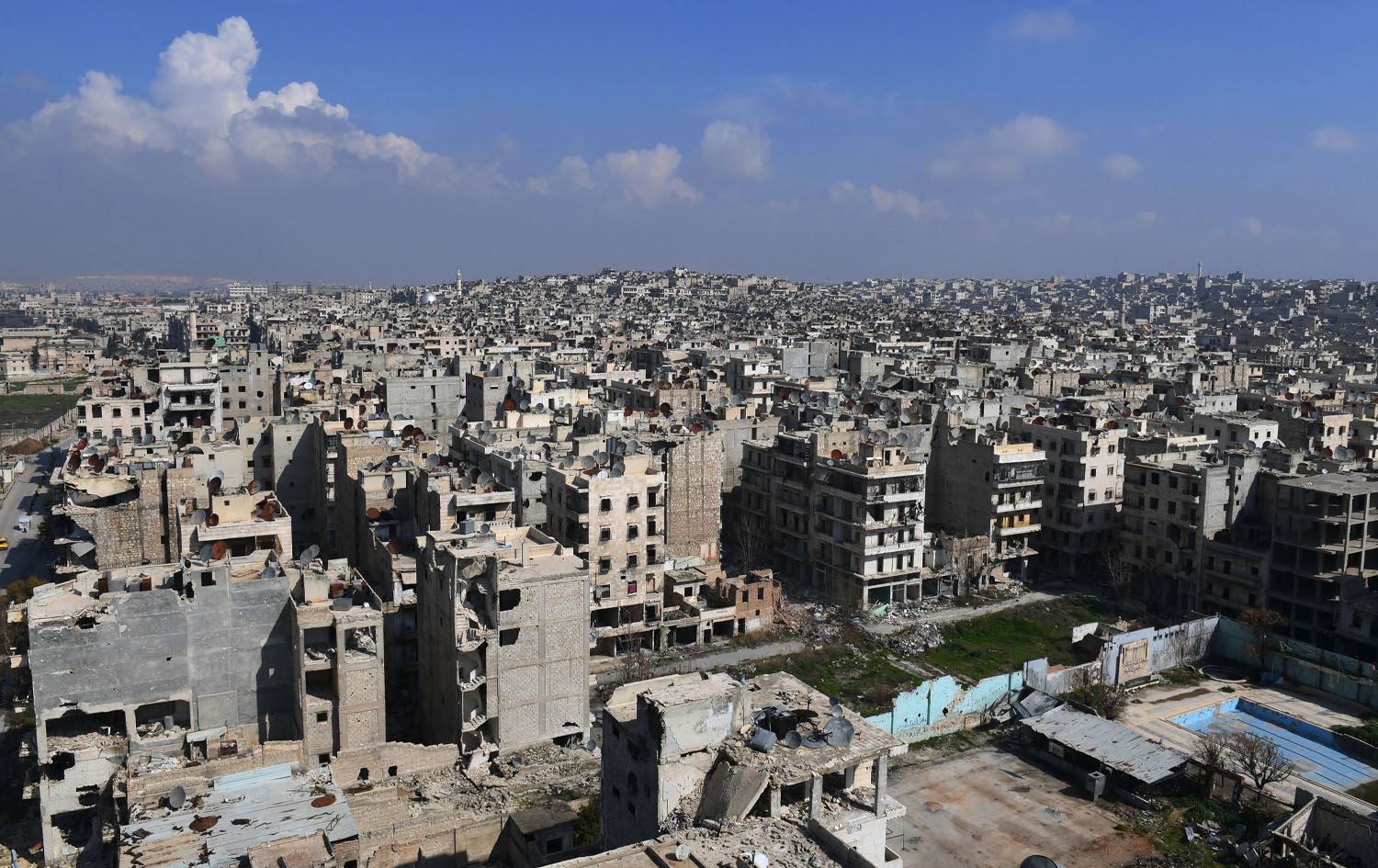
An overview of the Sheikh Maqsood neighborhood, located in the northern Aleppo, Syria, on February 23, 2018. File photo: AFP
ERBIL, Kurdistan Region - Livelihoods in the Kurdish-majority neighborhoods of north of Syria’s northern Aleppo province are “on the verge of a complete halt,” a local official told Rudaw on Sunday, citing what he described as an ongoing siege of the key quarters since late September.
Nouri Sheikho, co-chair of the General Council for the Sheikh Maqsood and Ashrafiyeh neighborhoods in northern Aleppo, said that “livelihoods in the two neighborhoods are on the verge of a complete halt amid severe conditions that are significantly affecting residents.”
He added that “a stifling siege has been imposed on the two areas since September 24, with the main roads connecting them to other parts of the city closed,” urging “relevant authorities to support residents under these difficult circumstances.”
Sheikh Maqsood and Ashrafiyeh made headlines in early October after heavy clashes erupted between Damascus-aligned factions and the Kurdish-led Internal Security Forces (Asayish) - an affiliated of the Kurdish-led Syrian Democratic Forces (SDF), which serves as the military force of northeast Syria (Rojava).
The clashes followed a violent crackdown by Damascus-aligned forces that left more than a dozen protesters from the Kurdish-majority neighborhoods injured. The demonstrations were sparked by the closure of all seven entrances to the neighborhoods.
The Syrian Arab News Agency (SANA) then reported that one member of the state-affiliated Internal Security Forces was killed and four others were injured in the fighting.
After calm was restored, the Syrian interior ministry told Rudaw in early October that “only one route [leading to the Kurdish quarters] was kept open to control the security situation in Aleppo city.”
The ministry’s spokesperson, Nour al-Din al-Baba, further attributed the shutdown of entrances to Sheikh Maqsood and Ashrafiyeh allegedly “turning into hotbeds for assembling remnants of the defunct regime.”
Sheikho said on Sunday that while “communication with Aleppo province has not ceased and meetings are ongoing, only promises of a solution are being offered, without any tangible steps being taken.”
He added that the continued stalemate “either stems from significant neglect on the part of the Syrian [interim] government, or from political objectives,” stressing that “residents of the two neighborhoods are resisting with all their might.”
SDF chief Mazloum Abdi and Syrian interim president Ahmed al-Sharaa on March 10 signed a landmark agreement which outlines the integration of “all civil and military institutions in northeast Syria [Rojava] under the administration of the Syrian state” and establishes a “ceasefire across all Syrian territory.”
A follow-up agreement, signed in early April with American representatives, established a joint security framework for Sheikh Maqsood and Ashrafiyeh, along with provisions for continued prisoner exchanges between the two sides.
Sheikho told Rudaw that the local council of the two neighborhoods is pursuing “dialogue and negotiation” to resolve the crisis under the April agreement, which includes “14 mutually complementary clauses” aimed at addressing tangled issues with Damascus.
However, amid the procrastination, a fuel shortage in Sheikh Maqsood and Ashrafiyeh has had severe humanitarian consequences, leaving “hundreds of children” unable to attend school because heating systems are not functioning during the winter cold.
Moreover, “all 11 bakeries” in the quarters have been cut off from flour and diesel, he said, making it “extremely difficult” to secure bread.
The local official further noted that electricity is available for only a few hours a day, while the landline telephone network has been out of service for two days, adding that the health situation as “alarming,” citing severe shortages at the only hospital serving the two neighborhoods.
Addressing basic services, he said the bread crisis has worsened, noting that “all 11 bakeries” in the area have been cut off from flour and diesel, making it “extremely difficult” to secure bread. He added that electricity is available for only a few hours a day and that the landline telephone network has been out of service for two days.
Sheikho warned that the continuation of what he described as “this siege” on the Kurdish-majority quarters in northern Aleppo would lead to dire consequences for residents, appealing to the Damascus government as well as local and international public opinion.
He also urged the Kurdish community in Syria and beyond “not to abandon these two neighborhoods amid their plight.”
Nouri Sheikho, co-chair of the General Council for the Sheikh Maqsood and Ashrafiyeh neighborhoods in northern Aleppo, said that “livelihoods in the two neighborhoods are on the verge of a complete halt amid severe conditions that are significantly affecting residents.”
He added that “a stifling siege has been imposed on the two areas since September 24, with the main roads connecting them to other parts of the city closed,” urging “relevant authorities to support residents under these difficult circumstances.”
Sheikh Maqsood and Ashrafiyeh made headlines in early October after heavy clashes erupted between Damascus-aligned factions and the Kurdish-led Internal Security Forces (Asayish) - an affiliated of the Kurdish-led Syrian Democratic Forces (SDF), which serves as the military force of northeast Syria (Rojava).
The clashes followed a violent crackdown by Damascus-aligned forces that left more than a dozen protesters from the Kurdish-majority neighborhoods injured. The demonstrations were sparked by the closure of all seven entrances to the neighborhoods.
The Syrian Arab News Agency (SANA) then reported that one member of the state-affiliated Internal Security Forces was killed and four others were injured in the fighting.
After calm was restored, the Syrian interior ministry told Rudaw in early October that “only one route [leading to the Kurdish quarters] was kept open to control the security situation in Aleppo city.”
The ministry’s spokesperson, Nour al-Din al-Baba, further attributed the shutdown of entrances to Sheikh Maqsood and Ashrafiyeh allegedly “turning into hotbeds for assembling remnants of the defunct regime.”
Sheikho said on Sunday that while “communication with Aleppo province has not ceased and meetings are ongoing, only promises of a solution are being offered, without any tangible steps being taken.”
He added that the continued stalemate “either stems from significant neglect on the part of the Syrian [interim] government, or from political objectives,” stressing that “residents of the two neighborhoods are resisting with all their might.”
SDF chief Mazloum Abdi and Syrian interim president Ahmed al-Sharaa on March 10 signed a landmark agreement which outlines the integration of “all civil and military institutions in northeast Syria [Rojava] under the administration of the Syrian state” and establishes a “ceasefire across all Syrian territory.”
A follow-up agreement, signed in early April with American representatives, established a joint security framework for Sheikh Maqsood and Ashrafiyeh, along with provisions for continued prisoner exchanges between the two sides.
Sheikho told Rudaw that the local council of the two neighborhoods is pursuing “dialogue and negotiation” to resolve the crisis under the April agreement, which includes “14 mutually complementary clauses” aimed at addressing tangled issues with Damascus.
However, amid the procrastination, a fuel shortage in Sheikh Maqsood and Ashrafiyeh has had severe humanitarian consequences, leaving “hundreds of children” unable to attend school because heating systems are not functioning during the winter cold.
Moreover, “all 11 bakeries” in the quarters have been cut off from flour and diesel, he said, making it “extremely difficult” to secure bread.
The local official further noted that electricity is available for only a few hours a day, while the landline telephone network has been out of service for two days, adding that the health situation as “alarming,” citing severe shortages at the only hospital serving the two neighborhoods.
Addressing basic services, he said the bread crisis has worsened, noting that “all 11 bakeries” in the area have been cut off from flour and diesel, making it “extremely difficult” to secure bread. He added that electricity is available for only a few hours a day and that the landline telephone network has been out of service for two days.
Sheikho warned that the continuation of what he described as “this siege” on the Kurdish-majority quarters in northern Aleppo would lead to dire consequences for residents, appealing to the Damascus government as well as local and international public opinion.
He also urged the Kurdish community in Syria and beyond “not to abandon these two neighborhoods amid their plight.”


Comments
Rudaw moderates all comments submitted on our website. We welcome comments which are relevant to the article and encourage further discussion about the issues that matter to you. We also welcome constructive criticism about Rudaw.
To be approved for publication, however, your comments must meet our community guidelines.
We will not tolerate the following: profanity, threats, personal attacks, vulgarity, abuse (such as sexism, racism, homophobia or xenophobia), or commercial or personal promotion.
Comments that do not meet our guidelines will be rejected. Comments are not edited – they are either approved or rejected.
Post a comment