
ERBIL, Kurdistan Region - The besieged city of Kobane, long regarded as a Kurdish symbol of resistance against extremism, is on the brink of a humanitarian disaster as supplies of food and water are expected to run out within days, a local economic expert has warned.
The looming crisis comes as an embargo imposed by Damascus and allied armed factions continues unabated.
Over the past 24 hours, Damascus-aligned forces have reportedly made significant territorial gains along the eastern banks of the Euphrates River, advancing in areas including Tabqa, Raqqa, and Deir ez-Zor. These advances have now resulted in the complete encirclement of Kobane.
The escalation persists despite a ceasefire brokered on Sunday under US mediation. Clashes between the Syrian Democratic Forces (SDF) and Damascus-affiliated factions have continued, further destabilizing the region.
“This conflict has paralyzed life in the city,” Kobane-based economic expert Mustafa Khalil told Rudaw. “Kobane is besieged from all four directions. No one can enter or leave.”
Khalil warned that essential services have collapsed.
“Water and electricity have been completely cut off. Markets have run out of food and drinking supplies. There are only two small malls left operating in the city,” he said.
“Unless the situation is resolved within the next two to three days, Kobane will face a major humanitarian crisis.”
He added that many residents are civil servants earning less than $100 per month, leaving families particularly vulnerable as prices soar and supplies disappear.
Kobane holds deep historical significance. In 2014, the city became the focal point of a brutal assault by ISIS, which at the time controlled vast territories across Syria and Iraq. Beginning in mid-September, ISIS militants seized village after village, tightening their grip around the city and forcing thousands of civilians to flee into neighboring Turkey.
With decisive support from the US-led Global Coalition against ISIS and reinforcements from Kurdistan Region Peshmerga forces, the People’s Protection Units (YPG) ultimately repelled the militants in January 2015. The victory marked ISIS’s first major military defeat and propelled Kobane into global headlines as a powerful symbol of resistance against extremism.
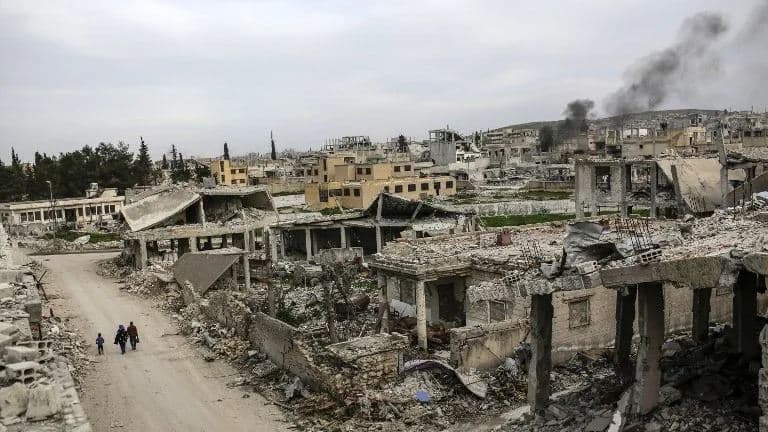
That triumph, however, came at an enormous cost. Nearly 70 percent of the city was destroyed during weeks of intense fighting. In the years since, residents and local authorities have worked painstakingly to rebuild homes, infrastructure, and basic services - reviving a city once reduced to rubble.
Now, a decade later, Kobane once again faces an existential threat - this time not from ISIS, but from a siege that risks plunging the city into another devastating humanitarian crisis.