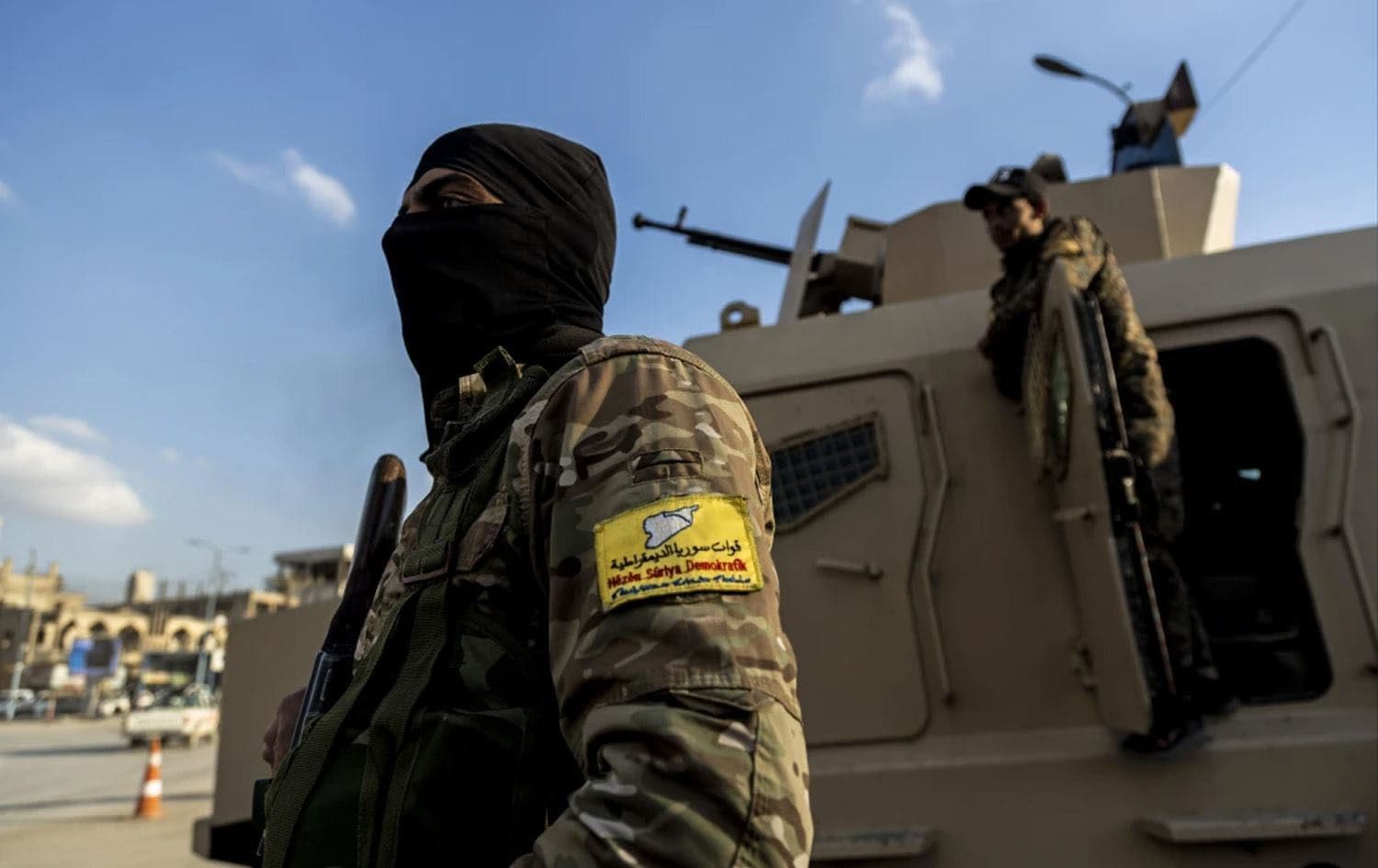

ERBIL, Kurdistan Region - As talks progress between the administration of northeast Syria (Rojava) and Damascus, there is an understanding that small units of the Kurdish-led security forces will remain in place, a Rojava representative in Washington told Rudaw on Friday.
“The understanding is that SDF will not dissolve and will remain as smaller units across north and east Syria,” said Sinam Mohamad, who represents the Syrian Democratic Council (SDC), which is the political arm of the Syrian Democratic Forces (SDF), in the American capital.
Rojava has agreed with Damascus to integrate its civil and military institutions into state structures. Talks about how the integration will proceed have been ongoing for months. One issue is the future of Rojava’s female security forces.
Mohamed said that as the current Syrian army does not accommodate women, the United States, which has been mediating the negotiations, “also supports the idea that YPJ [Women Protection Units] remain as they are in North and East Syria.”
The SDF has strong support in Washington, according to Mohamed.
US Congressman Abraham Hamadeh’s office announced on Friday that he spoke with SDF commander Mazloum Abdi.
Hamadeh’s office, in a social media post, said he thanked Abdi “for appointing a dedicated liaison to recover the remains of Arizonan Kayla Mueller,” who was killed in Syria in 2015 when she was being held captive by the Islamic State (ISIS).
Abdi “praised President Trump’s decision to lift sanctions and urged sustained U.S. backing for pluralistic governance,” according to Hamadeh’s office.
Mohamed said that the discussion between Abdi and Hamadeh reflects Washington’s ongoing support for the Kurdish-led force.
“Members of Congress continue to support the SDF because they know the SDF had a big role in the fight against terrorism,” she said, adding that the “SDF is an organized and reliable” partner of the US in Syria.
The SDF is a key ally of the US-led global coalition to defeat ISIS, which Syria officially joined earlier this month.
Another issue of discussion between Rojava and Damascus is that of governance. Kurds and other minority groups have raised objections about the centralization of power that the interim Syrian government has undertaken.
“We want a decentralized government out of these negotiations. This is for the protection of all national components of Syria, not just Kurds in north and east Syria,” said Mohamed.
The US government “wants to see a government that includes everyone,” she said, adding that Washington has tied lifting sanctions to Damascus’ commitment to protecting the rights of the minorities in Syria.
“Caesar sanctions have not been lifted completely because some Congress members have some reservations about the Syrian government, so they need to put some conditions for the complete lifting of sanctions,” Mohamad said, noting that “If the Syrian government breaks the promises, then the sanctions would be reactivated.”