
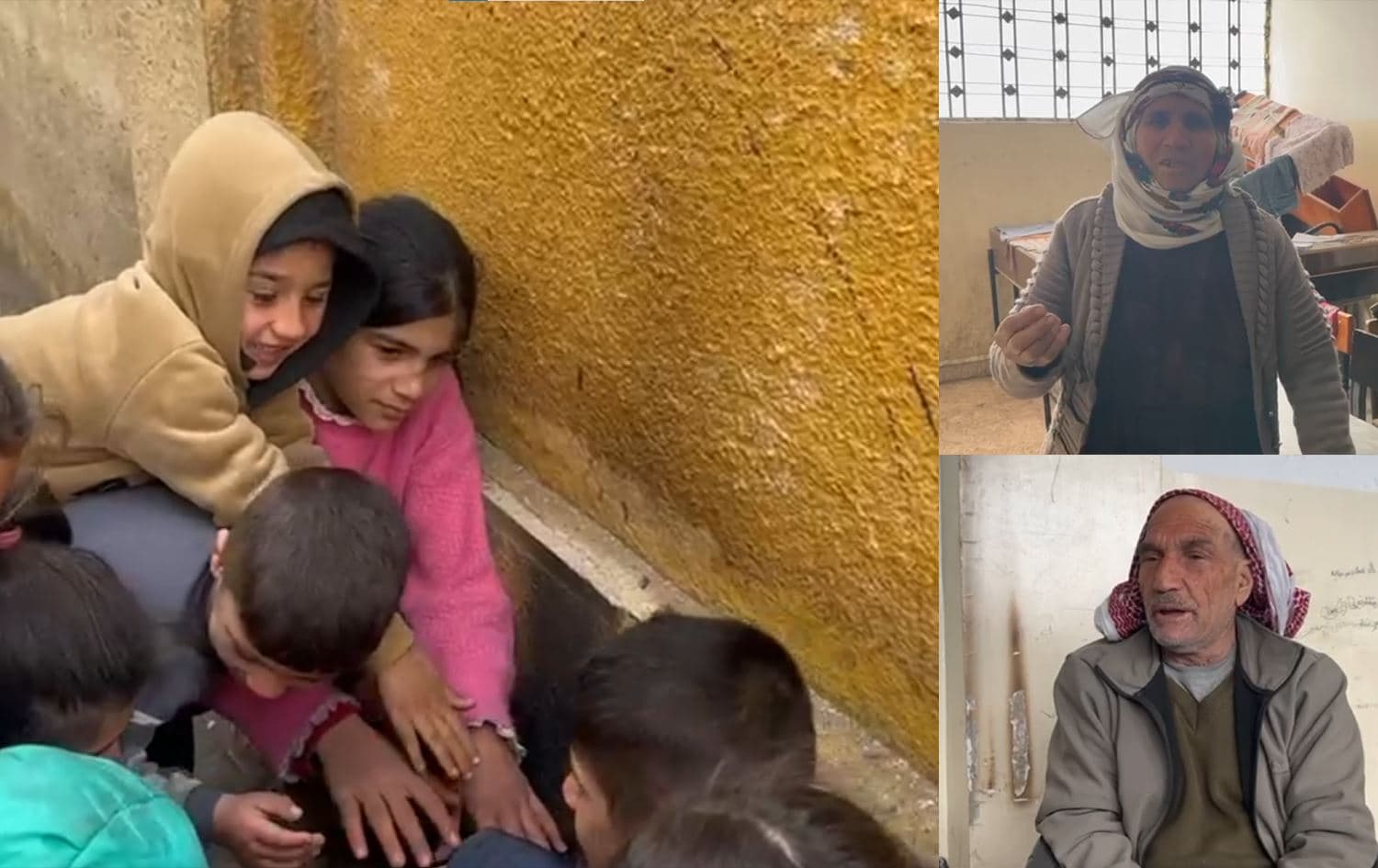

ERBIL, Kurdistan Region - A week-long siege imposed by the interim government in Damascus on the Kurdish town of Kobane is making life unbearable as five children froze to death on Saturday. The residents call for an urgent flow of aid to avoid a catastrophe.
“We are in a dire condition. We are melting snow through fire, but we do not have [enough] fire to melt the snow with. We do not have water, bread, kerosene, or anything else,” Fadila Mohammed, an elderly resident of Kobane, said in a video supplied to Rudaw English.
She called on Kurds and the international community to help.
“We are Muslims too.”
The recent attacks by the Syrian Arab Army and affiliated armed groups carried out a large-scale offensive on areas under the control of the Kurdish-led Syrian Democratic Forces (SDF). The SDF retreated from Arab-majority areas after Arab tribes refused to maintain their loyalty with the SDF.
The SDF’s withdrawal from Raqqa has isolated Kobane from the rest of the areas under Kurdish-led control. The town has been under siege for at least a week, as government forces continue attempts to advance despite a four-day ceasefire that expired on Saturday. It remains unclear whether the truce will be extended. The army hinted at renewed clashes with the SDF in a statement published by state media late Saturday.
The interim government has cut electricity, water, and internet services to Kobane. Some residents are melting recently fallen snow for drinking, despite safety concerns, and relying on limited internet access from Turkey, which borders the town.
Sheikh Mohammed, who has special needs, said he fled to Kobane to protect his dignity after his home on the frontlines came under army attack. Violations committed against Kurds in Aleppo earlier this month have raised alarm among many Kurds, who fear the same could happen to them if the jihadist-led army seizes their towns.
He called on Kurds to provide aid, adding that some of them have no shelter despite cold weather.
The Kurdish Red Crescent said on Saturday that at least five children froze to death in Kobane.
The Kurdish administration in northeast Syria (Rojava) on Saturday joined the residents of Kobane in their appeal to the international community to provide aid. It warned that the “suffocating siege” imposed by Damascus on Kobane “today brought it to the brink of a real humanitarian catastrophe threatening the lives of hundreds of thousands of innocent civilians.”
Kobane is a powerful symbol of resistance where the myth of the Islamic State (ISIS) was shattered. The city was previously attacked by ISIS in 2014, but later gained global recognition after successfully resisting the group and ultimately being liberated by the SDF.
“Kobane is not merely a city; it is a symbol of resistance and resilience. Its name is engraved in the memory of Syrians and the world alike for the immense sacrifices it made in confronting terrorism in defense of humanity as a whole. Kobane stood as the first line of defense for human values and marked a historic turning point that changed the course of the war against extremism. Therefore, targeting it today constitutes a direct attack on the will of free peoples and on the democratic experience in North and East Syria,” read a statement from the Rojava administration, also known as the Democratic Autonomous Administration of North and East Syria (DAANES).
Mustafa al-Ali is a journalist from Kobane who publishes updates on the developments in the town on his X account. He said in a video submitted to Rudaw English that 25 families live in a school, adding that due to lack of space four to five families share a room.
“They don’t have access to any gas in order to have a warm meal. They don’t have access to water, they do not have access to electricity,” he said.
.jpeg&w=3840&q=75)
.png&w=3840&q=75)
