Syria
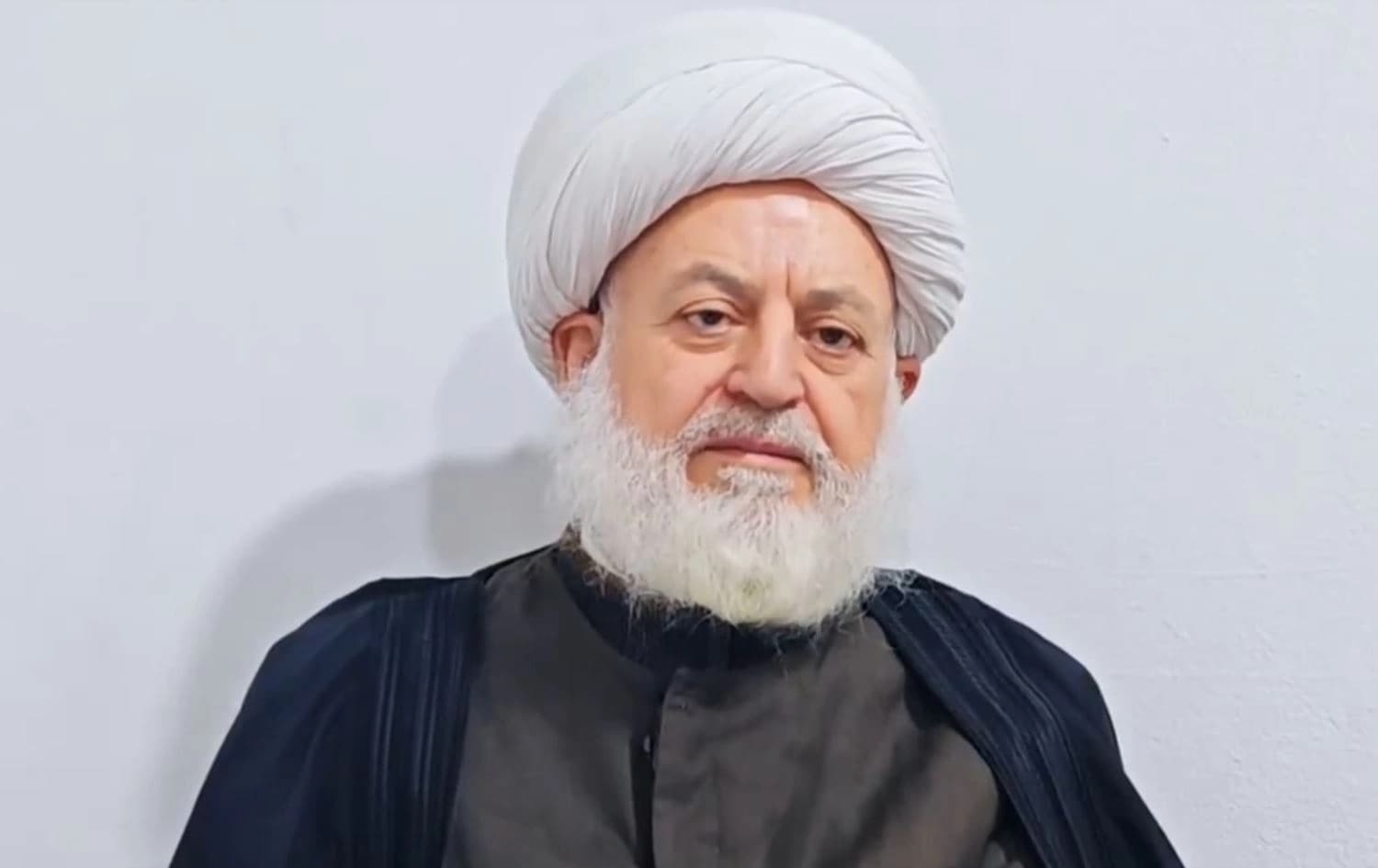
Ghazal Ghazal, head of the Supreme Islamic Alawite Council in Syria and Abroad, speaking in a video message published on December 27, 2025. Photo: screengrab
ERBIL, Kurdistan Region - The leader of Syria’s Alawite community on Saturday called on the members of the sect to stage mass demonstrations on Sunday to demand “political federalism” and protest violence targeting the minority group. The call comes a day after an explosion killed eight people at an Alawite mosque in Homs.
“Tomorrow will be a peaceful human flood filling the squares, and we call on every free and honorable person from the other components to stand with us and support us in our demands,” Ghazal Ghazal, head of the Supreme Islamic Alawite Council in Syria and Abroad, said in a video message.
“We do not want a civil war. We want political federalism. We do not want your terrorism. We want our right to self-determination,” he said in an apparent message to the transitional government in Damascus, led by Islamist figures. “Our appointment is tomorrow from twelve o'clock until five o'clock in the afternoon, Sunday.”
Ghazal’s call follows Friday’s explosion at the Imam Ali ibn Abi Talib Mosque in the Wadi al-Dhahab neighborhood of southeastern Homs, which killed at least eight people and wounded around 20 others, according to Syrian state media. A radical Sunni Islamist militant group, Saraya Ansar al-Sunna, claimed responsibility, saying the attack was carried out “in cooperation with mujahideen [jihadists] from another group.”
No one has been arrested over the blast.
Violence has persisted in parts of Syria since the ouster of longtime ruler Bashar al-Assad by the now-dissolved jihadist group Hay’at Tahrir al-Sham (HTS). Its former leader, Ahmed al-Sharaa, now serves as interim president.
The interim authorities have faced mounting criticism over their centralized style of governance. In March, Sharaa signed a constitutional declaration emphasizing Islamic jurisprudence, drawing backlash from Alawite, Christian, Druze, and Kurdish communities, who viewed it as exclusionary.
Calls for decentralization or federalism have grown among Alawites, Druze, and Kurds following waves of violence, especially after clashes left nearly 800 dead in the Druze-majority Suwayda province in mid-July and in Alawite-majority coastal regions in March, which war monitors say left nearly 2,000 people dead. Damascus and its affiliated forces have been held responsible for killing many civilians.
“What we are experiencing today is not a passing incident or blind chaos, but a systematic war of extermination practiced against us in full view and hearing of the world,” Ghazal said. “This [Damascus] authority has not left any form of crime without committing it against us. We are killed in places of worship. We are slaughtered in our homes.”
Ghazal also appealed to “the international community and decision-makers,” warning that “silence about these crimes means nothing but more killing and more collapse,” and called for “radical, genuine, and swift solutions,” including “international protection.”
In November, Ghazal similarly called for demonstrations, which were held in several areas across Latakia and Tartus provinces along the Syrian coast, as well as parts of Hama and Homs. Protesters at the time demanded federalism, political decentralization, the release of detainees, and an end to violence against minorities.
Syria’s interior ministry then warned against what it described as “schemes” to sow discord, cautioned against sectarian slogans, and said security forces had been deployed to protect demonstrations.
“Tomorrow will be a peaceful human flood filling the squares, and we call on every free and honorable person from the other components to stand with us and support us in our demands,” Ghazal Ghazal, head of the Supreme Islamic Alawite Council in Syria and Abroad, said in a video message.
“We do not want a civil war. We want political federalism. We do not want your terrorism. We want our right to self-determination,” he said in an apparent message to the transitional government in Damascus, led by Islamist figures. “Our appointment is tomorrow from twelve o'clock until five o'clock in the afternoon, Sunday.”
Ghazal’s call follows Friday’s explosion at the Imam Ali ibn Abi Talib Mosque in the Wadi al-Dhahab neighborhood of southeastern Homs, which killed at least eight people and wounded around 20 others, according to Syrian state media. A radical Sunni Islamist militant group, Saraya Ansar al-Sunna, claimed responsibility, saying the attack was carried out “in cooperation with mujahideen [jihadists] from another group.”
No one has been arrested over the blast.
Violence has persisted in parts of Syria since the ouster of longtime ruler Bashar al-Assad by the now-dissolved jihadist group Hay’at Tahrir al-Sham (HTS). Its former leader, Ahmed al-Sharaa, now serves as interim president.
The interim authorities have faced mounting criticism over their centralized style of governance. In March, Sharaa signed a constitutional declaration emphasizing Islamic jurisprudence, drawing backlash from Alawite, Christian, Druze, and Kurdish communities, who viewed it as exclusionary.
Calls for decentralization or federalism have grown among Alawites, Druze, and Kurds following waves of violence, especially after clashes left nearly 800 dead in the Druze-majority Suwayda province in mid-July and in Alawite-majority coastal regions in March, which war monitors say left nearly 2,000 people dead. Damascus and its affiliated forces have been held responsible for killing many civilians.
“What we are experiencing today is not a passing incident or blind chaos, but a systematic war of extermination practiced against us in full view and hearing of the world,” Ghazal said. “This [Damascus] authority has not left any form of crime without committing it against us. We are killed in places of worship. We are slaughtered in our homes.”
Ghazal also appealed to “the international community and decision-makers,” warning that “silence about these crimes means nothing but more killing and more collapse,” and called for “radical, genuine, and swift solutions,” including “international protection.”
In November, Ghazal similarly called for demonstrations, which were held in several areas across Latakia and Tartus provinces along the Syrian coast, as well as parts of Hama and Homs. Protesters at the time demanded federalism, political decentralization, the release of detainees, and an end to violence against minorities.
Syria’s interior ministry then warned against what it described as “schemes” to sow discord, cautioned against sectarian slogans, and said security forces had been deployed to protect demonstrations.
Comments
Rudaw moderates all comments submitted on our website. We welcome comments which are relevant to the article and encourage further discussion about the issues that matter to you. We also welcome constructive criticism about Rudaw.
To be approved for publication, however, your comments must meet our community guidelines.
We will not tolerate the following: profanity, threats, personal attacks, vulgarity, abuse (such as sexism, racism, homophobia or xenophobia), or commercial or personal promotion.
Comments that do not meet our guidelines will be rejected. Comments are not edited – they are either approved or rejected.
Post a comment