


Syria

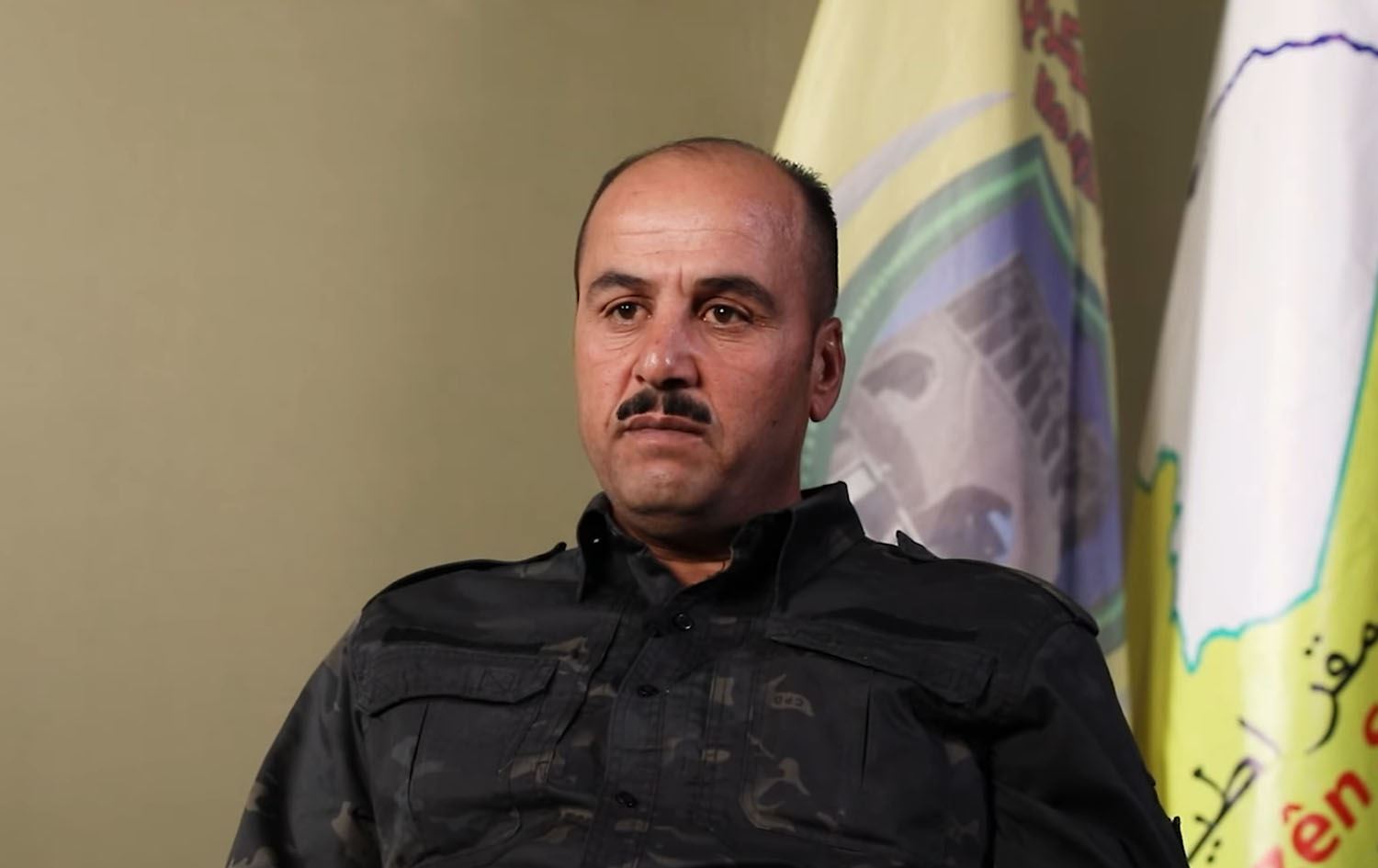
Ayid al-Hadi, a member of the Raqqa Military Council within the Syrian Democratic Forces (SDF), speaking in a video message on October 31, 2025. Photo: screengrab/SDF Press
ERBIL, Kurdistan Region - A senior Syrian Democratic Forces (SDF) official denied accusations that the force is besieging Raqqa and detaining residents, saying in a video published on Friday that opposition groups and “foreign agendas” are spreading “completely false” claims as the Kurdish-led force continues operations against remnants of the Islamic State (ISIS) in the former extremist stronghold.
“Some opposition groups and foreign agendas” are trying to claim the SDF “have Raqqa and its residents under siege,” Ayid al-Hadi, a member of the Raqqa Military Council within the SDF, said in the video published by the SDF’s media office.
These allegations are “completely false,” he said.
This is not the first time allegations have been made against the Kurdish-led SDF in Raqqa. Earlier in October, the force dismissed accusations that it was recruiting young men.
The denial followed comments by Syrian journalist Aboud Hamam. Speaking on state-run al-Ikhbariya TV, Hamam accused the SDF of “arresting young people” for “forced conscription” in Raqqa, a claim echoed by other guests on the program.
The SDF has previously faced criticism over child recruitment, but after signing a UN-backed action plan to prohibit the practice, dozens of children have been returned to their families.
According to Hadi, SDF forces are present in Raqqa due to “the movement of narcotics and terrorist cells” in the area. He added that the SDF, with support from the international coalition, is focused on pursuing ISIS cells and leaders.
“Our first step is to free ourselves and free Raqqa and northeast Syria from terrorism,” he said.
Raqqa is the former de facto capital of ISIS in Syria.
Accusations against armed factions
Hadi said that the Syrian government must address concerns about armed groups backed by Turkey.
The Suleiman Shah Division - Amshat - and the Hamza Division - Hamzat - are Turkey-backed armed factions that have resisted efforts to integrate into the new military structure following the ouster of longtime Syrian dictator Bashar al-Assad. Both groups have been sanctioned by the United States and the European Union, and have been implicated in war crimes and human rights abuses documented by Human Rights Watch and the UN Commission of Inquiry on Syria.
Damascus “should put an end to this security lapse. This is unacceptable,” said Hadi.
“Whoever wants to [impose] something on us that is outside the bounds of the law and outside the protection of all the components present in northeast Syria, we will not agree to it under any circumstances,” he added.
Integration talks with Damascus
Tensions are high between the SDF and Damascus.
The two are engaged in talks to integrate the SDF’s forces and institutions into the Syrian state. SDF commander Mazloum Abdi and interim Syrian President Ahmed al-Sharaa have signed agreements advancing political and security coordination, and held discussions about decentralization as a basis for Syria’s future governance.
Disagreements persist, however. The SDF favors integration of its forces as a unified structure, while Damascus seeks to absorb fighters individually into regular army units.
Their negotiation process remains fragile. Last week, Syria’s Defense Ministry accused the SDF of “targeting” a government position near Tishreen Dam with a guided missile, killing two soldiers and wounding another. The SDF denied involvement.
Backed by the US-led coalition, the Kurdish-led SDF played a central role in defeating ISIS in Syria and continues to conduct anti-terrorism operations in former ISIS strongholds including Raqqa.


Comments
Rudaw moderates all comments submitted on our website. We welcome comments which are relevant to the article and encourage further discussion about the issues that matter to you. We also welcome constructive criticism about Rudaw.
To be approved for publication, however, your comments must meet our community guidelines.
We will not tolerate the following: profanity, threats, personal attacks, vulgarity, abuse (such as sexism, racism, homophobia or xenophobia), or commercial or personal promotion.
Comments that do not meet our guidelines will be rejected. Comments are not edited – they are either approved or rejected.
Post a comment