ERBIL, Kurdistan Region - Turkey’s foreign ministry on Tuesday condemned an Israeli strike on southern Syria earlier in the day that left one dead, stressing that the attacks threaten Damascus’s security and must end.
“These attacks directly target efforts to establish stability and security in Syria and across our region. They must be brought to an end, and support for the Syrian Government’s efforts to ensure peace and calm throughout the country should be sustained,” the ministry said in a statement.
It further slammed Israel’s “expanding” attacks on Syria as a violation of the country’s “territorial integrity, unity, and sovereignty.”
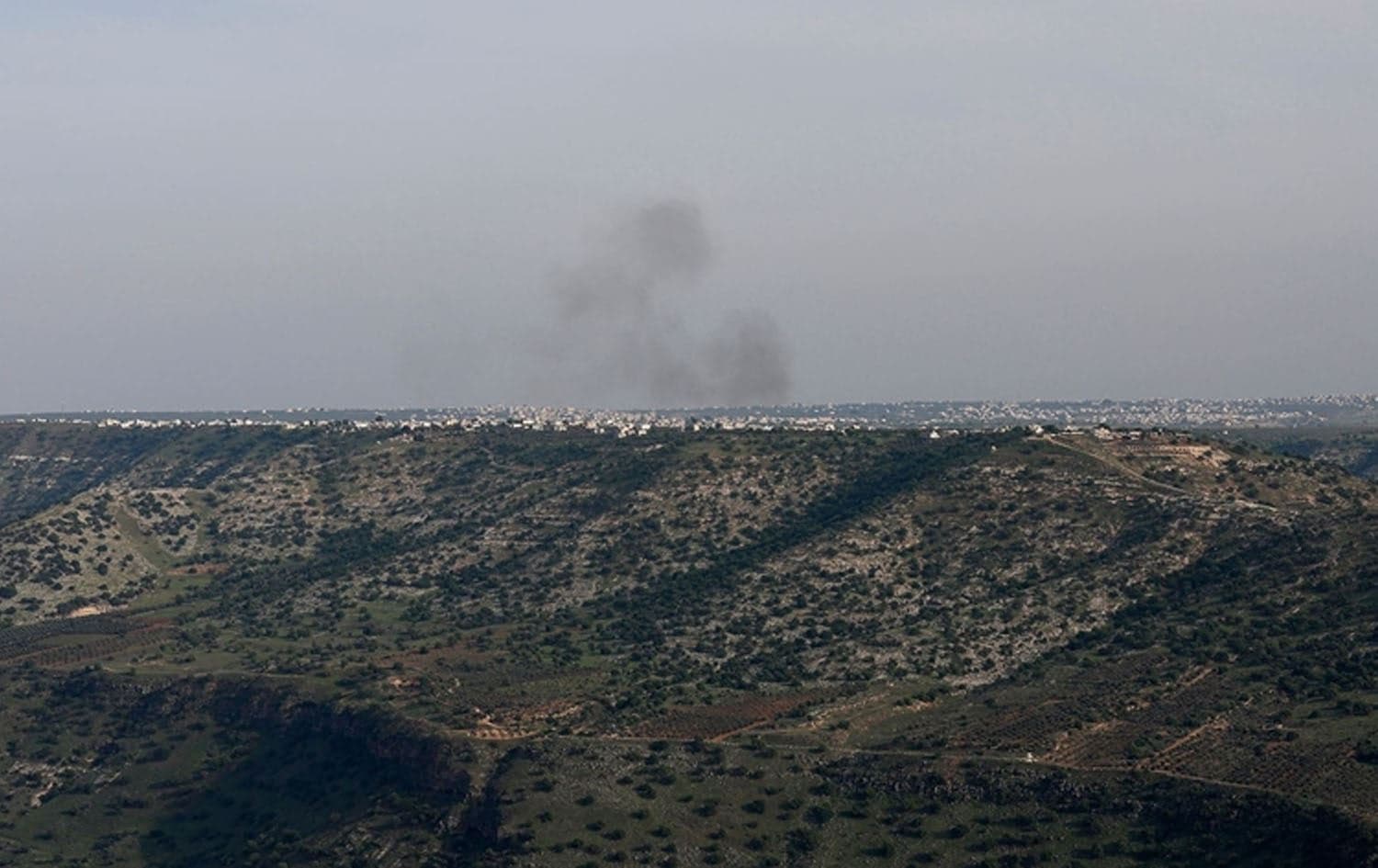
A young man was killed in an Israeli strike on a home in the village of Taranja, on the formerly Syrian-controlled side of the armistice line on the Golan Heights, Syria’s state-run SANA news agency reported.
Damascus condemned the attack, the Israeli army’s incursion into a town in the bordering Quneitra province, their “arrest campaigns against civilians,” and their “announcement of the continuation of their illegal presence on the summit of Mount Hermon and the buffer zone.”
“These aggressive practices constitute a flagrant violation of the United Nations Charter, international law, and relevant Security Council resolutions, and pose a direct threat to peace and security in the region,” the foreign ministry stressed.
Several regional countries, including Saudi Arabia, Qatar, Kuwait, and Jordan, condemned the Israeli attacks.
On Sunday, Israel’s Defence Forces (IDF) said it carried out several operations in southern Syria, uncovering weapons storage facilities containing RPG missiles, explosives, AK-47s, and ammunition, all of which were confiscated. Several suspects were also apprehended and questioned.
In early December, a coalition of opposition forces - then spearheaded by the now-dissolved Hay’at Tahrir al-Sham (HTS) under Ahmed al-Sharaa - launched a swift offensive that toppled the regime of longtime Syrian dictator Bashar al-Assad. Sharaa became Syria’s interim president in late January.
Since then, Israel has intensified efforts to destroy Damascus’s military stockpiles, and its forces have entered buffer zones east of the Israel-annexed Golan Heights.
Israel captured most of the Golan Heights from Syria during the 1967 Six-Day War. In 1974, a US-brokered Disengagement Agreement created a UN-monitored buffer zone to delineate separation lines between Syrian and Israeli forces without establishing formal peace.
Last week, Syrian Foreign Minister Asaad al-Shaibani met Israeli Strategic Affairs Minister Ron Dermer in Paris to push for a return to the 1974 agreement. The meeting came as Damascus struggles to maintain control over Druze-majority areas in the south.