

WASHINGTON DC - US Special Envoy for Syria Tom Barrack told Rudaw on Thursday that he expects a "centralized" Syrian government that is inclusive of all groups and minorities to be established by year end, ruling out the potential of establishing “a federation.” He reaffirmed his country’s support for all groups in Syria, including the Kurds, in addressing unresolved issues, “without dictating anything” on any side.
US President Donald Trump on Thursday hosted his Turkish counterpart Recep Tayyip Erdogan at the White House for the first time since 2019.
Speaking to Rudaw’s correspondent at the White House, Barrack lauded the meeting as “more than great,” adding that the “two amazing leaders … [who despite having] some different points of view, have a real understanding and respect for each other.”
The US envoy noted that the two leaders addressed “the bevy of the issues” at hand, stressing that the outcomes of the meeting were “very positive.”
On the Syrian stage, Barrack anticipated the formation of “a centralized government that doesn’t become a federation” by year end.
He added that this government would uphold the rights of all factions and communities, and would acknowledge the different group’s worries of becoming “secondary class Syrians” in their own country.
The envisioned government would consider the different groups’ demands from education systems, to language and religious rights and more, Barrack said.
However, the US envoy regretted the unfolding of challenges, which he described as “speedbumps,” including the intercommunal violence recorded in the Druze-majority Suwayda province in southern Syria in mid-July.
Asked by Rudaw about Washington’s role in facilitating talks among the different communities in Syria, Barrack reiterated US President Trump’s goal of allowing “each region to decide their own destiny.”
“We will usher, we will convince, we will modify … but we are not dictating anything,” Barrack stressed.
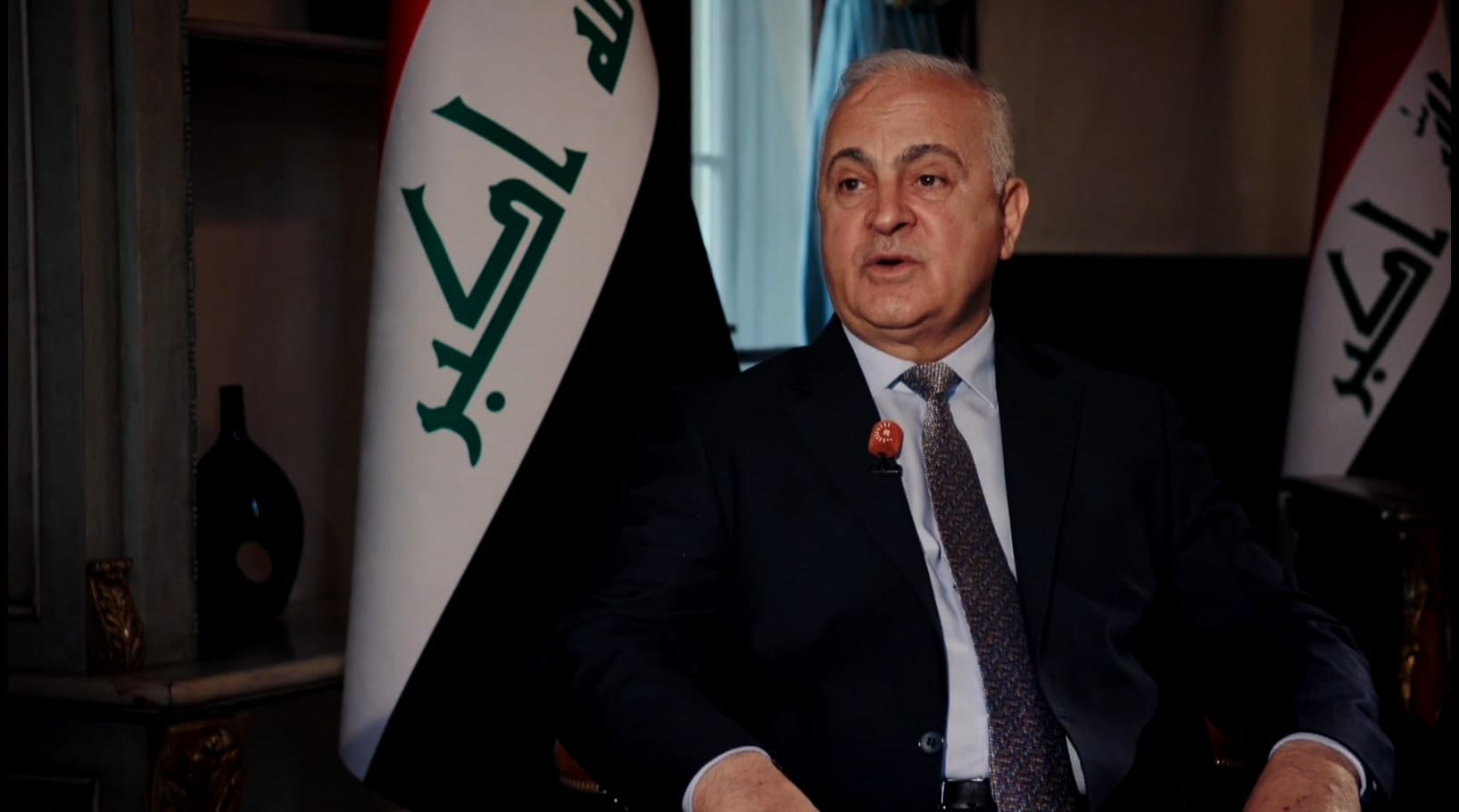
Below is the full transcript of the interview with US Special Envoy for Syria Tom Barrack.
Rudaw: Ambassador, when the [US] President [Donald Trump] stepped out, I asked him a question: how was the meeting? And he said, it was a great meeting, how great was this meeting, what is your take away from it?
Barrack: I think it was better than great. In my humble opinion, two amazing leaders, very different parts of the world, some differing points of view, and have a real understanding and respect of each other, and so the bevy of issues and questions that were given to them were addressed, and I think you'll see that the readout from the meeting was amazingly positive, but I was so proud of both sides.
So, as you are special envoy for Syria as well, I will ask questions on Syria, where are you in Syria now, especially when it comes to [the Syrian Democratic Forces] SDF integration into the new Syrian defense systems, are you optimistic about this, and how do you look into the Kurdish aspiration for having more autonomy in Syria?
I'm optimistic on all of it. So regarding the "more autonomy" issue, it is with every faction or every minority, which I think the new government is acknowledging that they want their own education system, they want their own language, they want their own religious practices to be honored. They don't want to be thought of as a secondary class of Syria. So that takes architecture, how do you design a centralized government that doesn't become a federation that gives all of those factions that right an opportunity? I think it's happening. It's unfortunate. It has to happen with speed bumps. So what happened in Suwayda came early. It was unfortunate. Nobody wants it to continue. We're all working to solve that. I think by year end, that kind of the architecture of what happens is, how do you onboard all of the various factions and minorities in a safe and sound way, [it] will happen. They're endeavoring to do it. I I'm optimistic that with help they can get it
I have heard from you that you're not dictating the negotiation between Syrian and Kurds, but there's some interpretation in the region in a way that, because you said, maybe federalism doesn’t, they think that this is the position of the United States and they are dictating Syria, you don’t want them have federalism but a centralized government, can you clarify this for our audience? And the second one, how do you look into the fear of the Kurds when they think that maybe they will face the same situation as Druze and Alawite with the militia groups in Syria?
This President, my boss's point of view is simple. He wants peace and prosperity for everybody. He also sees that colonial dictates for the last 100 years have failed. He's not interested in putting an American or a European or an Asian or a British based system on top of anybody. That's not what his goal is. His goal is to just allow each region to decide their own destiny. And that's all he's done. He's unwrapped the sanctions. It took a little longer than he thought, and said, you in the region decide what you want it to be. That's it. So we'll Usher, will help, will convince you will qualify, but we're not dictating anything.
Did you discuss that in your meeting with President Erdogan?
Yes, of course.
And what is the position of Turkey on your role in bringing peace to new Syria and having a government that is inclusive and everyone sees themselves in it?
Well, you're adding a lot of things to what you want, right? That wasn't exactly…
I am just asking questions.
The question is, how did it go? It went well, that's my answer to you.

.jpeg&w=3840&q=75)