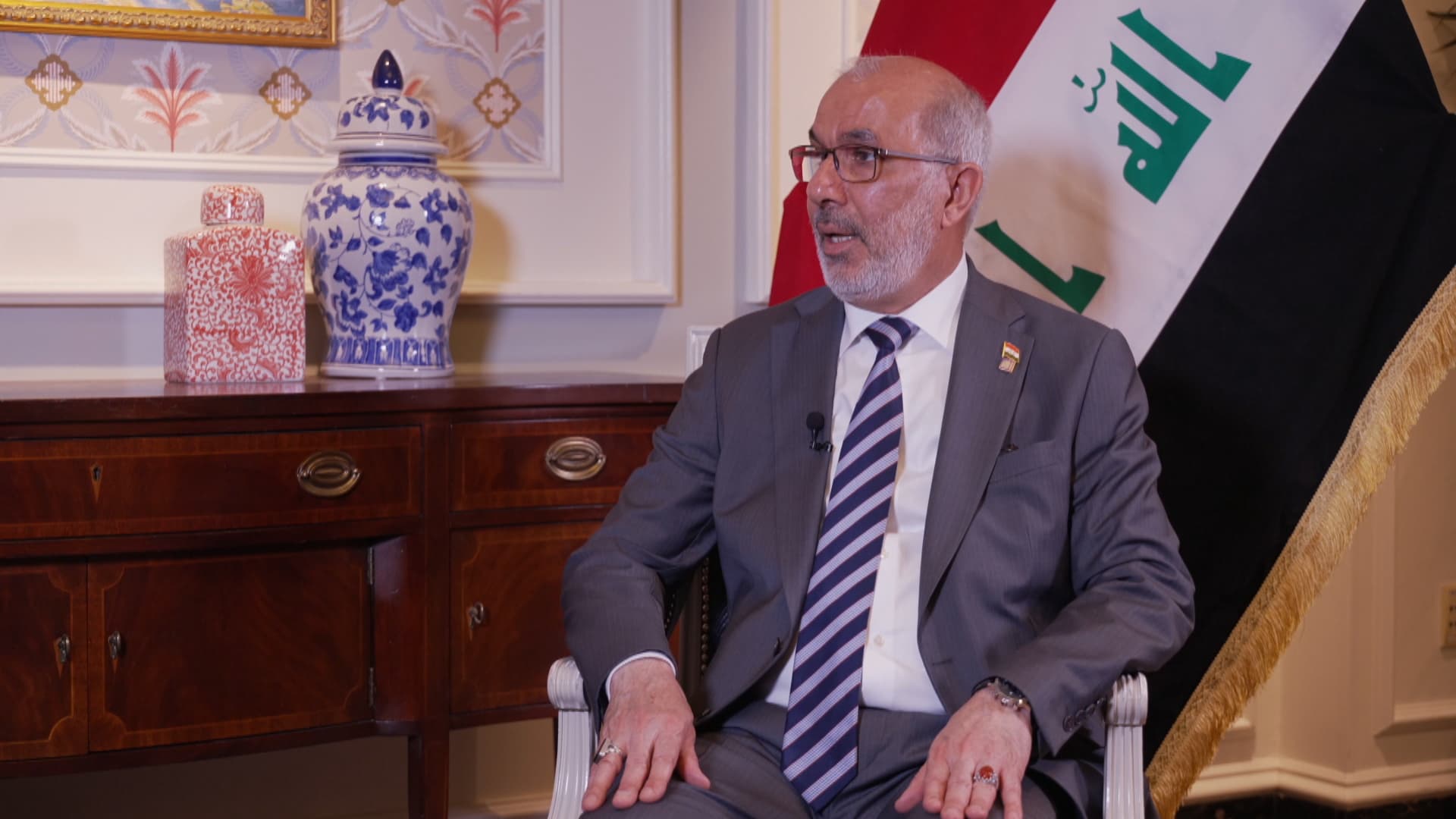
ERBIL, Kurdistan Region - Kirkuk Governor Rebwar Taha said on Monday that the province is “not neglected anymore” and urged an end to ethnic-based politics. He also stressed the need for collective action and cooperation as the multi-ethnic province prepares for Iraq’s federal elections.
Taha, who leads the Patriotic Union of Kurdistan’s (PUK) list in Kirkuk, told Rudaw in an interview that “Kirkuk was neglected [before he took office but] it is not neglected anymore.”
“We must change the model and mentality of doing politics in Kirkuk and abandon ethnic conflict. Now we need collective steps and action,” he said.
The upcoming federal elections, scheduled for November 11, are seen as particularly consequential for Kirkuk, with the potential to reshape the balance of power between Kurdish, Arab, and Turkmen political parties in the multi-ethnic, oil-rich province. Campaign messaging in Kirkuk frequently centers on identity politics rather than policy programs, and the results could influence the long-stalled implementation of Article 140 of the Iraqi constitution, which calls for normalization measures and a referendum to determine whether the province will join the Kurdistan Region or remain under Baghdad’s authority.
Years of political impasse have hindered governance and delayed service delivery in Kirkuk. The PUK assumed the governor’s post in August 2024 following a contentious vote in Baghdad, where a coalition of PUK, Arab, and Christian members appointed Taha. The session was boycotted by the Kurdistan Democratic Party (KDP) and the Turkmen Front, who questioned its legality, though the Iraqi presidency later confirmed the appointment. Taha succeeded Rakan al-Jabouri, who had served as acting governor since 2017 when federal forces retook Kirkuk from Kurdish control, until he was disqualified from contesting the election due to corruption-related cases.
Taha said British energy company BP has played a key role in returning investment to Kirkuk. “BP has been working for 25 years to develop Kirkuk's oil fields,” he noted, adding that the company is now investing $26 billion in the province to increase oil and gas production and boost petrodollar revenues. “As a result, it will lead to increased projects and job opportunities in the city,” he said.
In October, Iraq’s oil ministry activated a development contract with BP to rehabilitate four key fields - Baba Avana, Bay Hasan, Jambour, and Khabbaz - with the aim of raising production to 328,000 barrels per day. Taha said the company will build a petrochemical plant and a 400-megawatt power station, and provide $10 million annually to Kirkuk’s local government, which is allocated to public works.
Highlighting recent achievements, Taha said the administration has implemented large-scale infrastructure efforts, laying 1.4 million square meters of concrete for streets in the past eight months and installing 400 electricity transformers to improve the power network.
Nwenar Fatih contributed to this article.