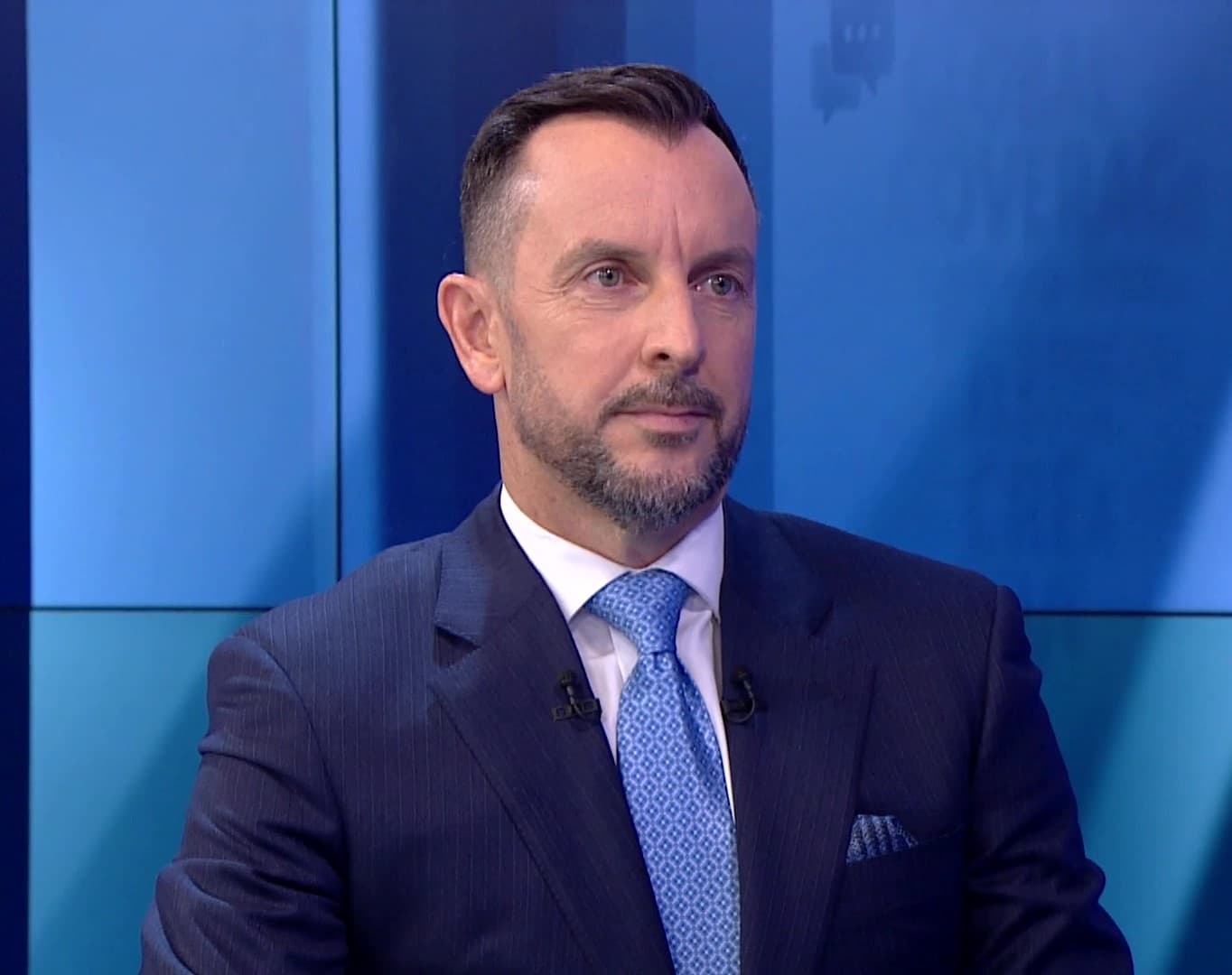
MUNICH, Germany - Kurdistan Region President Nechirvan Barzani said Sunday international support remains firmly behind a strong Kurdistan Region within a federal Iraq, while acknowledging growing external criticism over delays in forming a new regional government and stressing the need for dialogue on Syria and regional stability.
In an interview with Rudaw on the last day of the Munich Security Conference, Barzani said European and international leaders “reaffirm the role of the Kurds in the region”, emphasizing that global policy favors “a strong Kurdistan within a federal Iraq,” grounded in the country’s constitution.
However, Barzani acknowledged that the prolonged political deadlock following the October 2024 Kurdistan Region elections has drawn criticism from abroad. He said the delay in reactivating parliament and forming a new cabinet is “not a good thing,” adding that efforts are ongoing to reach a shared framework with political parties, particularly the Patriotic Union of Kurdistan (PUK).
Turning to Syria, Barzani said the Kurdistan Region supports dialogue between the Kurdish-led Syrian Democratic Forces (SDF) and Damascus within the framework of a unified Syria. He stressed that implementation of recent agreements is key and said international actors, including the US and European countries, have emphasized the need to monitor that process.
Barzani said he heard assurances from Syria’s interim leadership that they are committed to implementing the agreement, adding that Kurdish and minority rights must ultimately be enshrined in Syria’s future constitution. He welcomed recent steps taken by Damascus as “a very good start in the right direction.”
Barzani also highlighted Turkey’s role during recent developments in Syria, saying Ankara played a “very positive” and constructive role in supporting the SDF-Damascus agreement.
On Kurdish unity, Barzani said broad support from Kurds across the region for northeast Syria (Rojava) drew international attention and reinforced the Kurdistan Region’s diplomatic standing.
Describing his meetings in Munich, Barzani said they reflected growing international respect for the Kurdistan Region, calling that recognition “a source of pride” rooted in the sacrifices of the Kurdish people, while reiterating that dialogue remains the preferred path to addressing regional threats.
The following is a transcript of the interview with President Nechirvan Barzani:
Rudaw: Is the world ready to continue supporting the Kurdistan Region, and does the Kurdistan Region have the capacity to continue as a partner and ally of the international community?
President Nechirvan Barzani: Naturally, our coming to these conferences is primarily to meet people up close, to meet officials across the world, and to reaffirm the role of the Kurds in the region generally and in Iraq. Regarding your question about the Kurdistan Region, yes, I believe European and international policy is clear in wanting a strong Kurdistan within a federal Iraq. That is clear to all states and leaders. They want the Kurdistan Region's role to be an effective and serious one, they want it to be stable, and they want the Kurdistan Region to be a strong region within the framework of a federal Iraq.
The difference that we always make is that we are within the framework of Iraq's permanent constitution. We certainly do not say that the constitution is perfect and without problems, but we have certain rights, and we also know that certain responsibilities fall upon us under that constitution. But international policy up to now is this: a strong Kurdistan within a federal Iraq.
A strong Kurdistan, but Your Excellency held several meetings. Was criticism raised in the meetings and discussions that, more than a year and four months after the elections, the parliament is still not functioning, and a government has still not been formed?
Yes, that was one of the topics. This issue is discussed within the international community. The people of Kurdistan showed great trust in all the parties, and the turnout in the elections was close to 73 percent. That was all a reflection of the trust the people of Kurdistan had. A year has passed by a government is yet to be formed, and that is a point of criticism from outside, but for ourselves as well, it is not a good thing. Ultimately, this is an important issue that must be resolved as soon as possible, and we are continuing our efforts to truly reach a framework and a shared understanding with the other parties, particularly the Patriotic Union of Kurdistan, so that this government can be formed.
Mr. President, Turkey is a major power in Syria and in the region. You have been continuously engaged in efforts to end that war and restore peace between the Syrian government and the SDF. What was Turkey's role during this period?
Naturally, when this crisis erupted in Syria, I personally was continuously in contact with Turkey. I can tell you that Turkey's role was a very positive one, and without Turkey's assistance and support, many of the things that were accomplished could not have been done. For example, what happened in Aleppo [early January conflict], and the fact that those people were able to leave there calmly, Turkey truly played a major role in that. Turkey's role has been a very positive and helpful one in bringing the SDF and the Syrian government to a mutual agreement. That is what I have seen and what I observe, their role has been a very positive one.
Here, with several world leaders, one of the important topics in your discussions and meetings was the issue of Syria and Rojava. Can we say that there is a guarantee that the Kurds will be protected in Rojava? Can we also say that the establishment of autonomy in Rojava has come into play, or what does the support look like?
If the question were put to Damascus, they might feel they have given the Kurds a great deal. If the question were put to the Kurds as well, they might feel they have received very little. But in my personal view, what has been done is something that can be good for both sides. Ultimately, our policy in the Kurdistan Region is that our brothers in Rojava reach a good outcome with Damascus. Our policy supports their ability to reach a good outcome within the framework of a unified Syria. I believe what is important is how this agreement is implemented.
In these meetings we had in Munich with all sides, with the Americans and the Europeans, we emphasized that the implementation of this agreement must be monitored. To us, that is important. What I heard from Syria's foreign minister, and also from His Excellency President [Ahmed] al-Sharaa, is that they genuinely want to implement this agreement as it is. That is also our intention, and what is very important to us is that whatever is done regarding Rojava and the other communities within Syria, all of it must be enshrined in one form or another within Syria's constitution. We welcomed President al-Sharaa's [mid-January] decree. I believe that was also a very good start in the right direction, and I believe it is important for all of us to make efforts to enshrine these things within Syria's constitution...
President Masoud Barzani, yourself, and Prime Minister Masrour Barzani have all played an important role. All the people of Kurdistan and all the parties of Kurdistan showed strong support and unity for Rojava. Did that unity draw the attention of officials across the world?
Yes, it drew attention. Without doubt, I want to thank all the people of Kurdistan everywhere. Kurds, wherever they are - those outside, inside, in other countries - all of them, on this matter, as we saw, that unity of the Kurds in support of Rojava was very impactful. In this process, His Excellency President [Masoud] Barzani, Mr. Masrour, myself, and all of us, regarding what we could do for Syria's stability, what we could have done, we truly did not hold back. Each according to their position and role, we all made a serious effort. We have made a serious effort, and as far as we are concerned, it is not something to take credit for; rather, we have fulfilled our duty toward our sisters and brothers in Syria.
Will the PUK and KDP meet next week?
Up to now, we have had two meetings with the PUK. His Excellency, President Barzani, held a meeting with [PUK leader] Mr. Bafel [Talabani] about ten days ago. On Wednesday, before I came here, I had a meeting with Mr. Bafel, and after that, he had a very good meeting with His Excellency President [Barzani] as well. We have agreed in principle that these meetings will continue, and both meetings were truly good meetings. That is, I can say the meetings were not bad, but this requires effort. It is not that we have reached an agreement on anything, but the meetings themselves, the way they were conducted, I believe that it was a good thing. We are moving forward in the right direction. These meetings of ours will continue until we reach a common point, and God willing, it will be for the good of all of Kurdistan.
But you still have not agreed on a single candidate for the Iraqi presidency?
No, up to now we have not agreed on that.
How would you describe your meetings in Munich this year? Because they were truly different from last year.
I believe, if you look at all the meetings, the meetings were very good. The matter is not personal; we represent our own people, and we are proud that the world respects the people of Kurdistan in that way. It is a source of pride for us to be in this position, and that is the result of the struggle and sacrifice of the people of Kurdistan, truly. In a general manner, I believe the level of the meetings and the importance accorded to the Kurdistan Region are a source of pride for all of us.
But since the region is truly under threat right now…
Certainly, … the region is under threat, but in reality, we want these issues to be resolved through dialogue and in a peaceful manner. We do not believe war resolves any problem. We want problems to be resolved peacefully.