


Middle East

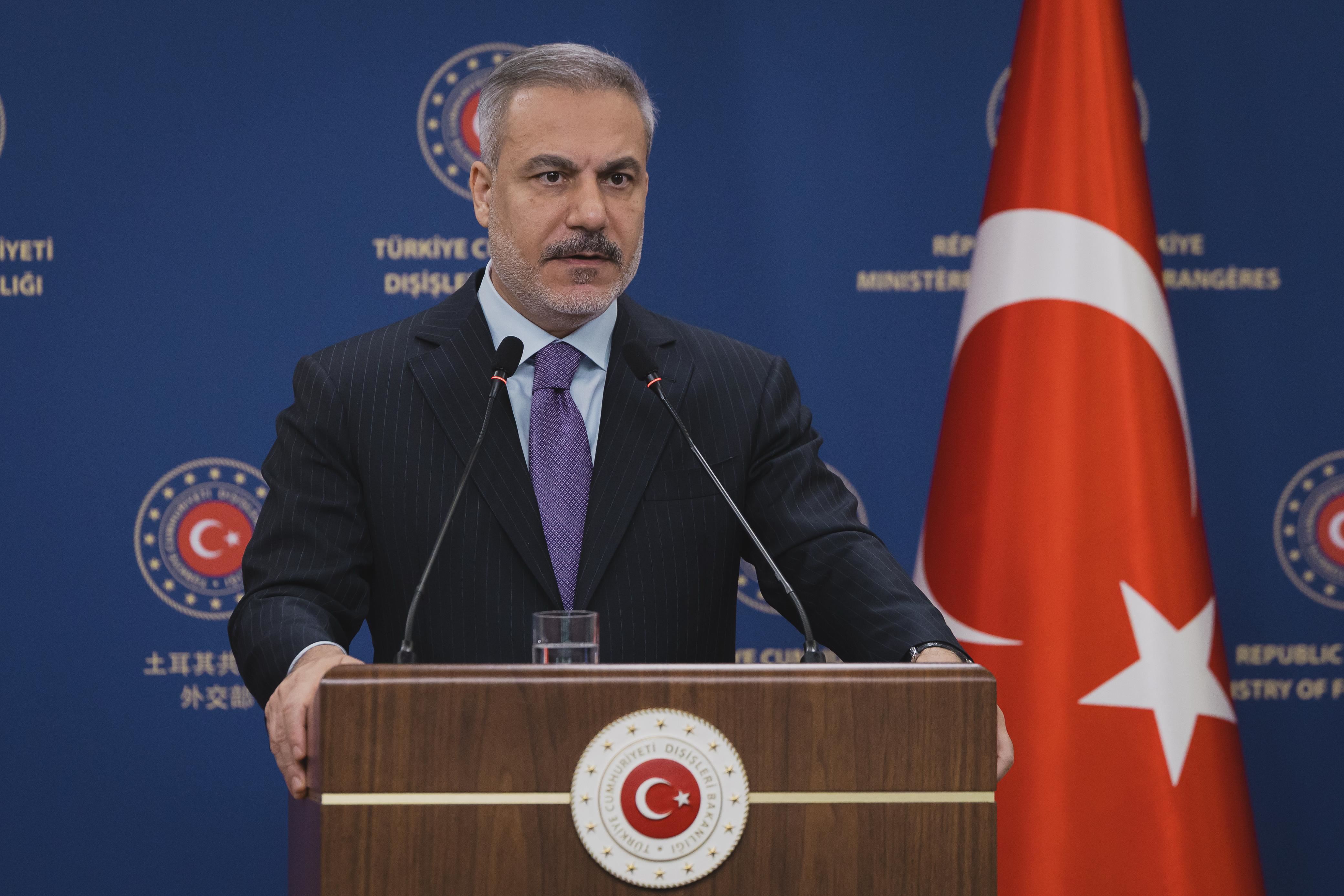
Turkish Foreign Minister Hakan Fidan during a joint press conference with Estonian Foreign Minister Margus Tsahkna (not seen) in Ankara on November 31, 2025. Photo: AA
ERBIL, Kurdistan Region - Turkish Foreign Minister Hakan Fidan will visit Baghdad on Sunday, an Iraqi official told Rudaw. He is expected to sign a memorandum of understanding with his Iraqi counterpart on water.
Iraqi Foreign Minister Fuad Hussein had announced on October 20 that Fidan would visit Iraq to sign an agreement on water, but no date was given at that time. A source from Hussein’s office, speaking on the condition of anonymity, told Rudaw on Saturday that the Turkish minister will arrive on Sunday.
Water is an issue of serious concern in Iraq, which is heavily dependent on the Euphrates and Tigris rivers, both of which have their source in Turkey.
Hussein, who visited Ankara on October 10, told Rudaw that Turkey has agreed to release more water.
The memorandum that Fidan and Hussein are expected to sign on Sunday covers key water management strategies: building dams in Iraq, recycling wastewater, collecting rainwater, managing groundwater, and desalinating seawater - tasks Turkish companies will handle due to their expertise, according to Hussein. And in the short term, Turkey will release more water to Iraq over the next 50 days.
Large Turkish dam projects, including the Southeastern Anatolia Project (GAP), have significantly reduced water flow to Iraq, worsening drought, desertification, and environmental degradation. Currently, Iraq receives less than 40 percent of its historical share of the river water.
While Iraq’s water crisis is driven by climate change, declining rainfall, poor resource management and upstream damming by Turkey and Iran, the absence of comprehensive water-sharing agreements with these neighbors leaves Iraq vulnerable to unilateral upstream actions that threaten its water security.
Iraq is experiencing its worst drought in nearly a century.
Ziyad Ismail contributed to this article.


Comments
Rudaw moderates all comments submitted on our website. We welcome comments which are relevant to the article and encourage further discussion about the issues that matter to you. We also welcome constructive criticism about Rudaw.
To be approved for publication, however, your comments must meet our community guidelines.
We will not tolerate the following: profanity, threats, personal attacks, vulgarity, abuse (such as sexism, racism, homophobia or xenophobia), or commercial or personal promotion.
Comments that do not meet our guidelines will be rejected. Comments are not edited – they are either approved or rejected.
Post a comment