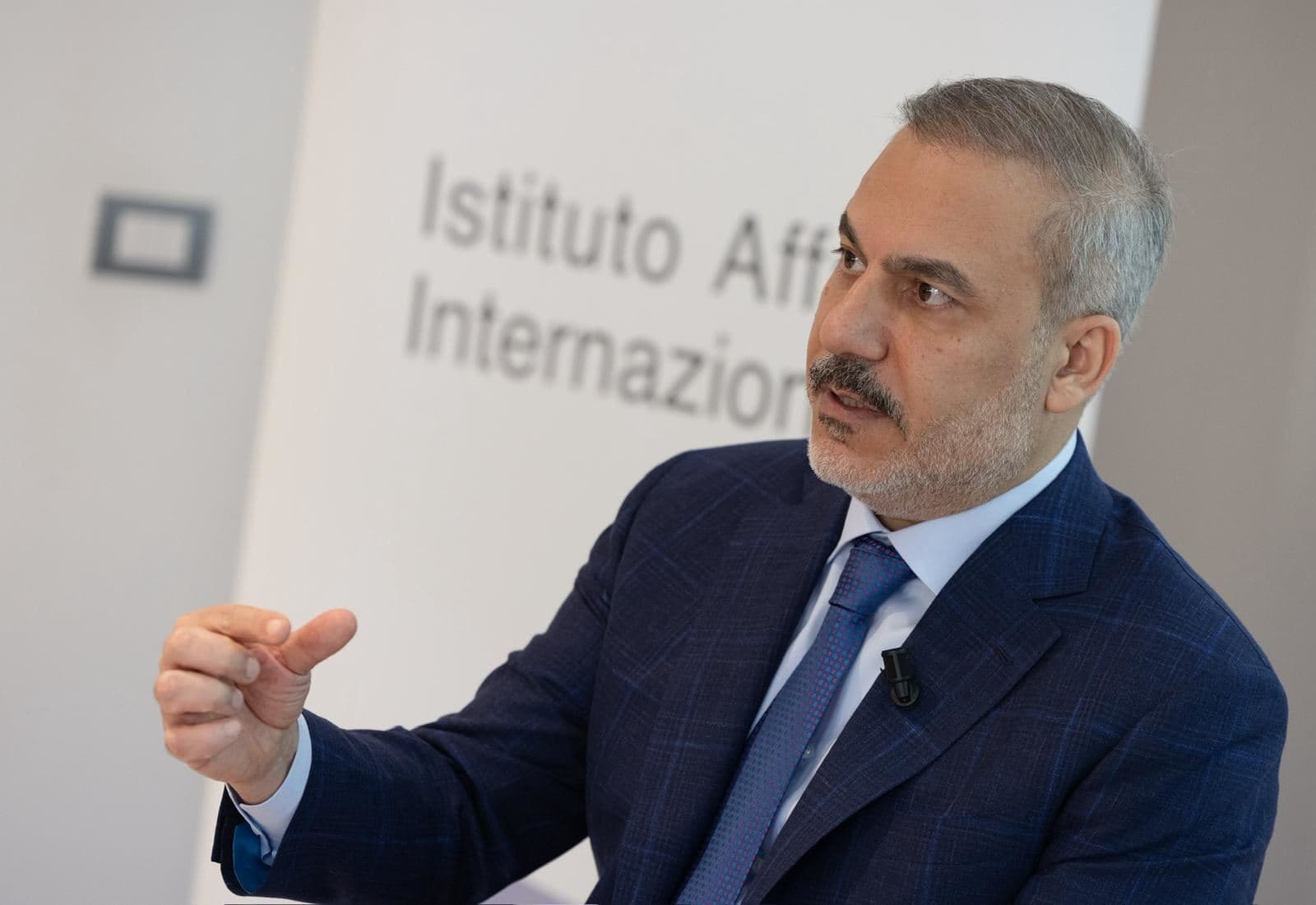

ERBIL, Kurdistan Region - Turkish Foreign Minister Hakan Fidan said on Friday that although Ankara has reservations about the March agreement between the Kurdish-led Syrian Democratic Forces (SDF) and the transitional government in Damascus, it will give them a chance to implement it.
“If they (SDF) can make an agreement with the Damascus government, we think this would be good because they had made an agreement on March 10, even though we weren't 100 percent satisfied with its terms… but in general, if both sides stick to it, we think this would be good,” Fidan said at a conference in Rome, Turkish state-owned Anadolu Agency reported.
He accused the SDF of "dragging their feet” when it came to implementing the agreement that includes integration of the SDF and civilian institutions of northeast Syria (Rojava) into state structures.
The landmark agreement, signed between SDF chief Mazloum Abdi and Syria’s interim President Ahmed al-Sharaa on March 10 with American mediation, has been partially implemented, but the integration aspect has yet to be finalized due to disagreements over how the SDF will join the national army.
Sharaa said on Friday that Turkey is also involved in the implementation of the agreement and acknowledged that the process is moving forward slowly. Turkey is one of the key supporters of Sharaa’s administration.
"The negotiations with the SDF were proceeding well, but it seems there is some kind of disruption or slowdown in implementing the agreement. The agreement was given a deadline until the end of the year, and we were striving for the terms of the agreement to be implemented by the end of next December," Sharaa told state-owned al-Ikhbariya.
He categorically ruled out any form of decentralization as demanded by Kurds and other minority groups.
He warned the SDF that any attempt to separate from Syria will not succeed and used the example of the Kurdistan Region, which held an independence referendum in 2017 but was attacked by Iraqi forces, leading to the loss of control of disputed areas like Kirkuk. The Region was internationally isolated for a while, with Turkey imposing a flight ban and Iran closing its borders. The isolation was broken by France.
There are concerns that tensions between the SDF and Damascus could impact peace talks between the Turkish state and the Kurdistan Workers’ Party (PKK).
Ankara is in talks with the Turkey-based PKK about ending nearly half a century of a deadly war that has claimed the lives of over 40,000 people. Acting on a call from its jailed leader Abdullah Ocalan, the PKK has agreed to dissolve itself and lay down arms. In response, the Turkish parliament has formed a commission to resolve the conflict through the legislature and guarantee its success.
Turkish officials claim that the peace process with the PKK also includes the People’s Protection Units (YPG), the backbone of the SDF, but the YPG and Kurdish mediators have denied this and Ocalan has reportedly stated that he has a different plan for Rojava, describing it as a “red line.”
Fidan claimed on Friday that PKK members are working with the YPG in Syria and said Ankara sees this as a threat.
“Right now we see many PKK members from Turkey, Iraq and Iran working together with the YPG. They are not there for Syria, they are there to fight against us. Therefore, as long as this threat element and certain capabilities exist, we cannot be satisfied with what is happening and we must take necessary measures,” he said.
He noted that they are giving the SDF and Damascus a chance to determine the future of the Kurdish forces there peacefully.
“Right now we are giving both Damascus and the YPG a chance to solve their own problems. While doing this, we expect them both to contribute to Syria's general stability and to address our security concerns. We are using all the tools at our disposal to reach this goal through peaceful means. But I repeat, what we serve here is our nation's security. If things go badly, there may be no other alternative,” he added.
_upscayl_4x_upscayl-lite-4x.png&w=3840&q=75)