


Middle East

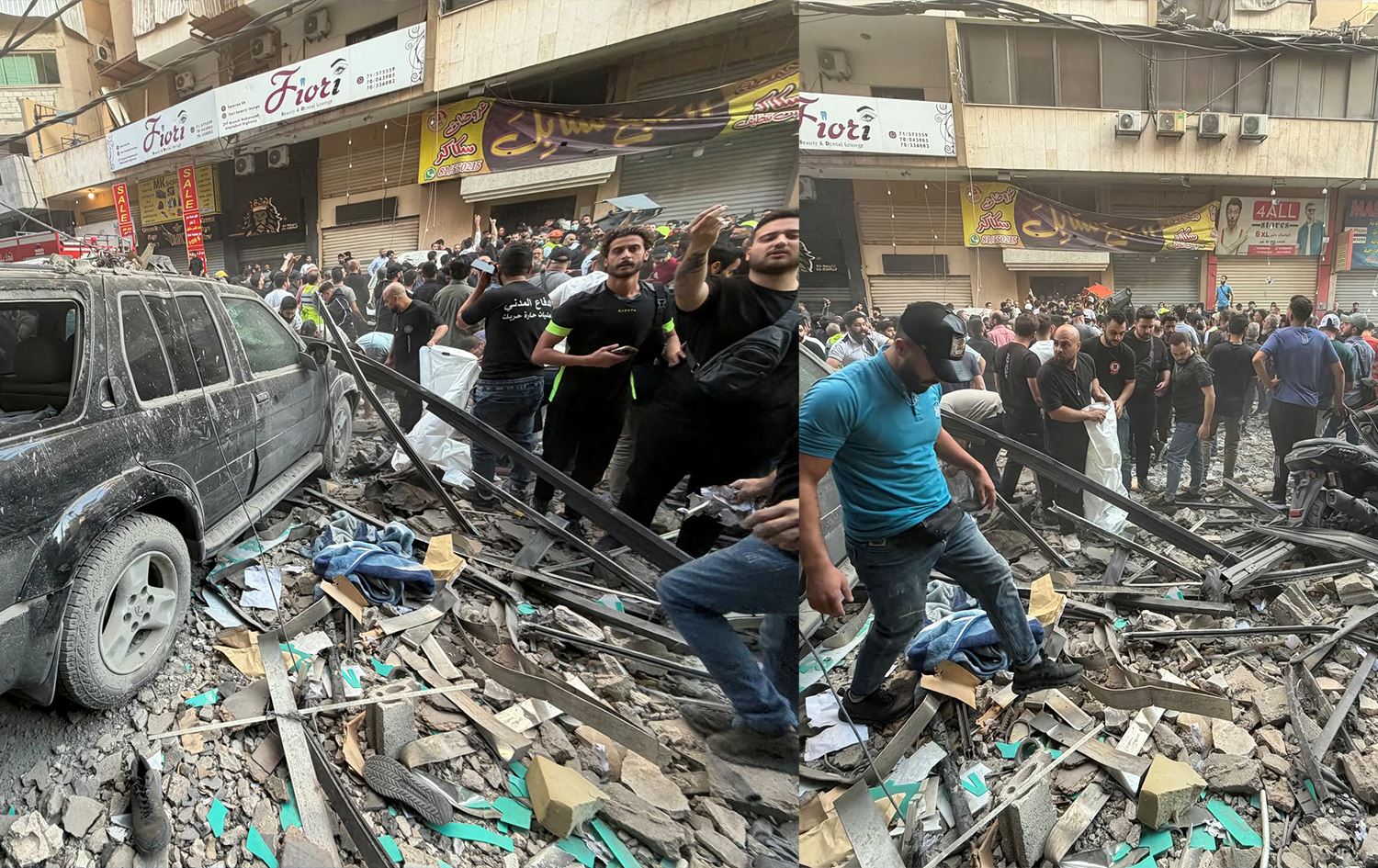
Aftermath of Israeli airstrike on a residential building in Beirut's southern suburb on November 23, 2025. Photo: Screengrab/AFP
ERBIL, Kurdistan Region - Israel on Sunday carried out a surgical airstrike on Beirut’s southern suburb, the Israeli military confirmed, as Lebanon’s state media reported multiple injuries in the attack. While not the first strike in Beirut since the November 2024 ceasefire with Lebanon, the raid marked a major escalation, as it reportedly targeted a high-ranking Hezbollah commander.
In a statement on X, the Israeli Defense Forces (IDF) said it “conducted a precise strike targeting a key Hezbollah terrorist in Beirut.”
The office of Israeli Prime Minister Benjamin Netanyahu said in another statement on X that “the IDF attacked the Hezbollah Chief-of-Staff, who had been leading the terrorist organization’s buildup and rearmament, in the heart of Beirut.”
Netanyahu “ordered the attack upon the recommendation” of Defense Minister Israel Katz and IDF Chief-of-Staff Eyal Zamir, the statement added, stressing that “Israel is determined to act to achieve its objectives everywhere and at all times.”
In a statement on X, the Israeli Defense Forces (IDF) said it “conducted a precise strike targeting a key Hezbollah terrorist in Beirut.”
The office of Israeli Prime Minister Benjamin Netanyahu said in another statement on X that “the IDF attacked the Hezbollah Chief-of-Staff, who had been leading the terrorist organization’s buildup and rearmament, in the heart of Beirut.”
Netanyahu “ordered the attack upon the recommendation” of Defense Minister Israel Katz and IDF Chief-of-Staff Eyal Zamir, the statement added, stressing that “Israel is determined to act to achieve its objectives everywhere and at all times.”
🔴 LIVE: Aftermath of Israeli strike in Beirut’s southern suburb https://t.co/4ZuAUWr2Yj
— Rudaw English (@RudawEnglish) November 23, 2025
For its part, Lebanon’s state-run National News Agency (NNA) reported Sunday that the “hostile airstrike on Beirut’s southern suburb targeted a residential apartment in a building in Haret Hreik,” causing injuries and significant damage to nearby vehicles and surrounding buildings.
The agency added that “two [Israeli] missiles” were fired at the targeted building on al-‘Areed Street in Haret Hreik, as ambulances arrived at the scene to transport the wounded.
The backdrop
The conflict between Lebanon’s Hezbollah movement and Israel began on October 8, a day after the outbreak of the war in Gaza between Israel and Hamas, when Hezbollah opened a “support front” from the Lebanese side with the stated goal of easing pressure on its Palestinian allies in Gaza.
The Hezbollah-Israel war escalated sharply after Tel Aviv, in mid-September 2024, carried out the “Pagers Operation,” remotely detonating communication devices used by members of the Lebanese group, and later killed Hezbollah’s secretary-general Hassan Nasrallah in an airstrike on a residential neighborhood in Beirut.
The fighting continued until November 27, when the two sides reached a ceasefire deal linked to United Nations Security Council Resolution 1701, which calls for the withdrawal of Israeli forces from Lebanon and the disarmament of all Lebanese armed groups - including Hezbollah.
However, Lebanon has repeatedly accused Israel of violating the ceasefire agreement by continuing to launch sporadic strikes on Lebanese territory and keeping its forces stationed in border villages in south Lebanon.
In mid-February, Beirut’s former economy minister Amin Salam told Rudaw that the latest round of violence had caused “somewhere between $25–30 billion worth of destruction and indirect negative effects on the economy.”
According to official figures from Beirut, the war also killed more than 4,000 people and injured nearly 17,000 in Lebanon.
More recently, on Friday, Lebanon’s health ministry reported that 331 people have been killed and 945 injured by Israeli fire since the ceasefire took effect in November 2024. The United Nations Interim Force in Lebanon (UNIFIL) also say they have documented more than 10,000 Israeli air and ground violations.
Updated at 5:10 pm


Comments
Rudaw moderates all comments submitted on our website. We welcome comments which are relevant to the article and encourage further discussion about the issues that matter to you. We also welcome constructive criticism about Rudaw.
To be approved for publication, however, your comments must meet our community guidelines.
We will not tolerate the following: profanity, threats, personal attacks, vulgarity, abuse (such as sexism, racism, homophobia or xenophobia), or commercial or personal promotion.
Comments that do not meet our guidelines will be rejected. Comments are not edited – they are either approved or rejected.
Post a comment