


Middle East

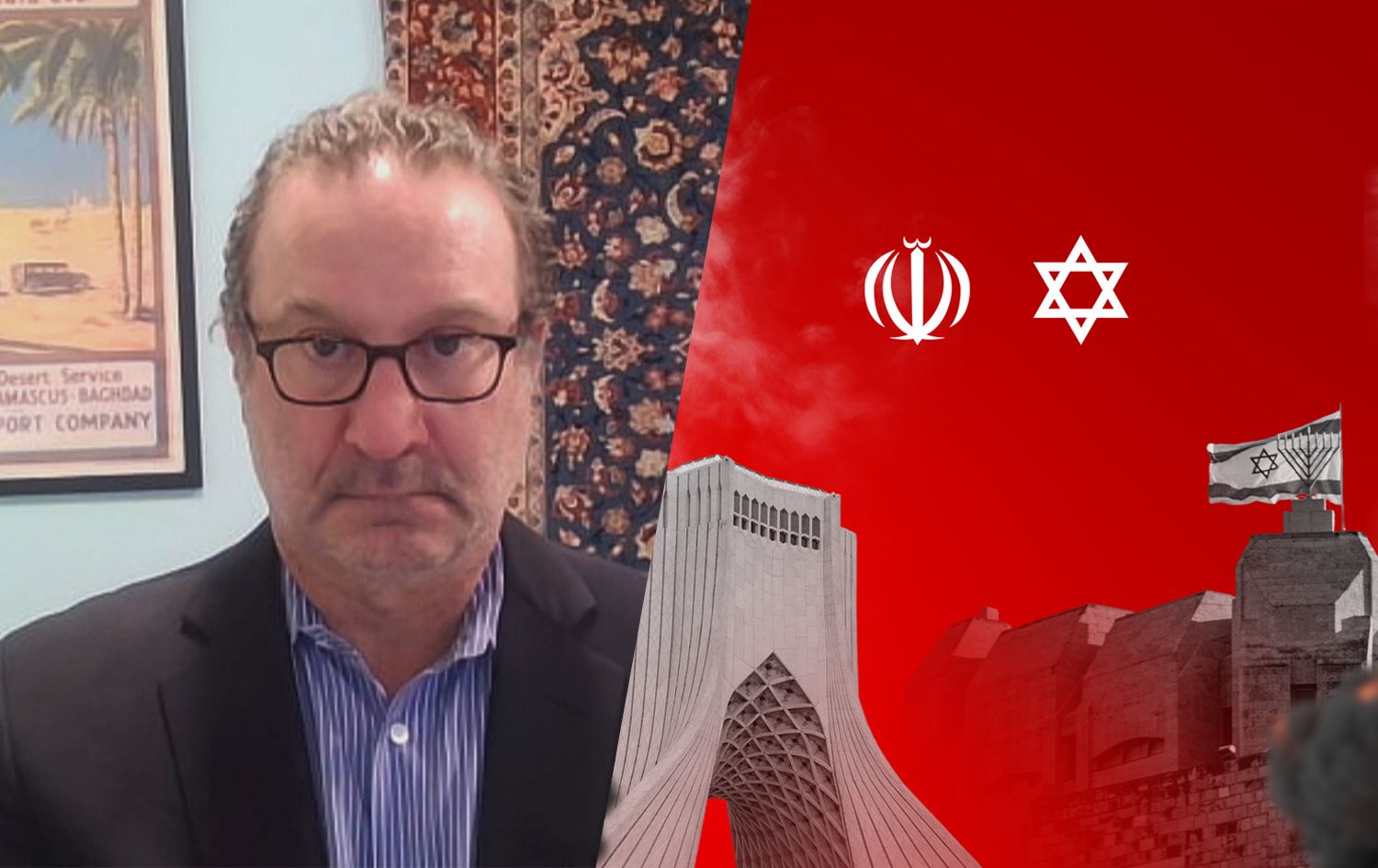
Former US Assistant Secretary of State for Near Eastern Affairs David Schenker in an interview with Rudaw on June 23, 2025. Graphic: Rudaw
ERBIL, Kurdistan Region - Iran’s missile attack on Qatar’s al-Udeid Air Base - the largest US military installation in the Middle East - was “performative” and likely pre-coordinated, a former US diplomat said Monday.
“I think they [Iran] are satisfied with this performative attack,” former US Assistant Secretary of State for Near Eastern Affairs David Schenker told Rudaw. “All airplanes and equipment had been evacuated from al-Udeid base beforehand, so it is pretty clear there was some early warning about Iran’s intentions.”
Qatari officials have confirmed that the air base was evacuated before the attack, and Doha condemned the attack as a “violation” of the country’s sovereignty.
Iran launched the attack on Monday in retaliation for US airstrikes the day before that targeted key nuclear facilities in Iran.
In a statement, Iran’s Supreme National Security Council (SNSC) claimed its “powerful armed forces… destroyed the US airbase.” It said that the number of missiles launched at al-Udeid matched the number of bombs used in the US operation, while stressing that the strike “does not pose any threat to our friendly and brotherly country, Qatar.”
“This is very similar in many ways, actually, to what happened after [the killing of] Qasem Soleimani,” Schenker said. “The Iranians - telegraphed - told the United States this [retaliatory attack] was coming, allowing US equipment to depart the base, and it was largely performative, not intending to injure anybody.”
General Soleimani, head of Iran’s Quds Force, and Abu Mahdi al-Muhandis, deputy leader of Iraq’s Iran-affiliated Popular Mobilization Forces (PMF, or Hashd al-Shaabi), were killed in a US airstrike in January 2020. The strike, ordered by Donald Trump during his first presidential term, was carried out in response to repeated attacks by Iran-backed groups on the US Embassy in Baghdad and military bases hosting American and coalition forces. The killing stunned Iran’s leadership and its regional allies.
Schenker added that he does not expect a US response to the latest attack.
“I think it is pretty clear the United States doesn’t intend to respond. Nobody was injured, and we used several interceptors, or the Qataris used interceptors that shoot down missiles. Yeah, I think Trump is satisfied,” he said.
Trump, early Tuesday, announced a ceasefire between Israel and Iran after 12 days of war. “The ceasefire is now in effect, please do not violate it!” Trump wrote on his Truth Social platform.
“God bless Israel, God bless Iran, God bless the Middle East, God bless the United States of America, and GOD BLESS THE WORLD!” Trump said.
Israel’s defense minister on Tuesday said that Iran violated the ceasefire, threatening to "respond forcefully... with firm strikes against regime targets in the heart of Tehran." Iranian state TV denied the allegation.
The US airstrikes on Sunday reportedly targeted Iran’s three main nuclear sites, including Fordow, which houses some of the country’s most advanced centrifuges. The attack followed Iranian retaliation for Israel’s June 13 killing of several senior Iranian military commanders and nuclear scientists.
“I don’t believe that the United States gave early warning to Iran on Fordow,” Schenker said. “I don't think the United States would be informing Iran - which has very limited air defense anyway - but give them an opportunity to take a shot at a B-2 bomber? No.”
He said the Trump administration is willing to “let this [Iranian attacks on US presence] go.”
Iraq and the Kurdistan Region are concerned that the escalating hostilities could spill over, threatening their sovereignty and fragile post-war recovery. Iraq hosts both US forces and Iran-backed militias, placing it in a vulnerable position if the conflict intensifies.
The Kurdistan Region, particularly Erbil, has frequently been targeted during periods of US-Iran tension. The PMF has fired rockets and drones at US military and diplomatic facilities near Erbil International Airport and the US consulate. Critical infrastructure, such as the Khor Mor gas field in Sulaimani province, operated by UAE-based Dana Gas, has also come under attack.
In January 2024, Iran launched ballistic missiles at the home of Kurdish businessman Peshraw Dizayee in Erbil, killing him, his family, and guests. Tehran claimed the site was “a concrete fortress used for espionage,” a charge rejected by Iraqi and Kurdish officials and widely condemned.
US-linked businesses and diplomatic missions in Iraq have faced threats during such flare-ups, prompting evacuations and suspensions of operations.
Schenker said that it is unclear if Iran-aligned groups in the region will target Erbil or US interests in Iraq.
Ain al-Assad Airbase is a major Iraqi airbase in the western Anbar province that hosts US and coalition forces and has frequently been targeted by Iran-aligned militias amid regional tensions. Meanwhile, Erbil hosts a US consulate. Some drones have been downed in the area surrounding the consulate since the start of the recent war. The source of the drones has not yet been officially recognized. The US has evacuated most non-essential personnel from its embassy in Baghdad and its Erbil consulate.
On a different note, Schenker said, “I think… a weakened Iran is helpful for the KRG [Kurdistan Regional Government], but I don’t think there is a real impact of this war [on the Kurdistan Region],” he added. “I’m glad to see that the Iranians didn’t target Erbil or Ain al-Asad. But there is no telling whether they will do so in the future.”
Schenker also added that Iran remains “committed” to developing a nuclear weapon, saying, “because why else would anybody enrich [uranium] to 60 percent?”
The International Atomic Energy Agency (IAEA) previously reported Iran holds hundreds of kilograms of uranium enriched up to 60 percent, which could be brought up to weapons-grade quality. Iranian officials now claim much of their stock was secretly moved to an undisclosed site days before the US strikes, raising further concerns.
Global and regional powers have repeatedly called for a continuation of stalled negotiations between Tehran and Washington. Iranian Foreign Minister Abbas Araghchi said Sunday that the United States and Israel “decided to blow up” diplomacy when they struck Iran’s nuclear sites. On Friday, he had said that Tehran is ready to resume nuclear negotiations once the fighting with Israel ends.
“Trump has made clear that he would be open to return to the negotiating table, but if this is just another stall tactic, I think Trump would walk away rather quickly and let the Israelis continue on,” he said. “I don’t think Trump is gonna engage in a negotiation that is meant to stall and buy time for Iran to find new anti-aircraft systems or improve air defenses.”
Shahyan Tahseen contributed to this report.


Comments
Rudaw moderates all comments submitted on our website. We welcome comments which are relevant to the article and encourage further discussion about the issues that matter to you. We also welcome constructive criticism about Rudaw.
To be approved for publication, however, your comments must meet our community guidelines.
We will not tolerate the following: profanity, threats, personal attacks, vulgarity, abuse (such as sexism, racism, homophobia or xenophobia), or commercial or personal promotion.
Comments that do not meet our guidelines will be rejected. Comments are not edited – they are either approved or rejected.
Post a comment