
ERBIL, Kurdistan Region – Beirut announced on Tuesday the capture of the Islamic State’s (ISIS) most senior commander in Lebanon.
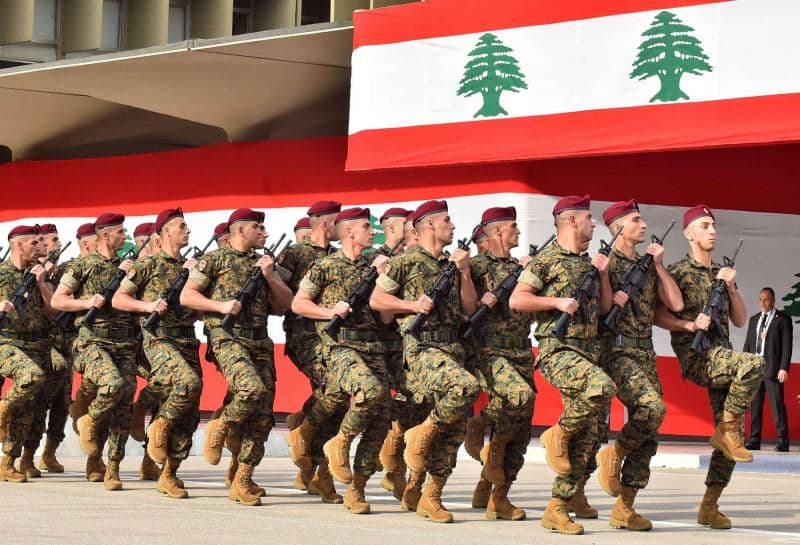
In a statement, the Lebanese Army Command confirmed the arrest of a Lebanese national identified by the initials “R.F.” and known by his nom de guerre “Qaswara.” He was described as ISIS’s top leader in Lebanon and “one of the most prominent leaders of the terrorist organization ISIS.”
Qaswara is accused of “participating in the planning of various destabilizing security operations,” the statement noted, adding that the arrest followed “extensive surveillance and intelligence efforts” by the Lebanese Army’s Intelligence Directorate.
According to the army, Qaswara assumed leadership of ISIS operations in Lebanon following the arrest of his predecessor - another Lebanese citizen identified by the initials “M.K.” and known as “Abu Said al-Shami” - who, along with several other ISIS commanders, was detained in December.
During Qaswara’s apprehension, authorities “seized a significant cache of weapons, ammunition, electronic devices, and equipment used for manufacturing drones.”
ISIS’s presence in Lebanon stems largely from the spillover of the Syrian Civil War, which began in 2011. The group exploited the porous 375-kilometer border between the two countries. While ISIS never controlled substantial territory inside Lebanon, it sought to destabilize the country through attacks and recruitment.
Its early operations in 2013–2014 included targeting Hezbollah and predominantly Shiite areas with bombings. ISIS also collaborated with the al-Nusra Front in clashes against the Lebanese Army and Hezbollah near the Syrian border, particularly in the Sunni-majority town of Arsal in August 2014 and July 2017.
The group was also responsible for a number of high-profile attacks, including the November 2015 twin suicide bombings in Beirut’s southern suburb, a Hezbollah powerbase.
Although ISIS was territorially defeated in Syria in 2019, concerns remain in Lebanon about the resurgence of sleeper cells, returning foreign fighters, and lone actors. These fears have been exacerbated by the fragile security that has been prevalent in Syria since the early December fall of Syrian dictator Bashar al-Assad.