


Middle East

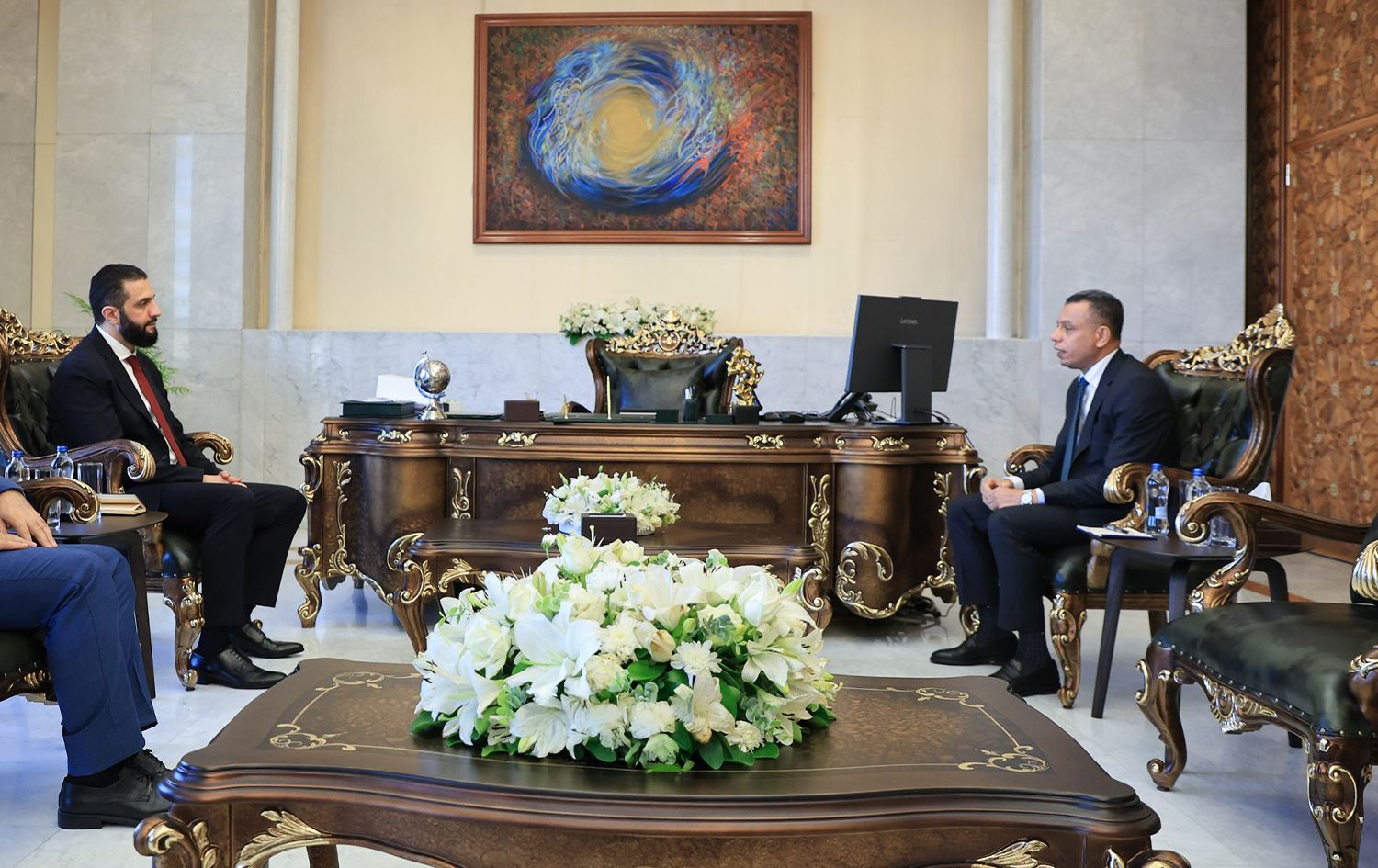
Syrian interim President Ahmed al-Sharaa (left) meeting with Hamid al-Shatri, head of the Iraqi National Intelligence Service (INIS), in Damascus on August 28, 2025. Photo: Syrian presidency
ERBIL, Kurdistan Region - Hamid al-Shatri, head of the Iraqi National Intelligence Service (INIS), on Thursday met with Syria’s interim President Ahmed al-Sharaa in Damascus to discuss border security and the status of the Iraqi nationals in Syria, according to Iraqi state media.
"The meeting focused on the issues of border security and counter-terrorism, in addition to the situation of the Iraqi community in Syria, and it was agreed to increase security co-operation to enhance security and stability in the region,” Iraqi News Agency (INA) cited an unnamed senior security source as saying.
INA added that Shatri also visited the Iraqi embassy building in the Syrian capital and met with Iraqi diplomats, discussing ways to resolve issues facing Iraqis living in Syria.
The Syrian presidency said both sides discussed latest developments in the Middle East, “foremost among them the security situation, with emphasis on the unity and sovereignty of Syrian territory, and that Syria's stability constitutes a fundamental factor in the region's security.”
Sharaa’s office added that the two also touched on reactivating trade exchange and opening of border crossings between both countries.
In June, Iraq reopened its al-Qaim border crossing with Syria, more than half a year after it was closed during a rebel offensive that toppled the Syrian regime. The crossing lies between Syria’s al-Bukamal city in southeastern Deir ez-Zor province and Iraq’s al-Qaim town in northwestern Anbar.
Iraq closed its western border and tightened security in late November when the now-dissolved Islamist group Hay’at Tahrir al-Sham (HTS) made a dramatic grab for territory in northern Syria before toppling dictator Bashar al-Assad’s regime in December.
Sharaa told reporters on Thursday that there is "convergence and a shared state between the Syrian and Iraqi peoples," adding that "political relations between the two countries must be a reflection of this convergence."


Comments
Rudaw moderates all comments submitted on our website. We welcome comments which are relevant to the article and encourage further discussion about the issues that matter to you. We also welcome constructive criticism about Rudaw.
To be approved for publication, however, your comments must meet our community guidelines.
We will not tolerate the following: profanity, threats, personal attacks, vulgarity, abuse (such as sexism, racism, homophobia or xenophobia), or commercial or personal promotion.
Comments that do not meet our guidelines will be rejected. Comments are not edited – they are either approved or rejected.
Post a comment