


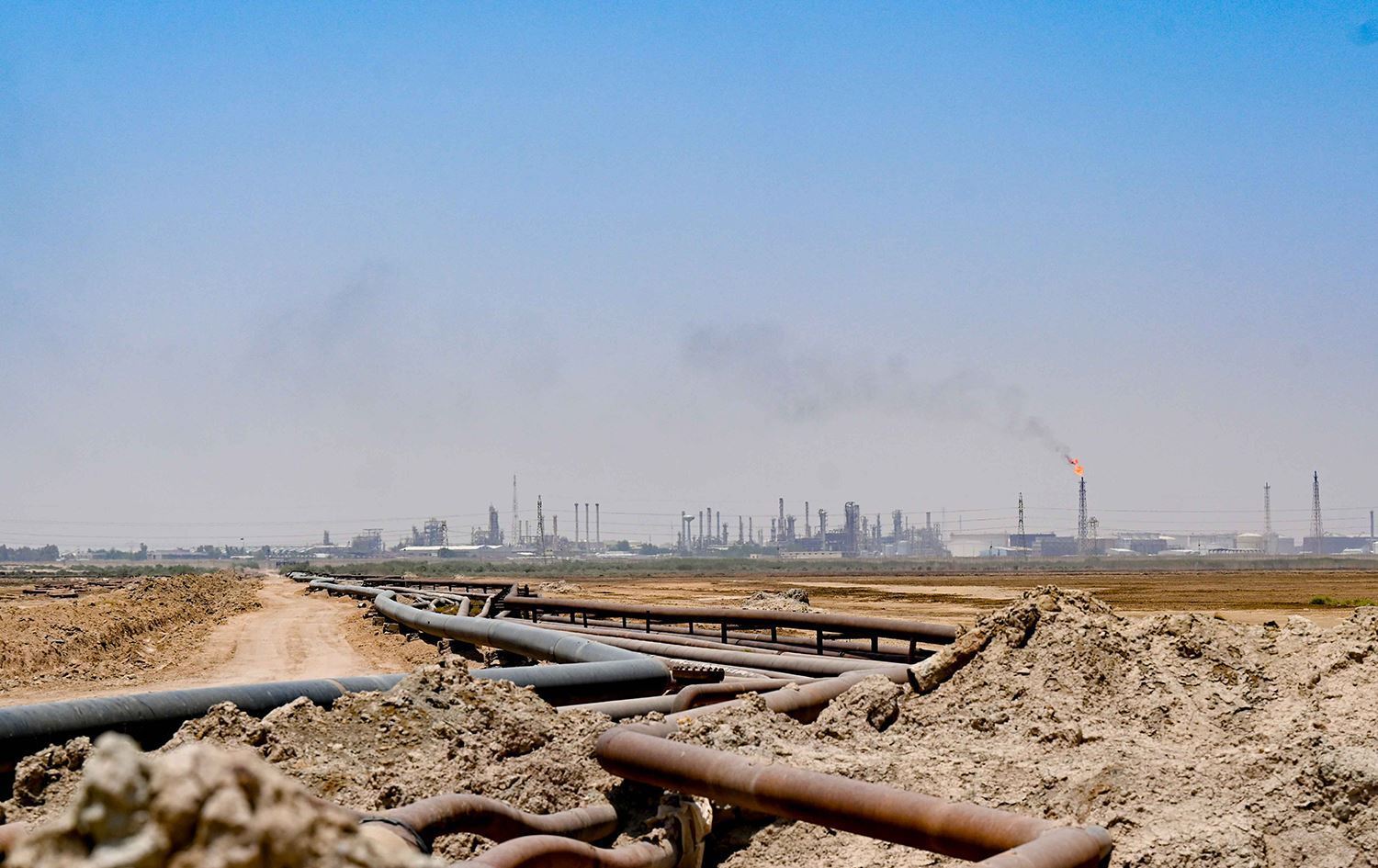
ERBIL, Kurdistan Region - Turkey’s energy minister said on Wednesday that his country has notified Iraq that it is willing to extend the decades-long oil agreement with Iraq but with modifications that ensure the full use of the Iraq-Turkey pipeline.
Last week, the Iraqi oil ministry said Ankara had officially expressed its willingness to renew and expand the 1973 oil export agreement with Baghdad. Turkey has confirmed sending a letter to Baghdad that included a draft of a broader energy cooperation deal covering oil, gas, petrochemicals, and electricity.
Turkish Energy Minister Alparslan Bayraktar said on Tuesday that his country expects neighboring Iraq to use the full capacity of the Iraq-Turkey pipeline, telling the state-run Anadolu Agency on Wednesday that they are also seeking the export of oil from southern Iraq, in addition to Kurdish oil.
"We are telling Iraq, 'Iraq has a daily oil export of 4 million barrels. All of it goes through Basra. Here, however, there is a different route with 1.5 million barrels. You can easily present almost 40 percent of your oil to the world through a different route. Moreover, you can reach different geographies and markets such as Europe and the Mediterranean,'" he said.
He reiterated Ankara’s willingness to extend the 1973 deal with Iraq but with modifications, blaming the deal for “legal impasse” since 2014, referring to Kurdistan Region’s independent oil exports through Turkey since 2014.
A Paris-based arbitration court in 2023 ruled in favor of Baghdad against Ankara, saying the latter had violated the 1973 agreement. This immediately halted the Kurdish oil exports, which have yet to resume due to unresolved tensions between Erbil and Baghdad.
“Therefore, we said this agreement is not commercially or legally beneficial. Let's not extend this,” the Turkish minister said.
He noted that the proposed agreement asks Iraq to export more oil through the pipeline.
“At the core of that agreement is this: let's use the full capacity of this pipeline in a way that there won't be any legal disputes between us. Let 1.5 million barrels of oil flow from here. This is our goal,” Bayraktar stated. "To reach 1.5 million barrels, this pipeline needs to go south. Because in the north [Kurdistan Region], with production including Kirkuk, you can perhaps fill it up to half capacity."
An energy advisor to the Kurdistan Region’s prime minister said on Tuesday that the Iraq-Turkey pipeline has surpassed its lifespan and will require “costly” renovation if the Kurdistan Region’s long-stalled oil exports are to resume.
“Normally and under international standards, the lifespan of oil pipelines is between 40 to 50 years. After that period, it becomes very old and needs special maintenance, which entails very high costs. Basically, the contract was for 50 years and has expired for that pipeline,” Kamal Atroshi explained.
Noting that the line is not beyond use, Atroshi said that any future operation would require extensive repair and favorable terms for both Iraq and Turkey.
“If an agreement is made to renovate that pipeline again, it has the capacity to work and its maintenance and repair costs and transit fees… are economically suitable for both sides, then it's possible. It's a very strong possibility,” he said. “Certainly, this also has great benefits for Turkey.”
Last week, the Iraqi oil ministry said Ankara had officially expressed its willingness to renew and expand the 1973 oil export agreement with Baghdad. Turkey has confirmed sending a letter to Baghdad that included a draft of a broader energy cooperation deal covering oil, gas, petrochemicals, and electricity.
Turkish Energy Minister Alparslan Bayraktar said on Tuesday that his country expects neighboring Iraq to use the full capacity of the Iraq-Turkey pipeline, telling the state-run Anadolu Agency on Wednesday that they are also seeking the export of oil from southern Iraq, in addition to Kurdish oil.
"We are telling Iraq, 'Iraq has a daily oil export of 4 million barrels. All of it goes through Basra. Here, however, there is a different route with 1.5 million barrels. You can easily present almost 40 percent of your oil to the world through a different route. Moreover, you can reach different geographies and markets such as Europe and the Mediterranean,'" he said.
He reiterated Ankara’s willingness to extend the 1973 deal with Iraq but with modifications, blaming the deal for “legal impasse” since 2014, referring to Kurdistan Region’s independent oil exports through Turkey since 2014.
A Paris-based arbitration court in 2023 ruled in favor of Baghdad against Ankara, saying the latter had violated the 1973 agreement. This immediately halted the Kurdish oil exports, which have yet to resume due to unresolved tensions between Erbil and Baghdad.
“Therefore, we said this agreement is not commercially or legally beneficial. Let's not extend this,” the Turkish minister said.
He noted that the proposed agreement asks Iraq to export more oil through the pipeline.
“At the core of that agreement is this: let's use the full capacity of this pipeline in a way that there won't be any legal disputes between us. Let 1.5 million barrels of oil flow from here. This is our goal,” Bayraktar stated. "To reach 1.5 million barrels, this pipeline needs to go south. Because in the north [Kurdistan Region], with production including Kirkuk, you can perhaps fill it up to half capacity."
An energy advisor to the Kurdistan Region’s prime minister said on Tuesday that the Iraq-Turkey pipeline has surpassed its lifespan and will require “costly” renovation if the Kurdistan Region’s long-stalled oil exports are to resume.
“Normally and under international standards, the lifespan of oil pipelines is between 40 to 50 years. After that period, it becomes very old and needs special maintenance, which entails very high costs. Basically, the contract was for 50 years and has expired for that pipeline,” Kamal Atroshi explained.
Noting that the line is not beyond use, Atroshi said that any future operation would require extensive repair and favorable terms for both Iraq and Turkey.
“If an agreement is made to renovate that pipeline again, it has the capacity to work and its maintenance and repair costs and transit fees… are economically suitable for both sides, then it's possible. It's a very strong possibility,” he said. “Certainly, this also has great benefits for Turkey.”


Comments
Rudaw moderates all comments submitted on our website. We welcome comments which are relevant to the article and encourage further discussion about the issues that matter to you. We also welcome constructive criticism about Rudaw.
To be approved for publication, however, your comments must meet our community guidelines.
We will not tolerate the following: profanity, threats, personal attacks, vulgarity, abuse (such as sexism, racism, homophobia or xenophobia), or commercial or personal promotion.
Comments that do not meet our guidelines will be rejected. Comments are not edited – they are either approved or rejected.
Post a comment