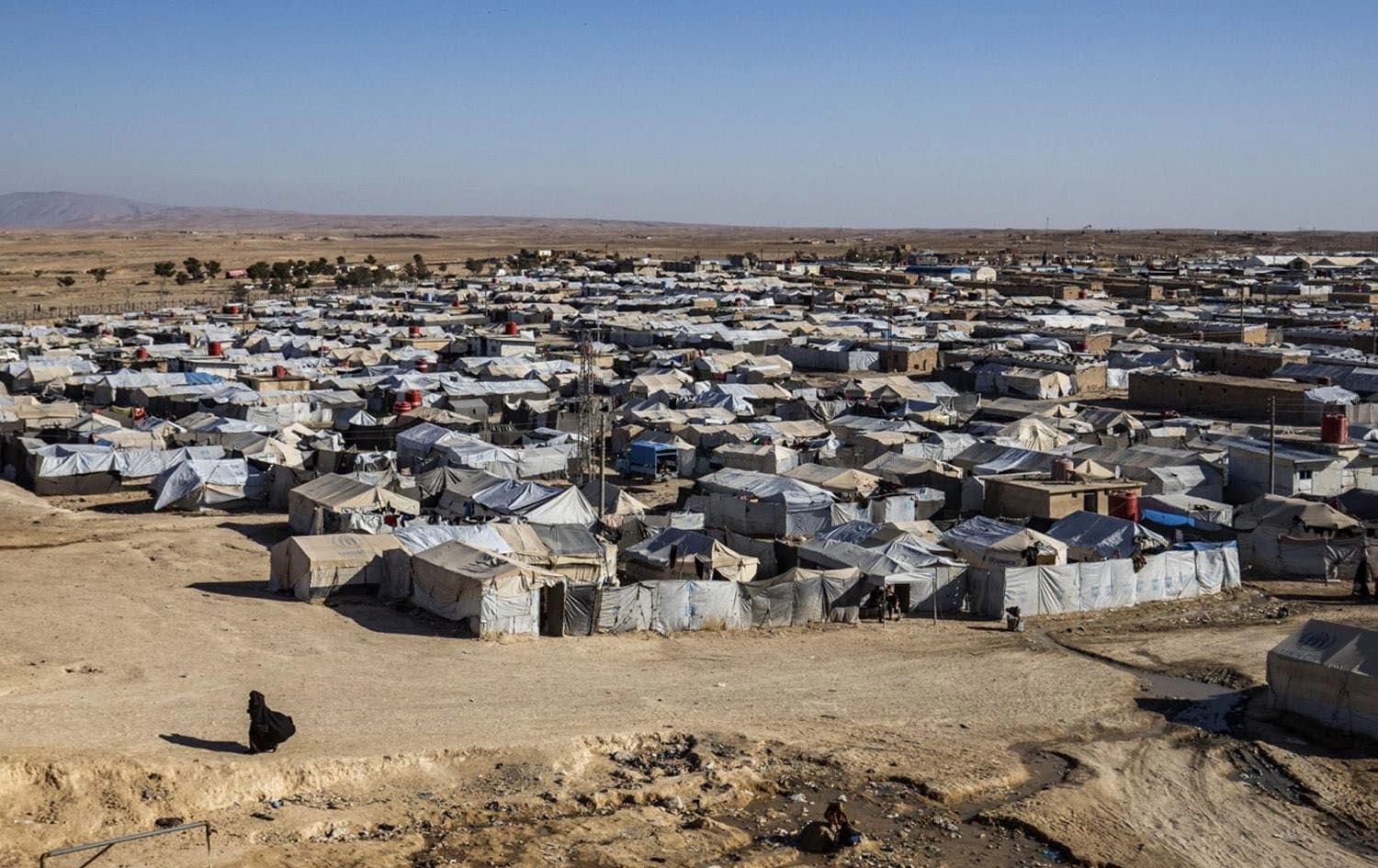

ERBIL, Kurdistan Region - More than 800 Iraqis left al-Hol in northeast Syria (Rojava) on Saturday as Baghdad continues to repatriate its nationals from the camp for suspected Islamic State (ISIS) family members and supporters, according to a Kurdish official.
About 10,000 Iraqis remain in the camp after the group of 832 people left on Saturday, Sheikhmous Ahmed, who oversees all internally displaced persons (IDP) and refugee camps in Rojava, told Rudaw.
Thousands of individuals with suspected ISIS ties are being held in al-Hol and Roj camps, which are controlled by the Syrian Democratic Forces (SDF), in Rojava’s Hasaka province. Al-Hol is the larger of the two camps. As of April, it housed 34,927 people. Of these, 15,681 were Iraqis, 15,861 were Syrians, and 6,385 were foreigners, according to data obtained by Rudaw English from Ahmed.
Iraq has repatriated its nationals in groups, bringing them to al-Jada camp south of Mosul where they go through a rehabilitation program before reintegrating into the community.
The repatriation of people affiliated with ISIS is a contentious issue in Iraq, given the heinous human rights violations and war crimes the group committed when it controlled territory in the north and west from 2014 through 2017. While some tribes and communities have expressed willingness to integrate individuals linked to the group, others argue that reintegration should be limited to family members, particularly those who were not directly involved in severe crimes.
Baghdad has set a goal of repatriating all Iraqi citizens from camps in Rojava by 2027.
The SDF has agreed to hand control of the camp over to the interim Syrian government, which plans to focus on rehabilitation of camp residents.