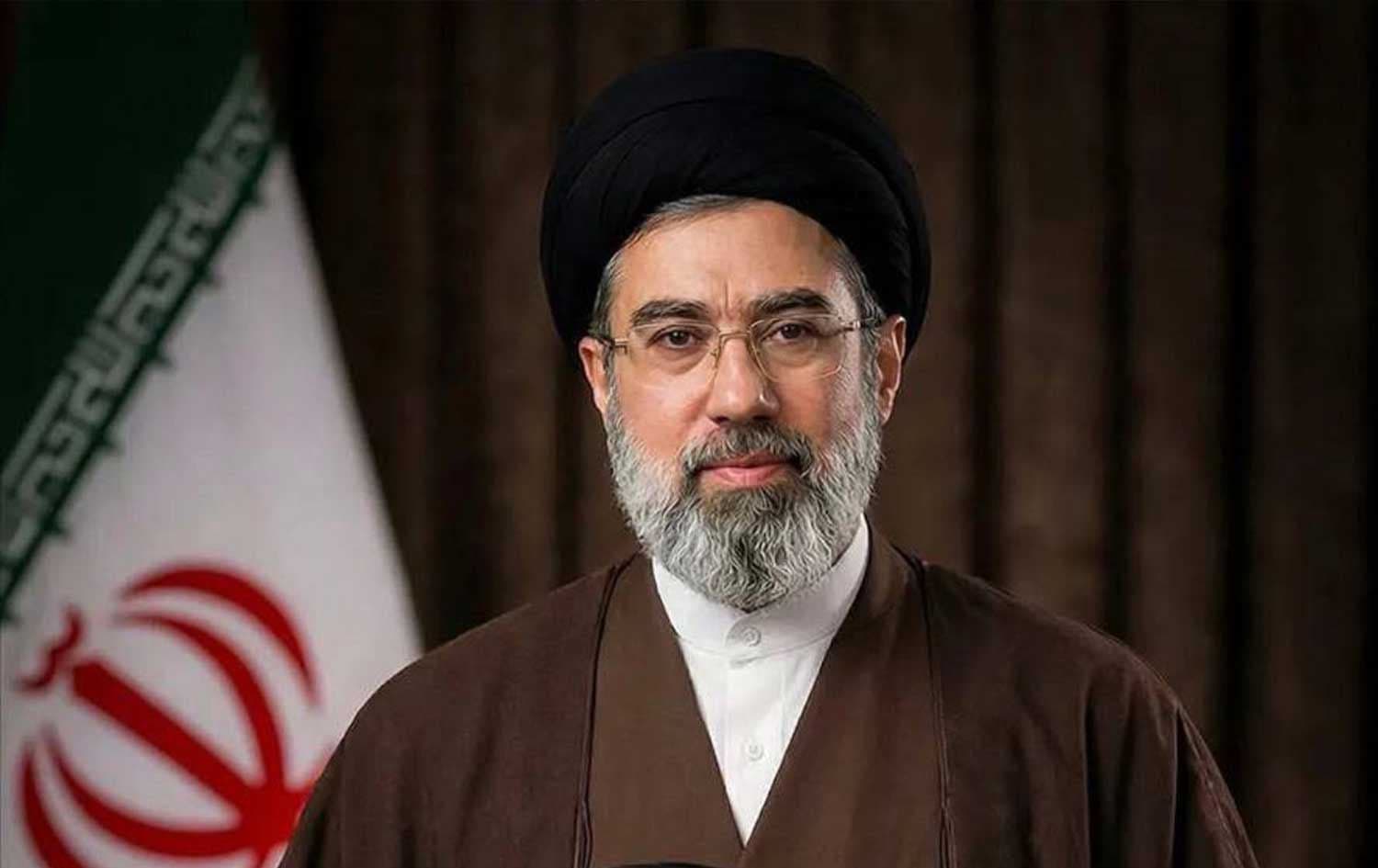

ERBIL, Kurdistan Region - Mojtaba Khamenei, the 56-year-old son of slain Iranian supreme leader Ali Khamenei (1939 - 2026), was on Sunday named Iran’s new supreme leader, according to media affiliated with the Islamic Revolutionary Guard Corps (IRGC).
“Ayatollah Sayed Mojtaba [Ali] Khamenei has been introduced as the third Supreme Leader of the Islamic Revolution following a decisive vote by the Assembly of Experts,” Tasnim News Agency reported.
In a statement issued on Sunday, Iran’s Assembly of Experts - the clerical body responsible for selecting the ultimate arbiter of the country’s political and religious structure - said that “by the decisive vote of its honorable representatives,” it had “appointed Ayatollah Sayed Mojtaba Hosseini Khamenei (may God protect him) as the third leader of the sacred system of the Islamic Republic of Iran.”
The Assembly said the move came “after thorough and extensive deliberations, and by utilizing the capacity of Article 108 of the [Iranian] Constitution, and in fulfillment of its religious duty.” It further urged “the noble people of Iran” to “pledge allegiance to the new leadership and to preserve unity around the axis of Wilayat [guardianship].”
The naming of Mojtaba Khamenei comes a little over a week after the US and Israel on February 28 launched a joint aerial campaign against Iran, killing several of the country’s top leaders and commanders, including long-time supreme leader Ayatollah Ali Khamenei (1939 - 2026).
In its statement, the Assembly of Experts said that immediately after Ali Khamenei’s killing, it “did not hesitate for a single moment in the process of selecting and introducing the leader of the Islamic establishment.” The statement added that this was “despite the severe wartime conditions, direct threats from enemies against this public institution, and the bombing of the offices of the Secretariat of the Assembly” which led to the killing of several of its staff.
The appointment of Mojtaba Khamenei as Iran’s third supreme leader comes in direct defiance of US President Donald Trump, who said Friday that the selection of the 56-year-old would be “unacceptable,” warning that he “is not going to last long” without Washington’s approval.
“He’s going to have to get approval from us,” Trump told ABC News, adding, “If he doesn’t get approval from us, he’s not going to last long. We want to make sure we don’t have to go back every 10 years, when you don’t have a president like me who’s willing to do it.”
The incoming ‘Rahbar’
Mojtaba Khamenei, born on September 8, 1969, in the northeastern Iranian city of Mashhad, is the second child of his family. At the age of 17, during the Iran-Iraq War (1980 - 1988), while his father held the presidency, Mojtaba took an active role in fighting against the forces of the Baathist regime under Iraqi dictator Saddam Hussein.
He studied for 18 years at the Shiite religious seminary (Hawza), and later served as an instructor there from 2004 to 2024. In addition to his religious education, Mojtaba is fluent in Arabic and English and has pursued studies in psychology.
Since the assassination of Ali Khamenei in a US-Israeli airstrike that targeted his office in Tehran late last week, the name of Mojtaba has been widely circulated as a frontrunner to become Iran’s next supreme leader - Rahbar in Farsi - despite some observers noting his relatively modest clerical rank.
The 56-year-old holds the rank of Hujjat al-Islam - ‘Proof of Islam’ in Arabic - a mid-level title in Twelver Shiite clerical hierarchy that reflects the level of education completed at a religious seminary, or Hawza.
The Iranian constitution was in 1989 amended, following the death of Islamic Republic's founder and first supreme leader, Ayatollah Ruhollah Khomeini (1900-1989), to allow Ali Khamenei to take on the role despite not having been an Ayatollah - a post reserved for those who are qualified to interpret Islamic law independently.
Nonetheless, the Assembly of Experts statement on Sunday clearly referred to Mojtaba Khamenei as “Ayatollah.”
Another power paradox concerns the issue of hereditary political succession. Some argue that the naming of Mojtaba Khamenei as Iran’s third supreme leader effectively transforms the Guardianship of the Jurist - Velayat-e-Faqih in Farsi - into a hereditary rule.
The latter doctrine, the foundational political-religious principle of the Islamic Republic of Iran, asserts that in the absence of Imam Mahdi - the twelfth Shiite Imam and final successor to the Prophet Muhammad - the most qualified Islamic jurist should hold supreme authority over the state.
Critics contend that this move toward hereditary succession contradicts the goals of the 1979 Islamic Revolution, which sought to dismantle the Pahlavi monarchy.
Despite the criticism, Mojtaba Khamenei has for over two decades served as the de facto gatekeeper of his late father’s office, the Beit-e Rahbari or the Office of the Supreme Leader, despite holding no official cabinet position or elected office. He further controlled the flow of information to his father and coordinated between various branches of the Iranian establishment.
Another key source of his influence is his close alignment with the IRGC where his supporters view him as a symbol of continuity for Iran’s regional ‘Axis of Resistance’ policy and its uncompromising stance against American and Western influence.
Accordingly, many analysts suggest that obstacles previously hindering Mojtaba’s selection may have been effectively set aside because of the ongoing US-Israel campaign against Iran.
Last updated at 3:02 am.
.webp&w=3840&q=75)