

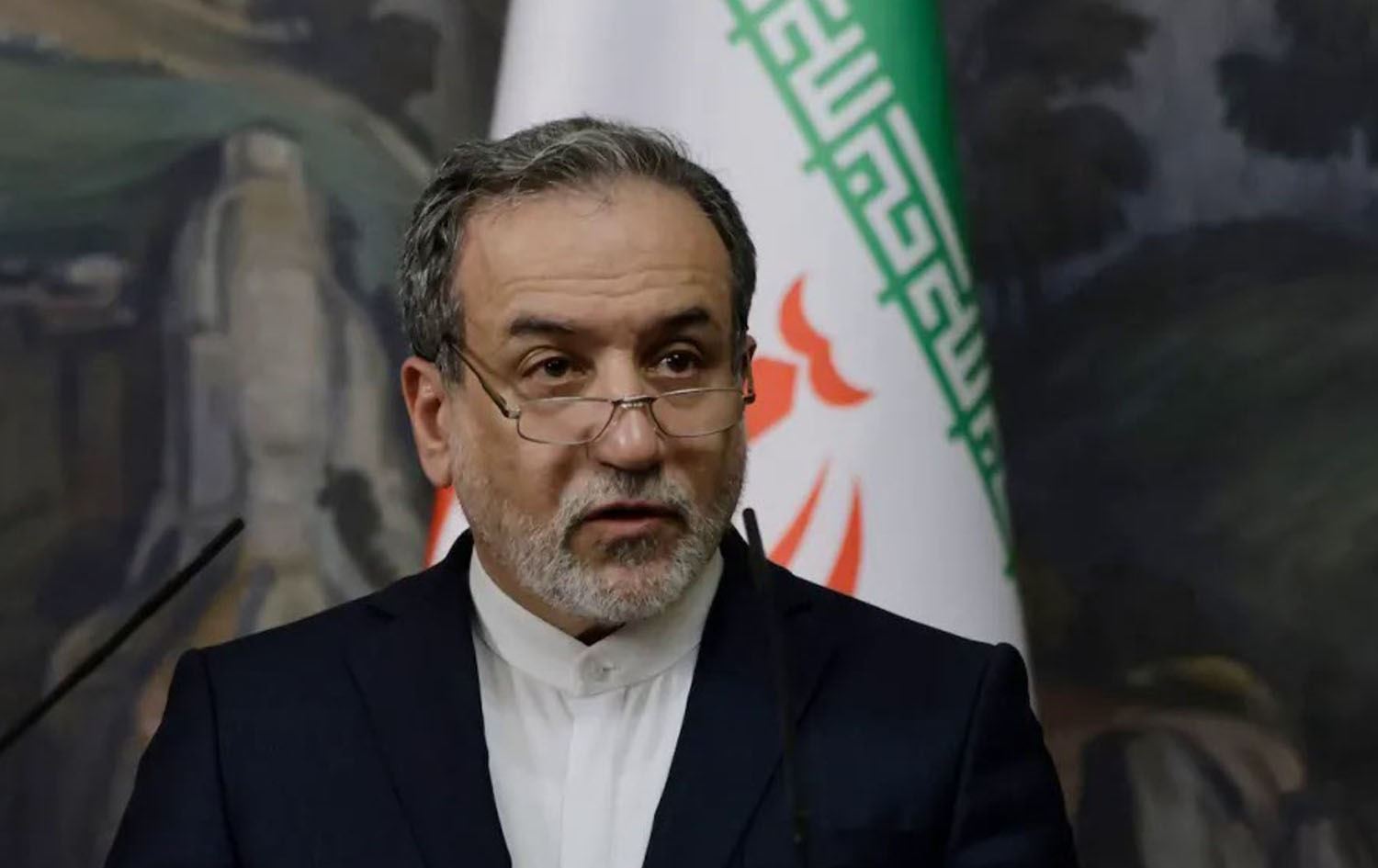
ERBIL, Kurdistan Region - Iran’s foreign minister on Sunday criticized European powers on their approach to the “snapback” mechanism, warning that their “confrontational strategy” risks a nuclear proliferation crisis.
“This confrontational strategy risks triggering a global nuclear proliferation crisis that would primarily affect Europeans themselves,” Abbas Araghchi said, as cited by the French weekly Le Point.
He further condemned the E3 - referring to France, Germany, and Britain - for using the “snapback” mechanism, “initially intended as a last resort,” as “diplomatic leverage.”
“Iran has made its position clear. We have officially warned all JCPOA signatories that abuse of the snapback mechanism will lead to consequences—not only the end of Europe's role in the agreement, but also an escalation of tensions that could become irreversible,” Araghchi stressed.
French Foreign Minister Jean-Noel Barrot said in late April that the E3 "will not hesitate for a single second to reapply all the sanctions" scrapped a decade ago if European security is threatened by Iran's nuclear activities.
In December, Iran warned European signatories of the 2015 nuclear deal that the possible activation of the agreement's “snapback” provisions - triggering the reinstatement of UN Security Council sanctions - would compel Tehran to exit the Non-Proliferation Treaty (NPT). The “snapback” mechanism is set to expire in October.
Araghchi also expressed his willingness to travel to Paris, Berlin, and London “to begin a new chapter” on nuclear negotiations.
“How we respond at this crucial moment will determine the future of Iran-Europe relations far more profoundly than many realize. Iran is ready to turn the page. We hope our European partners are too,” he stressed.
Indirect talks between Araghchi and US special envoy Steve Witkoff about Iran’s nuclear program and sanctions relief began on April 12 in Oman, meanwhile, the fourth round of talks was completed on Sunday.
Araghchi described the recent indirect talks as “significantly more serious.”
The ongoing talks follow the collapse of the 2015 nuclear deal, formally known as the Joint Comprehensive Plan of Action (JCPOA), under which Iran agreed to scale back its nuclear program in exchange for sanctions relief.
The accord unraveled in 2018, when US President Donald Trump, during his first term in office, unilaterally withdrew the US and reimposed biting sanctions on Iran, which in turn began rolling back on its nuclear commitments.
Tehran, however, has repeatedly asserted that atomic weapons go against the Islamic republic’s doctrine and has maintained that its nuclear program is for peaceful purposes.


Comments
Rudaw moderates all comments submitted on our website. We welcome comments which are relevant to the article and encourage further discussion about the issues that matter to you. We also welcome constructive criticism about Rudaw.
To be approved for publication, however, your comments must meet our community guidelines.
We will not tolerate the following: profanity, threats, personal attacks, vulgarity, abuse (such as sexism, racism, homophobia or xenophobia), or commercial or personal promotion.
Comments that do not meet our guidelines will be rejected. Comments are not edited – they are either approved or rejected.
Post a comment