


Iran

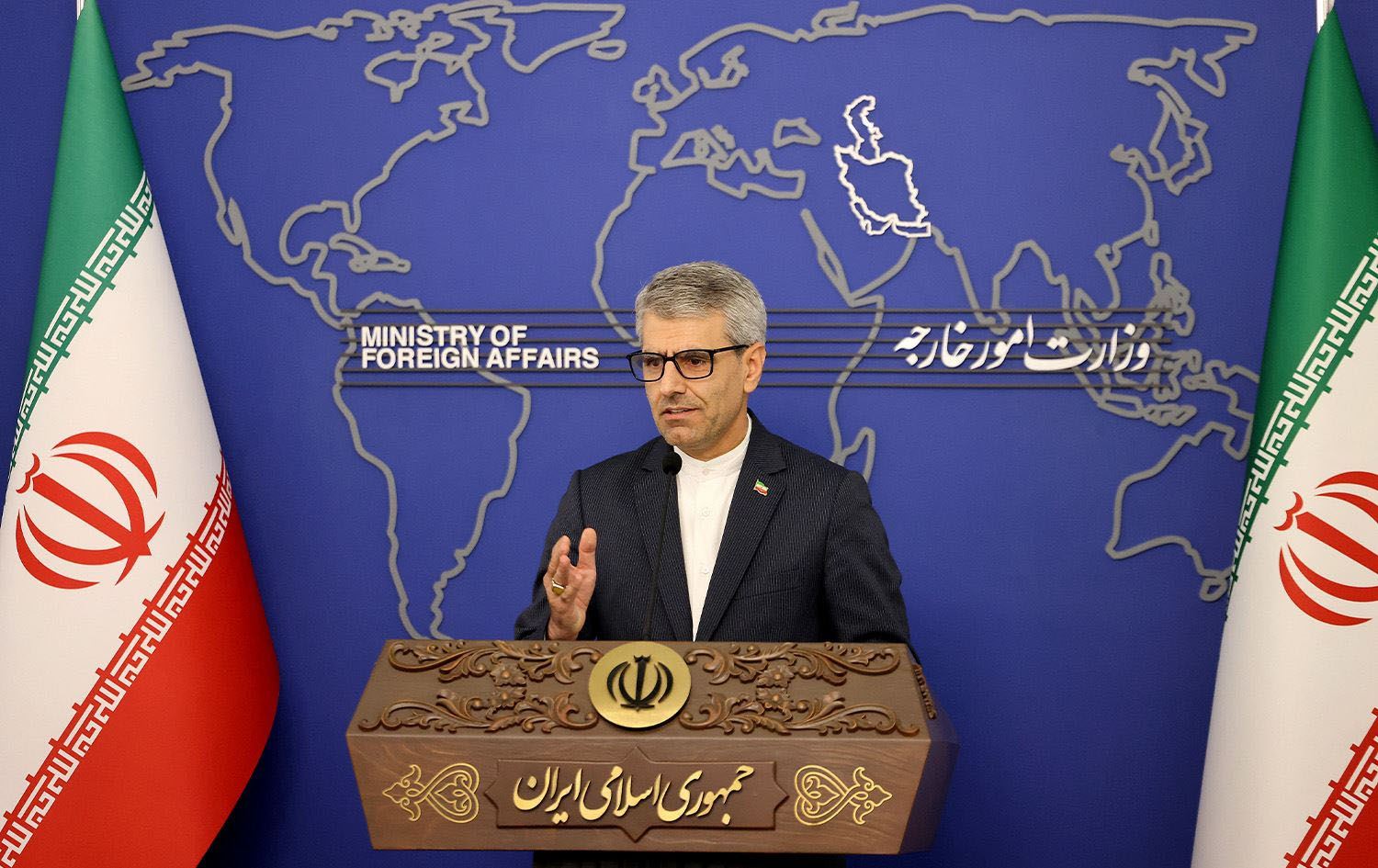
Iran's foreign ministry Spokesperson Esmaeil Baghaei holds a weekly press conference in Tehran on October 28, 2024. Photo: Atta Kenare/AFP
ERBIL, Kurdistan Region - Iran’s foreign ministry on Tuesday censured the US State Department’s decision to impose fresh sanctions on Tehran-affiliated entities and individuals, calling the move contradictory to ongoing nuclear talks between the two sides.
The Iranian foreign ministry Spokesperson Esmael Baghaei stated, “In the past few days, [the United States] has imposed sanctions on Iran, and this is completely inconsistent with the negotiations process.” He added, “The other party cannot speak of diplomacy while continuing to use the language of threats and pressure.”
Speaking on the sidelines of the Tehran International Book Fair, Baghaei emphasized that the sanctions would “definitely affect our positions,” and reaffirmed that Iran’s objective in the negotiations is “to preserve our rights and to end the unfair and unjustified sanctions.”
He noted however that “the outcome of the negotiations cannot be predicted,” but stressed that “we remain firm in our positions.”
The Iranian foreign ministry’s remarks came hours after the US State Department announced fresh sanctions on “an international network facilitating the shipment of millions of barrels of Iranian crude oil worth billions of dollars to China on behalf of Iran’s Armed Forces General Staff (AFGS) and its front company, Sepehr Energy Jahan Nama Pars (Sepehr Energy).”
According to the State Department, revenue from these oil shipments is being used to fund Iran’s ballistic missile program, nuclear proliferation efforts, and support for terrorist proxy groups.
A day earlier, US Secretary of State Marco Rubio also announced sanctions on three Iranian nationals and an entity linked to Iran’s Organization of Defensive Innovation and Research (SPND) - "the direct successor organization to Iran’s pre-2004 nuclear weapons program, also referred to as the Amad project.”
The Iranian foreign ministry on Tuesday criticized what it called Washington’s “contradictory statements,” saying they further erode trust. “We entered the negotiations seriously and with the aim of reaching a result, just as we did in the past,” the ministry added.
The renewed tensions coincided with a fresh warning from US President Donald Trump, who on Tuesday threatened “massive maximum pressure” if Iran refuses to strike a deal over its nuclear program and continues to threaten regional stability.
Speaking at the US-Saudi Investment Forum 2025 in Riyadh, Trump said, “I want to make a deal with Iran,” but warned that if Tehran rejects this opportunity and “continues to attack their neighbors,” the US would “have no choice but to inflict massive maximum pressure” and drive Iranian oil exports “to zero, like I did before.”
Labeling Iran as “the most destructive force” behind regional instability, Trump insisted that “Iran will never have a nuclear weapon,” but also suggested the country could enjoy “a much brighter future” if it chooses peace.
“Iran has a choice,” he added, “between continuing its chaos and terror, or embracing peace… We don't have much time to wait.”
Trump’s remarks came despite recent diplomatic engagement between US and Iranian officials.
On Sunday, the two sides held their fourth round of indirect nuclear talks in Muscat.
Iranian Foreign Minister Abbas Araghchi on Sunday described the fourth round of talks as “significantly more serious,” noting that “we moved away from generalities and delved into the specifics. Naturally, this makes the negotiations more difficult.”
“Despite the difficulty and frankness of the talks, very useful discussions took place,” Araghchi said. “It can now be said that both sides have a better understanding of each other’s positions.”
The Iranian foreign minister further anticipated that the fifth round of talks will be held this week.
Indirect talks between Iran and the US over Tehran’s nuclear program resumed on April 12 in Oman.
The talks represent the most substantive engagement between the two countries since the unraveling of the 2015 nuclear deal, formally known as the Joint Comprehensive Plan of Action (JCPOA), under which Iran agreed to curb its nuclear activities in exchange for sanctions relief.
In 2018, during his first term, President Trump unilaterally withdrew the US from the JCPOA and reimposed sweeping sanctions on Tehran. In response, Iran began gradually scaling back its commitments under the deal.
Tehran has consistently maintained that its nuclear program is intended for peaceful purposes and that the pursuit of nuclear weapons contradicts the principles of the Islamic Republic.


Comments
Rudaw moderates all comments submitted on our website. We welcome comments which are relevant to the article and encourage further discussion about the issues that matter to you. We also welcome constructive criticism about Rudaw.
To be approved for publication, however, your comments must meet our community guidelines.
We will not tolerate the following: profanity, threats, personal attacks, vulgarity, abuse (such as sexism, racism, homophobia or xenophobia), or commercial or personal promotion.
Comments that do not meet our guidelines will be rejected. Comments are not edited – they are either approved or rejected.
Post a comment