


Iraq

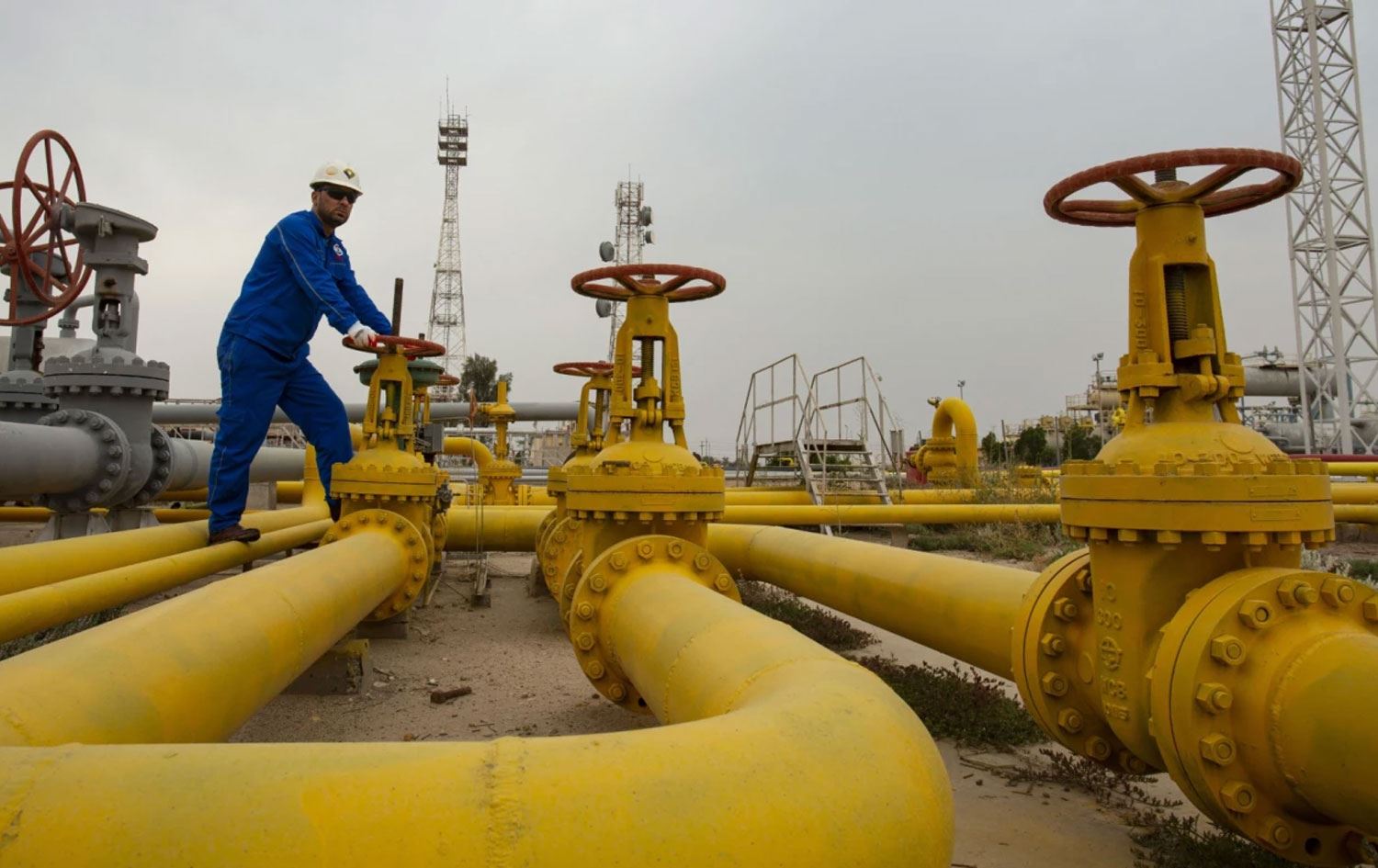
An employee turns a valve at the Nahr Bin Omar natural gas field, north of the Iraqi city of Basra on April 20, 2020. File photo: AFP
ERBIL, Kurdistan Region - Iran on Sunday resumed gas exports to Iraq following a fortnight-long suspension due to maintenance, the Iraqi electricity ministry said.
"Iranian gas imports to Iraq resumed today at a volume of five million cubic meters, following a two-week suspension due to maintenance work," Ahmed Musa, spokesperson for the Iraqi ministry of electricity, told Rudaw on Sunday.
The Iraqi government heavily relies on gas imports from Iran to generate a portion of its electricity.
In March, the United States rescinded a waiver allowing Iraq to purchase electricity from Iran as part of President Donald Trump’s maximum pressure campaign against Tehran.
Following the waiver expiry, Iraqi Prime Minister Mohammed Shia’ al-Sudani held meetings with energy officials to explore alternatives, including utilizing natural gas and importing electricity from Jordan, Turkey, and Turkmenistan.
Iraq is also exploring renewable options. In late March, the electricity ministry announced that it is close to inking agreements with two Emirati and Saudi-based companies to build solar panels.
Iraq also imports electricity from the Kurdistan Region but a drone attack last week on the Region’s key Khor Mor gas field caused a partial black out in the Kurdish region rendering it unable to supply power to areas under the federal government.
The Kurdistan Regional Government’s (KRG) electricity ministry announced on Sunday that its power production capacity had returned to normal.
The spokesperson for the federal electricity ministry told Rudaw that the KRG resumed supplying power to the federal provinces on Sunday, adding that the Kurdish government currently provides 700 megawatts.
Iraq suffers from chronic electricity shortages, particularly during the summer when demand reaches its highest.
Before Iranian gas supplies were halted and the Khor Mor field in the Kurdistan Region was attacked, Iraq’s total power generation stood at 27,500 megawatts. The two incidents together cut the country’s electricity output by roughly 8,000 megawatts, according to Musa.


Comments
Rudaw moderates all comments submitted on our website. We welcome comments which are relevant to the article and encourage further discussion about the issues that matter to you. We also welcome constructive criticism about Rudaw.
To be approved for publication, however, your comments must meet our community guidelines.
We will not tolerate the following: profanity, threats, personal attacks, vulgarity, abuse (such as sexism, racism, homophobia or xenophobia), or commercial or personal promotion.
Comments that do not meet our guidelines will be rejected. Comments are not edited – they are either approved or rejected.
Post a comment