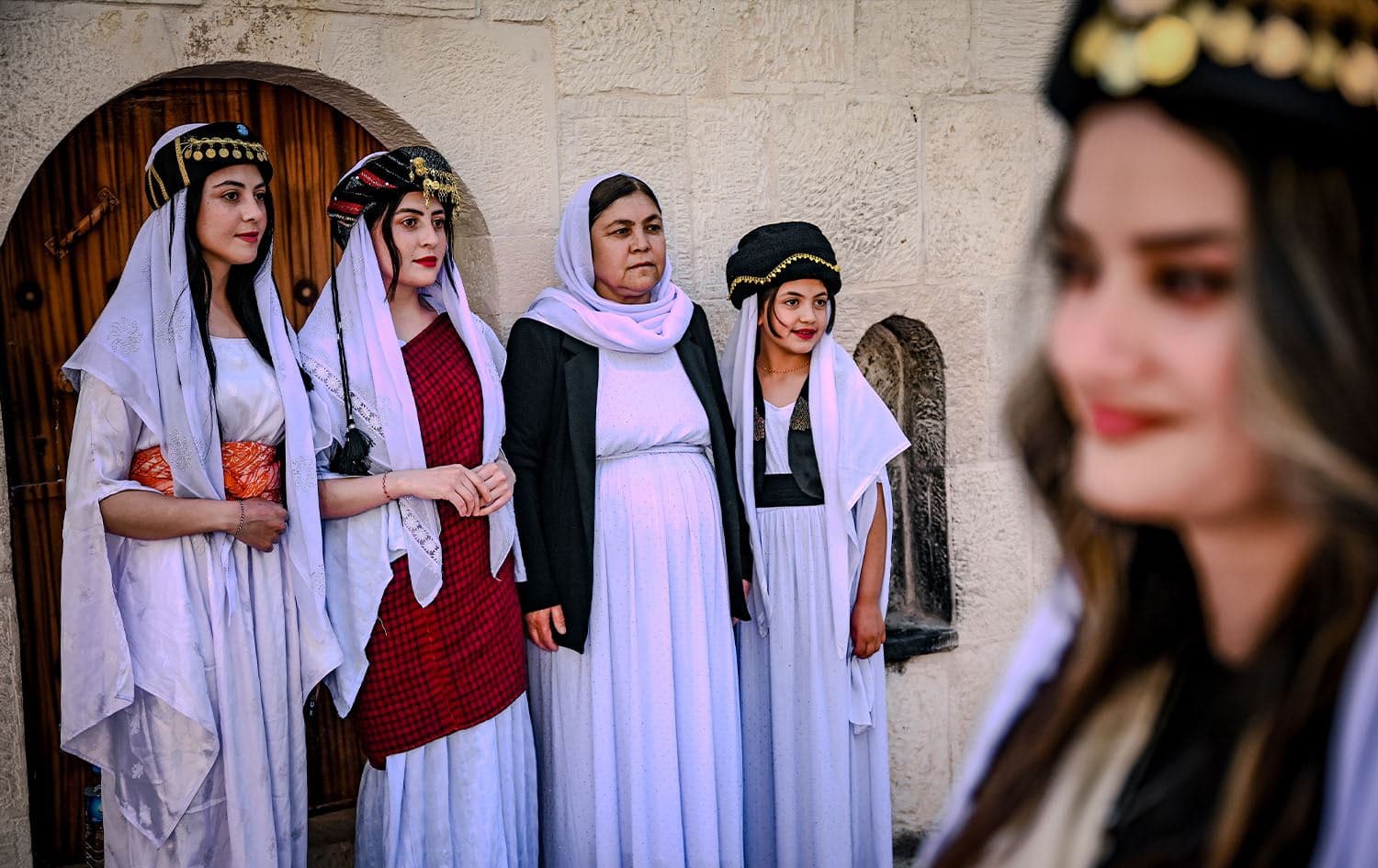
ERBIL, Kurdistan Region - Iraqi judges are interviewing Yazidi women living abroad about their captivity under the Islamic State (ISIS) who have applied for compensation under the Yazidi Survivor Law, according to an official on Thursday.
“Any Yazidi from any country can submit an application. Out of 150 people who have submitted applications, interviews have been conducted with 120 so far, with only 30 remaining,” Sarab Elias, director of Yazidi Survivors Affairs at the Iraqi Ministry of Labor and Social Affairs, told Rudaw.
The first interviews started on December 12, 2024 and have continued on every Thursday, with three to five survivors interviewed daily.
“For some women who spent a long time in ISIS captivity, the interviews take a considerable amount of time,” said Elias.
The process is led by the Nineveh Court of Appeal - Alqosh Investigation Court and coordinated with the Iraqi Ministry of Foreign Affairs to facilitate support for Yazidi women living abroad.
According to Elias, the interviews are arranged at Iraqi embassies and consulates in Berlin, Frankfurt, and Paris.
On March 1, 2021, the Iraqi Parliament passed the Yazidi Survivors Law that provides compensation for Yazidi survivors of ISIS atrocities committed when the group attacked the Yazidi heartland of Shingal (Sinjar) in 2014. The jihadists abducted thousands of women and children. Some two thousand remain missing.
Each survivor receives a monthly payment of 800,000 dinars (around $608). As of December, 2,228 Yazidi women and girls were receiving the payments.
The federal government has designated August 3 as a national day to remember the victims of massacres committed by ISIS.
Though the group no longer controls any territory, it continues to pose a security risk by carrying out kidnappings, hit-and-run attacks, and bombings.