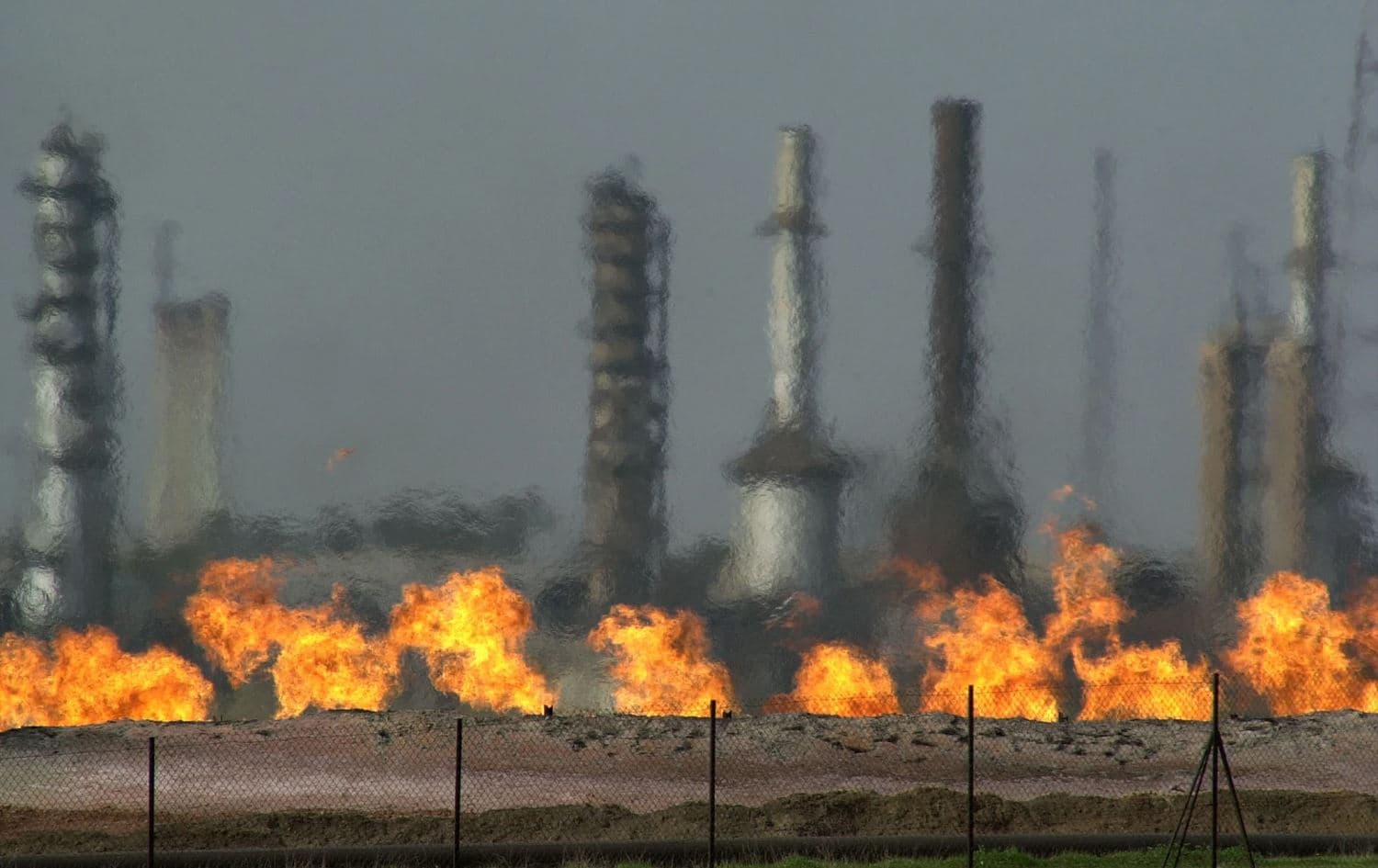
ERBIL, Kurdistan Region - Iraq plans in the “near” future to export 50,000 barrels per day of crude from Kirkuk oil fields through the Kurdistan Region’s pipeline to Turkey’s, nearly three years after suspension, the federal oil minister said Wednesday.
Hayyan Abdul Ghani told Rudaw that preparations are underway to route Kirkuk crude via the Kurdistan Region to Turkey’s Ceyhan port, adding that authorities are also working to raise current export volumes from the Region, which stand at between “200 to 210 thousand” barrels per day.
Oil exports from the Kurdistan Region through the Iraq-Turkey pipeline were suspended in March 2023, when a Paris-based arbitration court ruled in favor of Baghdad against Ankara, saying the latter had violated a 1973 pipeline agreement by allowing Erbil to begin exporting oil independently in 2014. Before the halt, Erbil exported around 400,000 barrels per day through the pipeline, in addition to some 75,000 barrels of Kirkuk’s oil.
The exports resumed last September following a tripartite agreement between Baghdad, Erbil, and international oil companies. The three sides agreed in late December to extend the deal for an additional three months to allow continued exports from the Kurdistan Region.
Ali Nizar, head of Iraq’s State Oil Marketing Organization, said Wednesday that efforts are underway to renew the deal again.
Abdul Ghani echoed that assessment, saying the agreement “will be extended,” adding that authorities are “in continuous contact” with the Kurdistan Region’s natural resources ministry and that “we believe the Kurdistan Regional Government wants to renew the agreement.”
The comments came after Iraq on Monday signed preliminary agreements paving the way for Chevron Corporation to take over management of some of the country’s largest oil fields, moves officials say will significantly lift output and create thousands of jobs.
Under one deal, Chevron is set to assume operations at the massive West Qurna 2 oil field in southern Basra province. A separate framework agreement between Basra Oil Company, Lukoil, and Chevron grants the US firm exclusive rights to negotiate for one year. During that period, the contract will be temporarily transferred to Basra Oil Company and later assigned to Chevron once terms of a new contract are finalized.
According to Abdul Ghani, Basra Oil Company “will work at the field for a temporary period and then hand it over to Chevron.” West Qurna 2 accounts for nearly 12 percent of Iraq’s total oil production. “With Chevron's operation, oil production at that field will reach 750 to 800 thousand barrels per day, and perhaps even more,” he said.
Chevron has also signed an agreement to take over the Balad oil field in Salahaddin province, Abdul Ghani said, noting that the field “has been inactive for years” and is expected to produce about 300,000 barrels per day once operations begin.
Amer Khalil, director general of Iraq’s state-run North Oil Company, told Rudaw that Chevron would start work at Balad “in about a week to 10 days.” He said the project is expected to create between 5,000 and 10,000 jobs for residents of Salahaddin.
Malik Mohammed contributed to this report from Erbil.
Hayyan Abdul Ghani told Rudaw that preparations are underway to route Kirkuk crude via the Kurdistan Region to Turkey’s Ceyhan port, adding that authorities are also working to raise current export volumes from the Region, which stand at between “200 to 210 thousand” barrels per day.
Oil exports from the Kurdistan Region through the Iraq-Turkey pipeline were suspended in March 2023, when a Paris-based arbitration court ruled in favor of Baghdad against Ankara, saying the latter had violated a 1973 pipeline agreement by allowing Erbil to begin exporting oil independently in 2014. Before the halt, Erbil exported around 400,000 barrels per day through the pipeline, in addition to some 75,000 barrels of Kirkuk’s oil.
The exports resumed last September following a tripartite agreement between Baghdad, Erbil, and international oil companies. The three sides agreed in late December to extend the deal for an additional three months to allow continued exports from the Kurdistan Region.
Ali Nizar, head of Iraq’s State Oil Marketing Organization, said Wednesday that efforts are underway to renew the deal again.
Abdul Ghani echoed that assessment, saying the agreement “will be extended,” adding that authorities are “in continuous contact” with the Kurdistan Region’s natural resources ministry and that “we believe the Kurdistan Regional Government wants to renew the agreement.”
The comments came after Iraq on Monday signed preliminary agreements paving the way for Chevron Corporation to take over management of some of the country’s largest oil fields, moves officials say will significantly lift output and create thousands of jobs.
Under one deal, Chevron is set to assume operations at the massive West Qurna 2 oil field in southern Basra province. A separate framework agreement between Basra Oil Company, Lukoil, and Chevron grants the US firm exclusive rights to negotiate for one year. During that period, the contract will be temporarily transferred to Basra Oil Company and later assigned to Chevron once terms of a new contract are finalized.
According to Abdul Ghani, Basra Oil Company “will work at the field for a temporary period and then hand it over to Chevron.” West Qurna 2 accounts for nearly 12 percent of Iraq’s total oil production. “With Chevron's operation, oil production at that field will reach 750 to 800 thousand barrels per day, and perhaps even more,” he said.
Chevron has also signed an agreement to take over the Balad oil field in Salahaddin province, Abdul Ghani said, noting that the field “has been inactive for years” and is expected to produce about 300,000 barrels per day once operations begin.
Amer Khalil, director general of Iraq’s state-run North Oil Company, told Rudaw that Chevron would start work at Balad “in about a week to 10 days.” He said the project is expected to create between 5,000 and 10,000 jobs for residents of Salahaddin.
Malik Mohammed contributed to this report from Erbil.
Comments
Rudaw moderates all comments submitted on our website. We welcome comments which are relevant to the article and encourage further discussion about the issues that matter to you. We also welcome constructive criticism about Rudaw.
To be approved for publication, however, your comments must meet our community guidelines.
We will not tolerate the following: profanity, threats, personal attacks, vulgarity, abuse (such as sexism, racism, homophobia or xenophobia), or commercial or personal promotion.
Comments that do not meet our guidelines will be rejected. Comments are not edited – they are either approved or rejected.
Post a comment