


Iraq

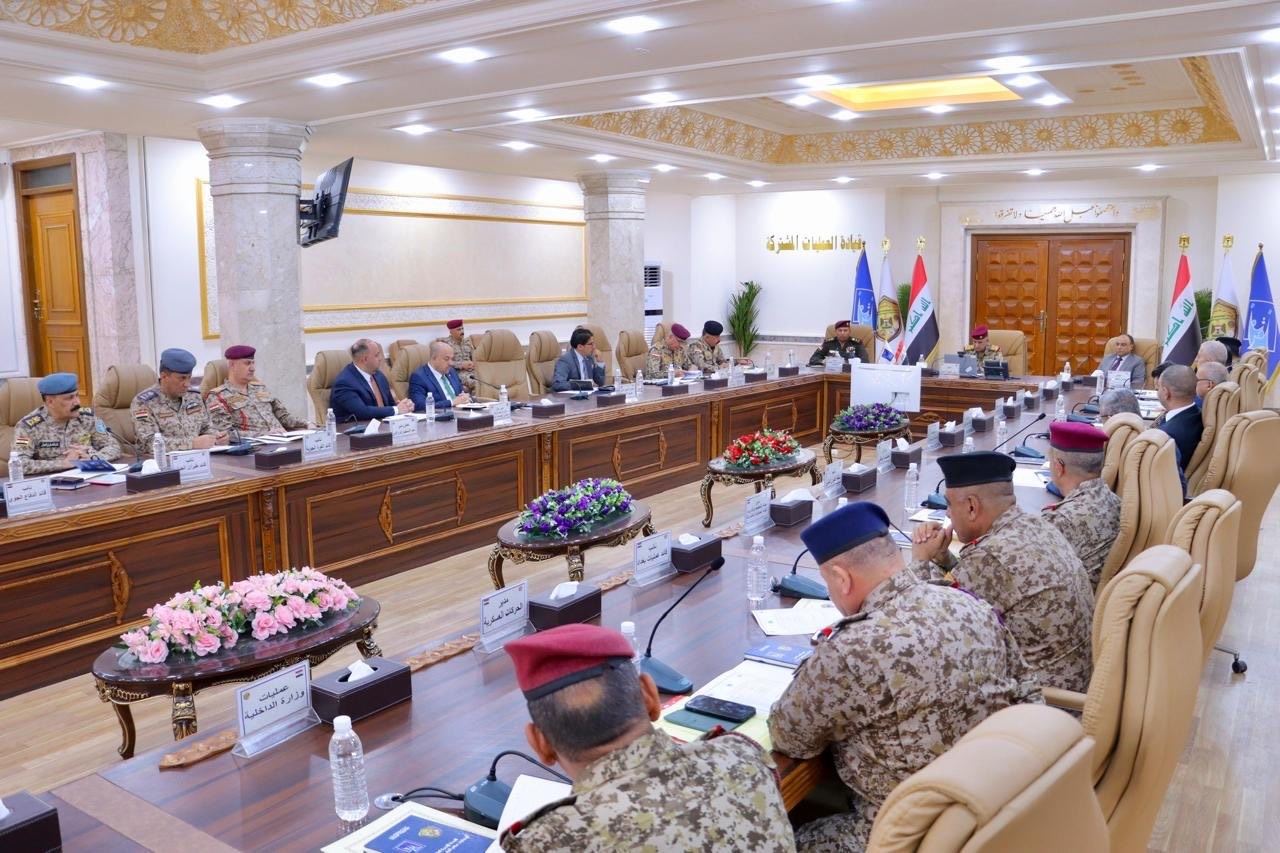
Lieutenant General Qais al-Muhammadawi, head of the Supreme Committee for Election Security, leads security meeting on October 15, 2025. Photo: Saadmaanoficial/X
ERBIL, Kurdistan Region - Iraqi authorities have uncovered "some evidence" in the case of slain parliamentary candidate Safaa al-Mashhadani, a senior security official confirmed to Rudaw on Sunday, adding that a visit to the Kurdistan Region is scheduled for next week to coordinate security arrangements ahead of the upcoming elections.
Mashhadani - also a member of Baghdad’s provincial council - was assassinated at dawn on Wednesday in a car bomb attack in northern Baghdad’s Tarmiah area. He was running on the Sunni Arab Sovereignty–Legislation Alliance ticket.
Lieutenant General Qais al-Muhammadawi, Deputy Commander of Baghdad’s Joint Operations Command, told Rudaw that “several security agencies, including the National Security Service and Iraqi Intelligence, are involved in the investigation.
“Some evidence has emerged so far,” he confirmed, noting that the investigation is ongoing and aimed at identifying and prosecuting the perpetrators.
A specialized investigative committee has been formed to handle the case, consisting of both a technical team analyzing surveillance footage and communication data, and a field team working on the ground, Muhammadawi added.
Baghdad Operations Command (BOC) reported on Wednesday that a sticky explosive device had been planted under Mashhadani’s Chevrolet Tahoe.
In response, Iraqi Prime Minister Mohammed Shia’ al-Sudani - who also serves as commander-in-chief of the armed forces - ordered the creation of “a joint forensic technical team and a high-level investigative committee” to determine the circumstances surrounding the assassination.
Just one day after the incident, Kurdistan Democratic Party (KDP) lawmaker Mahma Khalil reported that his office in Shingal (Sinjar) had been set on fire by “unknown individuals.”
While the attack caused only material damage and no casualties, Khalil - who is also seeking re-election - said security authorities have launched an investigation, affirming, “No one can stop our election campaign.”
Lieutenant General Muhammadawi - who currently heads the Supreme Committee for Election Security, additionally told Rudaw that a widescale plan has been devised to secure the November ballot.
“We will visit the Kurdistan Region this week to coordinate with the [Kurdish] interior minister [Rebar Ahmed Khalid] on how to ensure the protection of the electoral process,” he confirmed.
According to Muhammadawi, the protection of polling stations and border crossings in the Kurdistan Region “will fall under the supervision of the Region’s interior ministry, in coordination with the Supreme Committee for Election Security.”
He also noted that ballot boxes and related materials - including memory devices used in voting machines - will be transported to the Kurdistan Region via airports. After the election, these materials will be returned to Baghdad using the same secure method.
“This is to ensure the highest level of security and preserve the integrity of the electoral process,” Muhammadawi said.
Iraq is scheduled to hold its legislative elections on November 11.
According to data provided by Iraq’s Independent High Electoral Commission (IHEC), 31 alliances, 38 parties, 23 independent candidates and 56 minority quota candidates are running in the elections.
A total of 7,768 candidates - including 5,520 men and 2,248 women - will compete for 329 parliamentary seats, nine of which are reserved for minorities.
Over 39,000 polling stations will be open across 8,703 centers for the general vote, with an additional 4,501 stations designated for special voting. Displaced persons will vote at 97 polling stations located in and around camps in the Kurdistan Region.
More than 21 million Iraqis are eligible to vote, following a recent nationwide update of biometric voter registration.


Comments
Rudaw moderates all comments submitted on our website. We welcome comments which are relevant to the article and encourage further discussion about the issues that matter to you. We also welcome constructive criticism about Rudaw.
To be approved for publication, however, your comments must meet our community guidelines.
We will not tolerate the following: profanity, threats, personal attacks, vulgarity, abuse (such as sexism, racism, homophobia or xenophobia), or commercial or personal promotion.
Comments that do not meet our guidelines will be rejected. Comments are not edited – they are either approved or rejected.
Post a comment