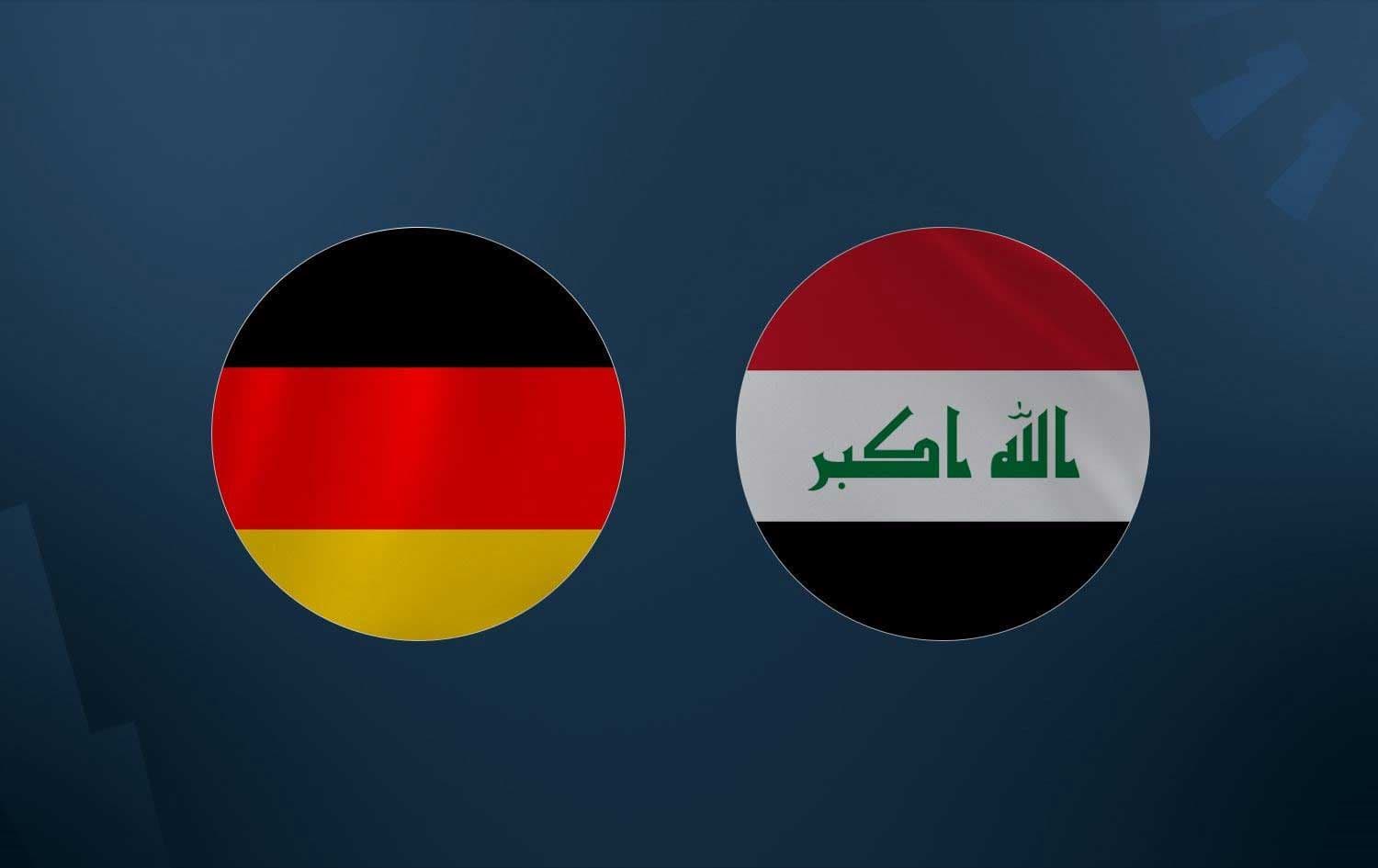
ERBIL, Kurdistan Region - German Ministry for Economic Cooperation and Development (BMZ) told Rudaw that Germany provided 53.25 million euros (over $62.6 million) in development funding to Iraq in 2025, while continuing to support projects in Shingal (Sinjar), particularly in areas affected by Islamic State (ISIS) attacks.
The ministry’s press office responded to Rudaw via email on Thursday regarding Berlin’s financial assistance to Baghdad and its role in the reconstruction of Shingal. “Within the framework of development cooperation with Iraq, a total of 53.25 million euros was provided in 2025,” the ministry’s office stated.
Regarding the portion of funds allocated to Iraq for humanitarian and development purposes that is specifically directed toward the reconstruction of Yazidi-populated towns and areas, particularly in the Shingal district, the ministry said Germany provides support through a range of targeted projects rather than a single earmarked funding stream.
“Among the current projects of the German Ministry for Economic Cooperation and Development in Iraq, a large number of projects are active, including those in the Shingal district," the ministry said, adding that the most important activities include "psychosocial support, the restoration of livelihoods (especially in the field of agriculture), the renovation of basic infrastructure, and housing construction,” the ministry said.
Shingal, home to a large Yazidi population, was overrun by ISIS militants in August 2014. On August 14, 2014, ISIS committed a massacre against the Yazidis of the district, killing more than 5,000, displacing hundreds of thousands, and leaving deep social and psychological scars among the religious community.
In 2023, the German Bundestag officially recognized the crimes committed against the Yazidis as "genocide." Since then, Berlin has reiterated its commitment to supporting reconstruction efforts in Shingal to enable displaced residents to return to their homes.
Germany has also funded psychosocial therapy programs and rehabilitation services for displaced Yazidis living in camps across the Kurdistan Region through its implementing agencies, including the German Agency for International Cooperation (GIZ).
The BMZ’s latest figures come amid a broader shift in Germany’s policy toward Iraq. In August last year, Germany announced it had ended its humanitarian aid to Iraq as of 2023, citing improved economic conditions and increased revenue from natural resources.
According to the German foreign ministry, between 2014 and 2022 Berlin provided €800 million ($933 million) in humanitarian aid and €2.6 billion ($3 billion) for stabilization efforts, particularly in the aftermath of the conflict with ISIS.
“Following the fall of ISIS, Germany provided extensive support to Iraq and the Kurdistan Region through humanitarian, development, and stabilization measures,” the ministry said. This included psychosocial services and rehabilitation programs for survivors of ISIS atrocities.
With the situation in Iraq now considered “improved,” Berlin no longer sees a need for continued emergency humanitarian assistance. However, Germany remains a “close partner” to Iraq and the Kurdistan Region and will continue cooperation in key sectors.
“Germany is currently supporting Iraq in the area of development and is pushing forward with civilian projects. We want to accelerate the pace of economic development and ensure energy security,” the ministry stated.
Climate change has also emerged as a priority area in Germany’s engagement with Iraq.
“We are supporting Iraq to adapt to the consequences of climate change,” the ministry noted.
According to Berlin, the current strategy centers on transitioning from emergency relief to long-term development, with the aim of “giving more responsibility to Iraqi parties,” the ministry concluded.
Kehy Mahmoud contributed to this report.