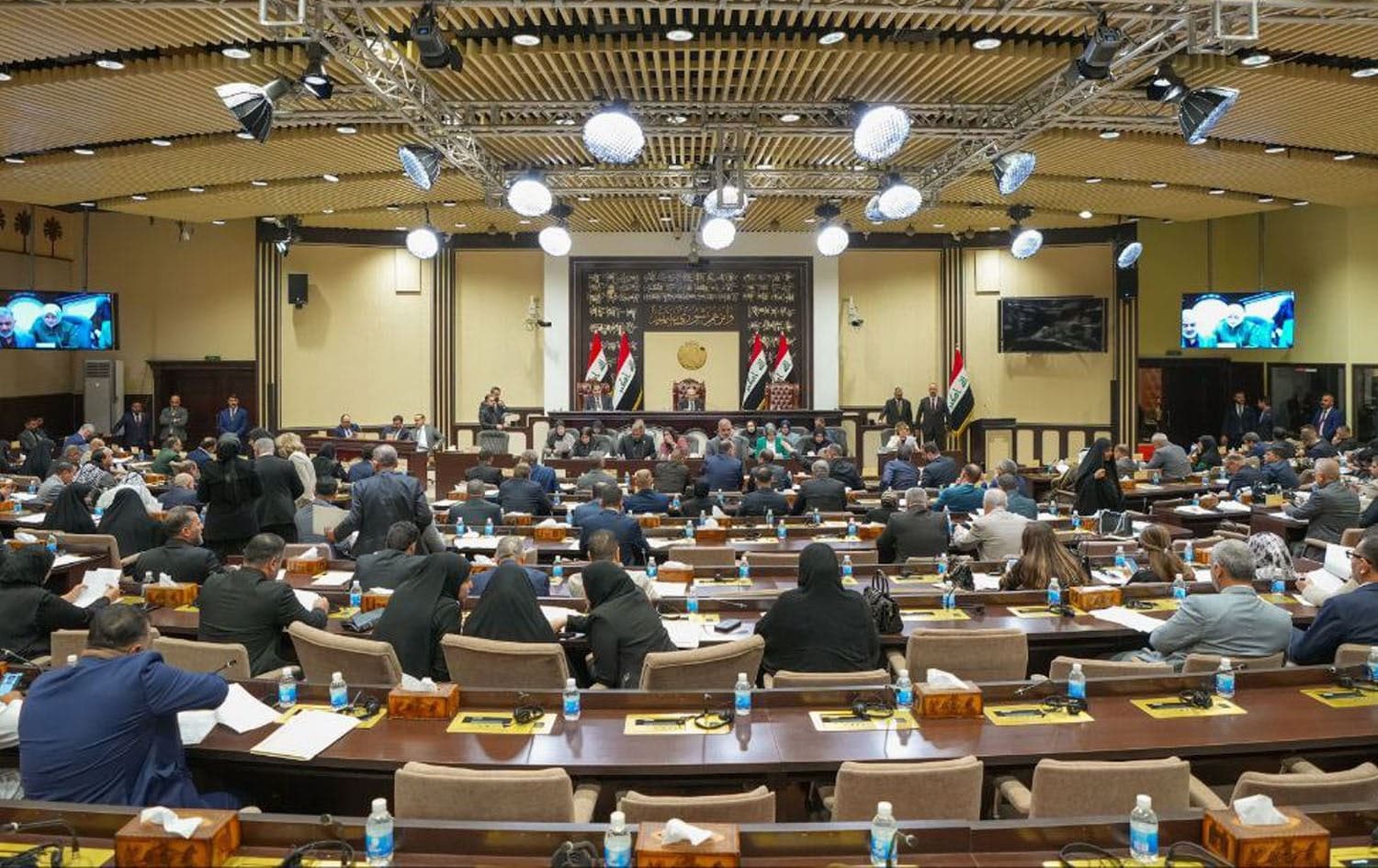

ERBIL, Kurdistan Region - Iraq’s parliament wrapped up a session Monday without addressing recent drone strikes on Kurdistan Region oil infrastructure, after Kurdish factions boycotted the session for unknown reasons, sources told Rudaw.
The session’s agenda included two main topics: the deadly fire at a shopping mall in Iraq’s Kut and drone attacks targeting the Kurdistan Region’s oil and energy infrastructure. The parliament said in a statement only the former topic was discussed without elaborating.
Lawmakers from the Kurdistan Democratic Party (KDP) and the Patriotic Union of Kurdistan (PUK) boycotted the session. Only three Kurdish parliamentarians attended it, according to Soran Omar from the Islamist Kurdistan Justice Group (Komal). Two of them left the session before it ended.
“The first item was discussed, but because Kurdish parliamentarians did not participate, I requested Muhsin al-Mandalawi, Deputy Speaker of Parliament who was chairing the session, to remove the drone attacks item from the session agenda. He removed it and it was not discussed,” Omar told Rudaw.
The first agenda item was a massive fire late Wednesday at a newly opened shopping mall in Kut, the capital of Wasit province, which killed at least 77 people. Most victims died from smoke inhalation, and the incident sparked public outrage over the lack of emergency exits and lax safety standards.
According to Omar, Mandalawi expressed his surprise at the absence of Kurdish lawmakers, saying, “They themselves had requested the session, yet now they have not participated in the session.”
Dara Sekaniani, a Kurdistan Islamic Union (KIU) lawmaker and member of the Iraqi parliament's legal committee, said he left after it became clear the drone strikes would not be discussed.
Showan Kalari and Sherwan Dubardani, KDP lawmakers, later told Rudaw they were instructed by party leadership not to attend, without knowing the reason. “We have no information, they just said not to participate and we did not participate,” they said.
PUK lawmaker Srwa Mohammed also confirmed her party’s absence but did not provide further details.
Omar criticized the Region’s ruling parties for not participating, especially since the Kurdistan Regional Government (KRG) has directly accused Iraq’s Popular Mobilization Forces (PMF) of being behind the drone attacks - a claim denied by Baghdad.
Omar said that since the interior ministry has made the accusation, the Region’s ruling parties - the KDP and the PUK - should have attended the session and voiced their concerns.
Since early July, nearly 20 drone attacks have hit the Kurdistan Region, mostly targeting oil fields and causing significant financial losses. No group has claimed responsibility for the attacks and there have been no new attacks since Erbil and Baghdad reached a new agreement on finances and oil exports on Thursday.
The map shows the approximate locations of drone attacks on the Kurdistan Region recorded by Rudaw English between July 1-17.
Iraq’s parliament on Friday launched an investigation into recent drone attacks.
“Next week we, as the Security and Defense Committee, will have a visit to learn the details of the incident and who is behind this incident,” Mohammed Rasul, a member of parliament’s Security and Defense Committee, told Rudaw on Friday.
The Kurdistan Region’s Presidency, Council of Ministers, and Ministry of Natural Resources have all strongly condemned the attacks, describing them as attempts to cripple the Region’s vital oil infrastructure. They called on the federal government to hold the perpetrators to account. The international community has also condemned the attacks.
KRG Deputy Chief of Staff Aziz Ahmad said last week that drone strikes by “criminal militias on the Iraqi government payroll” have led to the loss of nearly 200,000 barrels of oil production per day.
Ahmad also said that the drones were launched from Kirkuk province.