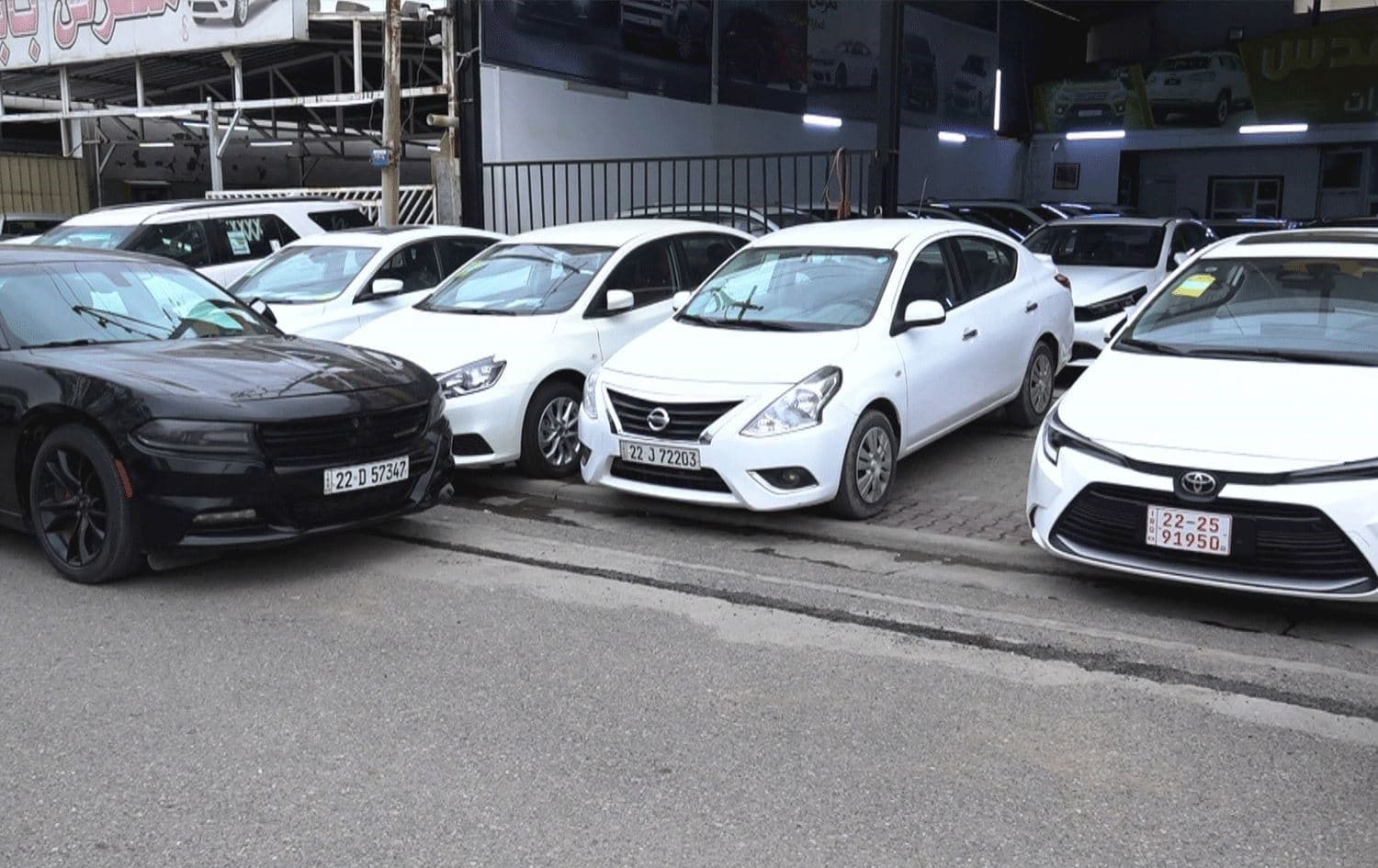
ERBIL, Kurdistan Region – Iraq’s federal government has imposed additional customs fees on vehicles bearing Kurdistan Region plates operating in disputed provinces, requiring thousands of car owners and dealers to pay millions of dinars more despite having already cleared customs in the Region. The move has crippled the market in these areas and seen as a move to discourage importation of vehicles through the Region.
Under a new decision by Iraq’s traffic authorities and endorsed by the Council of Ministers, vehicles that were customs-cleared in the Kurdistan Region for 1,500,000 Iraqi dinars must now pay an additional 3,500,000 dinars to the federal government if they operate in Kirkuk, Nineveh, or Diyala.
The decision also stipulates that no vehicle with temporary Kurdistan plates may enter these provinces unless it undergoes federal customs procedures. Vehicles that received permanent Kurdistan plates after June 1, 2025 are also required to repeat customs clearance.
Nuraddin Zangana, a representative of car showroom owners who has worked in the sector for four decades, criticized the move, saying Baghdad does not recognize the Kurdistan Region’s customs procedures.
“Temporary Kurdistan plates are valid for two months, but in Kirkuk they are not accepted even for a moment,” Zangana told Rudaw. “They immediately seize the vehicle and tell us to go and clear it through customs again, even though it has already been customs-cleared in Kurdistan.”
Car dealers say the measures have paralyzed the market.
Temporary plates are granted a two-month grace period in the Kurdistan Region before receiving permanent registration. “But here they [the Iraqi government] don’t give us even three minutes. They immediately seize the vehicle,” he said.
In response, Amer Nariman, spokesperson for Kirkuk’s traffic directorate, defended the enforcement of the new regulations.
“Vehicles that entered after June 1, 2025 must pay the customs difference,” Nariman said. “Those with temporary plates are not allowed to operate, except to visit traffic directorates. If they come from the Kurdistan Region and are found in the bazaar, legal measures will be taken against them.”
Hiwa Husamaddin contributed to this article from Kirkuk, Iraq.