


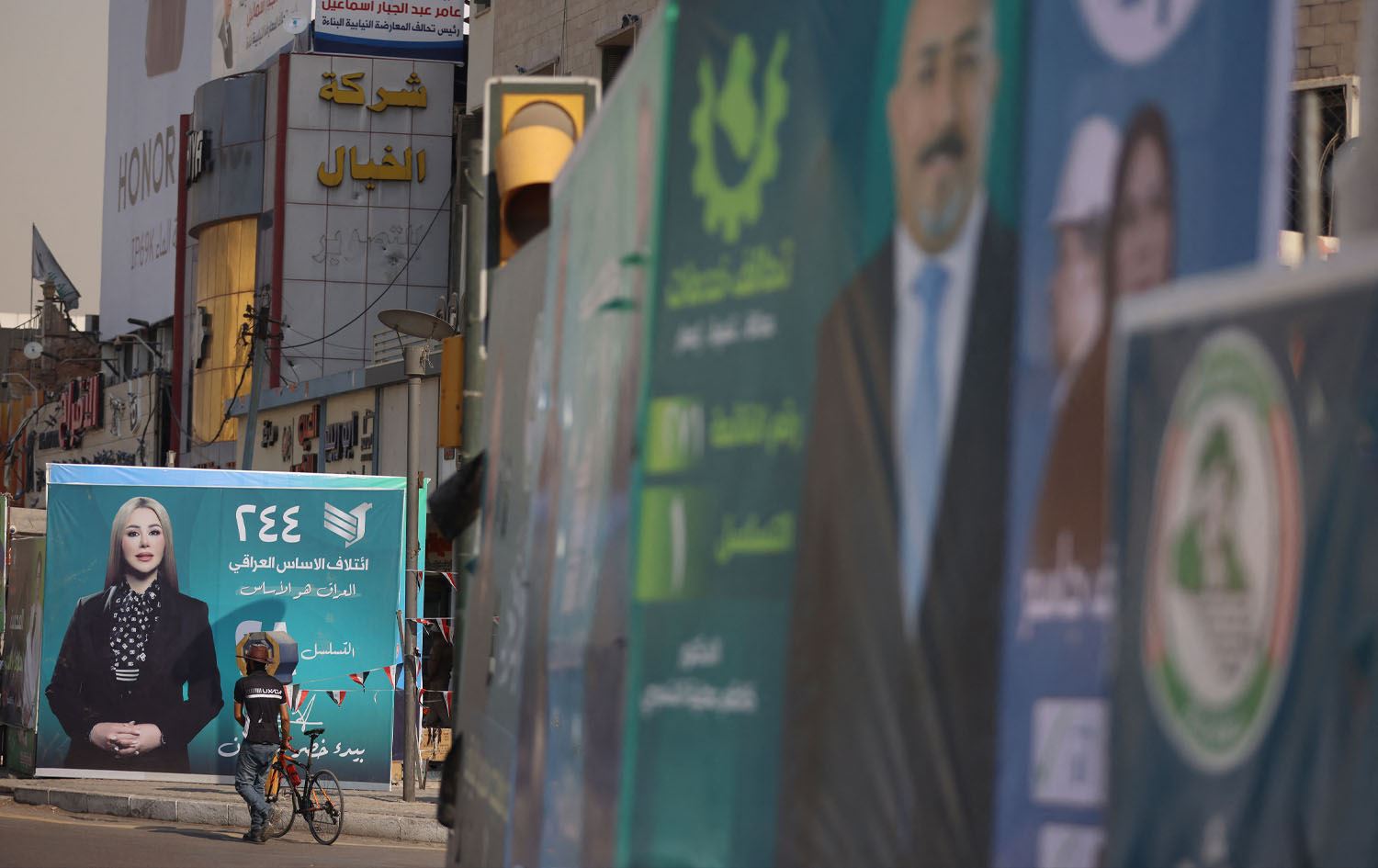
ERBIL, Kurdistan Region - Deepfakes generated with artificial intelligence are spreading rapidly on social media ahead of Iraq’s upcoming elections, the Digital Media Center (DMC) said on Friday.
Fake videos and images have been increasingly observed on Iraqi social media platforms, “circulated to influence public opinion and distort facts,” stated the DMC, a non-governmental organization that monitors developments in the digital sphere. It warned that these tactics are being used to manipulate perceptions of political and social events.
Praising the Communications and Media Commission (CMC) for its efforts to regulate Iraq’s online space, the DMC described tighter oversight as “a pivotal step to limit the escalating digital chaos, especially during critical phases the country is going through.”
Detecting the fakes is a challenge as the technologies that do it are “not foolproof” and studies have shown that deepfake detection systems can be tricked through “adversarial attacks” - subtle, imperceptible changes that cause algorithms to misclassify manipulated content, DMC said.
The center described the spread of deepfakes as part of “an ongoing technological race” between creators of fake content and developers of detection tools - an “unrelenting digital arms race” that continues to evolve.
One major weakness, according to the DMC, is the limited diversity of data used to train detection systems, which causes them to perform poorly when faced with new types of manipulations. Studies have found that “the accuracy of many detectors in real-world scenarios does not exceed 69 percent - essentially equivalent to a coin flip,” the statement said.
The DMC added that not all deception requires advanced AI, as “simple tricks” such as adding background noise, re-recording fake audio, compressing video, or removing metadata can successfully fool even sophisticated analysis tools.
The center concluded that combating deepfakes cannot rely on technology alone, urging greater emphasis on “critical thinking, media literacy, and careful verification of sources” to prevent the public from falling victim to AI-generated misinformation.
Sahira Siddiq, Rudaw Digital’s technical officer, said deepfakes have become “the most common threat to elections today.”
“AI-generated videos and images can easily deceive the public,” she said. “False stories can change opinions about candidates and parties, or mislead voters about how or when to vote.”
Siddiq warned that tracing the origins of such content is often impossible, making accountability difficult. “We’ve seen how deepfakes were used in recent US elections to attack candidates and spread misleading narratives,” she added.
The DMC has repeatedly warned that deepfakes could endanger Iraq’s democratic process by spreading false information, eroding public trust, and undermining the integrity of upcoming elections.
Malik Mohammed contributed to this report.


Comments
Rudaw moderates all comments submitted on our website. We welcome comments which are relevant to the article and encourage further discussion about the issues that matter to you. We also welcome constructive criticism about Rudaw.
To be approved for publication, however, your comments must meet our community guidelines.
We will not tolerate the following: profanity, threats, personal attacks, vulgarity, abuse (such as sexism, racism, homophobia or xenophobia), or commercial or personal promotion.
Comments that do not meet our guidelines will be rejected. Comments are not edited – they are either approved or rejected.
Post a comment