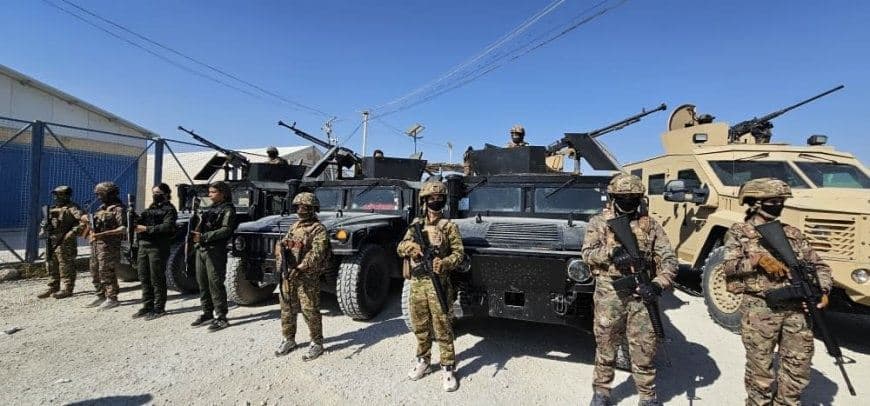

ERBIL, Kurdistan Region - Kurdish-led security forces in northeast Syria (Rojava) announced on Saturday that their recent security operation in al-Hol camp resulted in the dismantling of terrorist cells and the arrest of 11 individuals with ties to the Islamic State (ISIS).
“The campaign has achieved notable results, the most important of which are dismantling active terrorist networks operating within the camp, the arrest of 11 ISIS-linked members, foiling several attempts to target service and humanitarian facilities,” the Asayish (internal security forces) said in a statement.
The campaign, launched on Friday, was in response to a rise in ISIS activities, including attacks on humanitarian aid organizations and exploitation of youth in the camp.
The Asayish said they succeeded in “limiting the movements of terrorist cells inside and around the camp.”
“The operation also contributed to strengthening coordination with humanitarian organizations, ensuring the safe continuation of their missions, and providing a more stable environment for camp residents,” it added.
Al-Hol camp, located in Hasaka province, houses 27,488 people with suspected links to ISIS, most of them women and children, according to the most recent data from Rojava authorities. The camp’s residents come from around the world, though the majority are Iraqis and Syrians. It has been called a breeding ground for terrorism.
When launching the operation on Friday, the Kurdish force said that in recent months, “the camp has witnessed an increase in ISIS sleeper cell activities, with more than thirty attacks carried out against humanitarian workers. These attacks have led to the destruction of facilities and service infrastructures, placing the lives of thousands of civilians at risk and obstructing humanitarian and stabilization efforts.”