

ERBIL, Kurdistan Region - In a major military escalation, Israel carried out a rare air assault and airdrop operation south of Damascus in the early hours of Thursday, marking the first operation of its kind since the fall of longtime Syrian dictator Bashar al-Assad, according to a war monitor.
The UK-based Syrian Observatory for Human Rights (SOHR) reported that Israeli forces conducted over a dozen airstrikes in the Jabal al-Mane’ area of Rif Dimashq province, near the town of al-Kiswah, approximately 20 kilometers south of the Syrian capital. The area is a long-standing strategic military hub, historically serving as a key defense post for Damascus.
The operation involved “a number of airdrop operations” accompanied by “intensive helicopter and drone overflights,” SOHR stated. Four Israeli helicopters reportedly flew at low altitude in the Kiswah area as troops parachuted into the mountainous terrain to carry out “a landing and search mission.”
Strategic stronghold
For decades, Jabal al-Mane’ was a cornerstone of Syria's military defense system.
With an elevation of around 1,100 meters, the mountain offers commanding views over Rif Dimashq regions as well as critical infrastructure including the M5 highway and Damascus International Airport. It housed elite Syrian military units, such as the Republican Guard’s Fourth Division and the 44th Brigade, and was a focal point for joint operations between Assad’s forces and their allies, including Lebanon’s Hezbollah movement and Iranian military advisors.
According to SOHR, the Thursday assault included approximately “15 air raids in two successive sorties targeting key military infrastructure in Rif Dimashq.” Among the primary targets were a “military facility” in Jabal al-Manea, a Syrian military headquarters in Kiswah, “a Korean-made SK radar station used by the 4th Regiment” and “a large warehouse storing Igla-S (SA-18) missiles,” reportedly operated by Hezbollah during Assad’s rule.
The war monitor added that no interception attempts by the Syrian defense ministry were recorded during the operation and no official figures on casualties or material damage have yet been released.
For its part, the state-run Syrian Arab News Agency (SANA) cited a “government source” as stating that Syrian Arab Army personnel “discovered surveillance equipment” near Jabal al-Mane’ on Tuesday. While soldiers were “attempting to dismantle the devices, the site was subjected to an Israeli air attack,” resulting in fatalities and destruction of vehicles.
The source added that Israel continued “aerial strikes and drone attacks” through Wednesday evening, preventing Syrian forces from accessing the area. Nonetheless, Syrian forces destroyed “some of the surveillance systems” on the mountain and retrieved the bodies of those killed, he added.
On Wednesday, Syria’s foreign ministry had confirmed the deaths of six Syrian soldiers in the Israeli strikes near Damascus, condemning the operation as “a grave violation of international law.” The ministry urged the international community to hold Israel accountable for “repeated aggressions” on Syrian territory.
Earlier on Tuesday, a previous Israeli strike on southern Syria had left one dead as well.
Diplomacy amid firepower
Notably, the Israeli airstrikes came days after what appeared to be a diplomatic thaw between Syria and Israel.
Last week, Syrian Foreign Minister Asaad al-Shaibani held a rare meeting with Ron Dermer, Israel’s Strategic Affairs Minister and top aide to Prime Minister Benjamin Netanyahu, in Paris.
The discussions, “held under US mediation,” are “part of diplomatic efforts aimed at promoting security and stability in Syria and preserving its unity and territorial integrity,” SANA then reported.
In early December, a coalition of opposition forces - then spearheaded by the now-dissolved Hay’at Tahrir al-Sham (HTS), under Ahmed al-Sharaa - led a swift offensive toppling Assad. In late January, Sharaa was assigned Syria’s interim president.
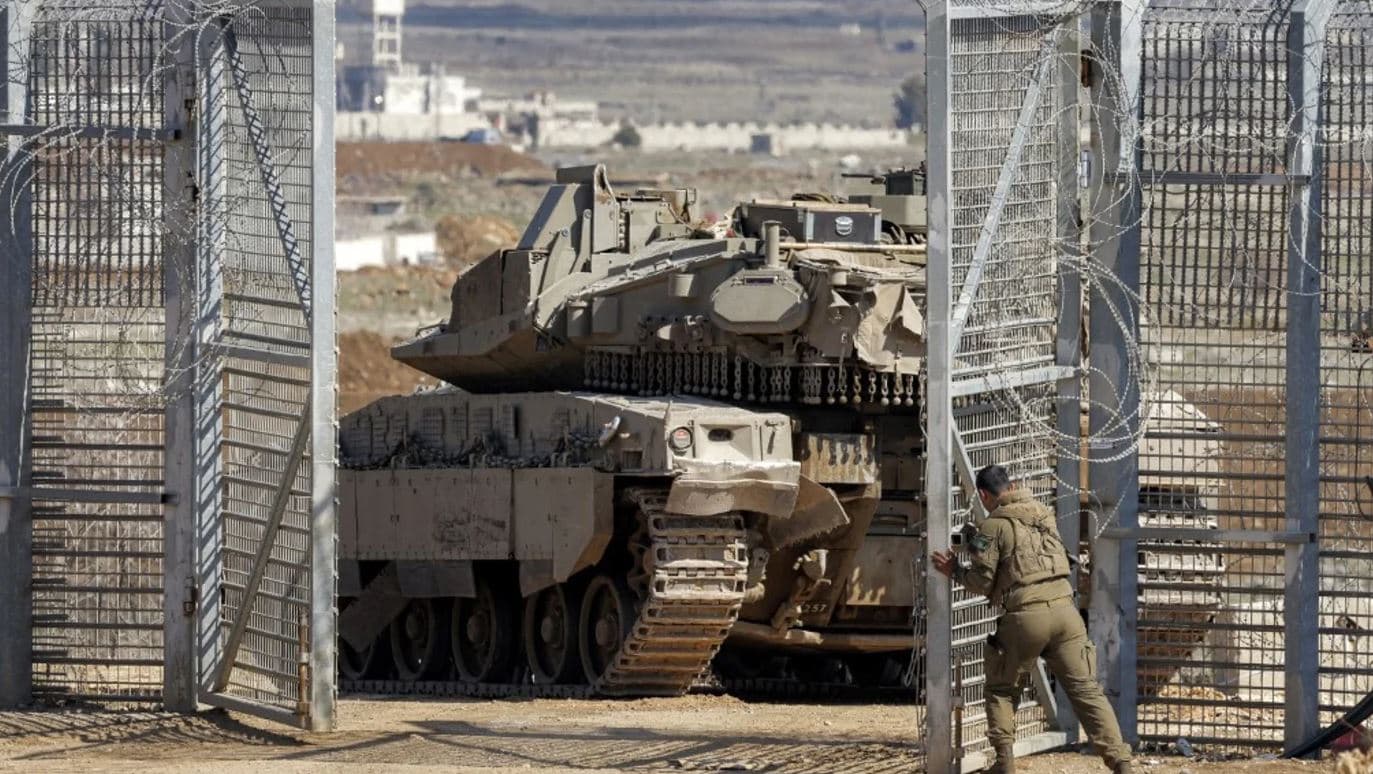
In the months since, Israel has worked to establish a demilitarized buffer zone in southern Syria, near its borders. Tel Aviv further intensified its efforts to destroy Damascus’s military stockpiles and its forces entered buffer zones east of the Israeli-annexed Golan Heights.
Israel had captured most of the Golan Heights from Syria during the 1967 Six-Day War. In 1974, a US-brokered Disengagement Agreement created a UN-monitored buffer zone to reduce tensions by delineating separation lines between Syrian and Israeli forces without establishing formal peace.
SANA last week reported that the Paris talks between Syrian and Israeli officials included discussions on “reactivating the 1974 agreement.”
Despite these diplomatic efforts, Israeli military activity in Syria has continued unabated. According to SOHR, Israel has launched 95 air and ground attacks on Syrian territory since the start of the year, killing at least 60 individuals, including 29 regime-affiliated forces and 17 civilians. Thursday’s operation likely adds to that toll.
.jpeg&w=3840&q=75)
.png&w=3840&q=75)
