
ERBIL، Kurdistan Region - Senior Kurdish officials in Syria have reported progress in incorporating Kurdish-led institutions into the Syrian government, but warned major rights and humanitarian issues remain unresolved.
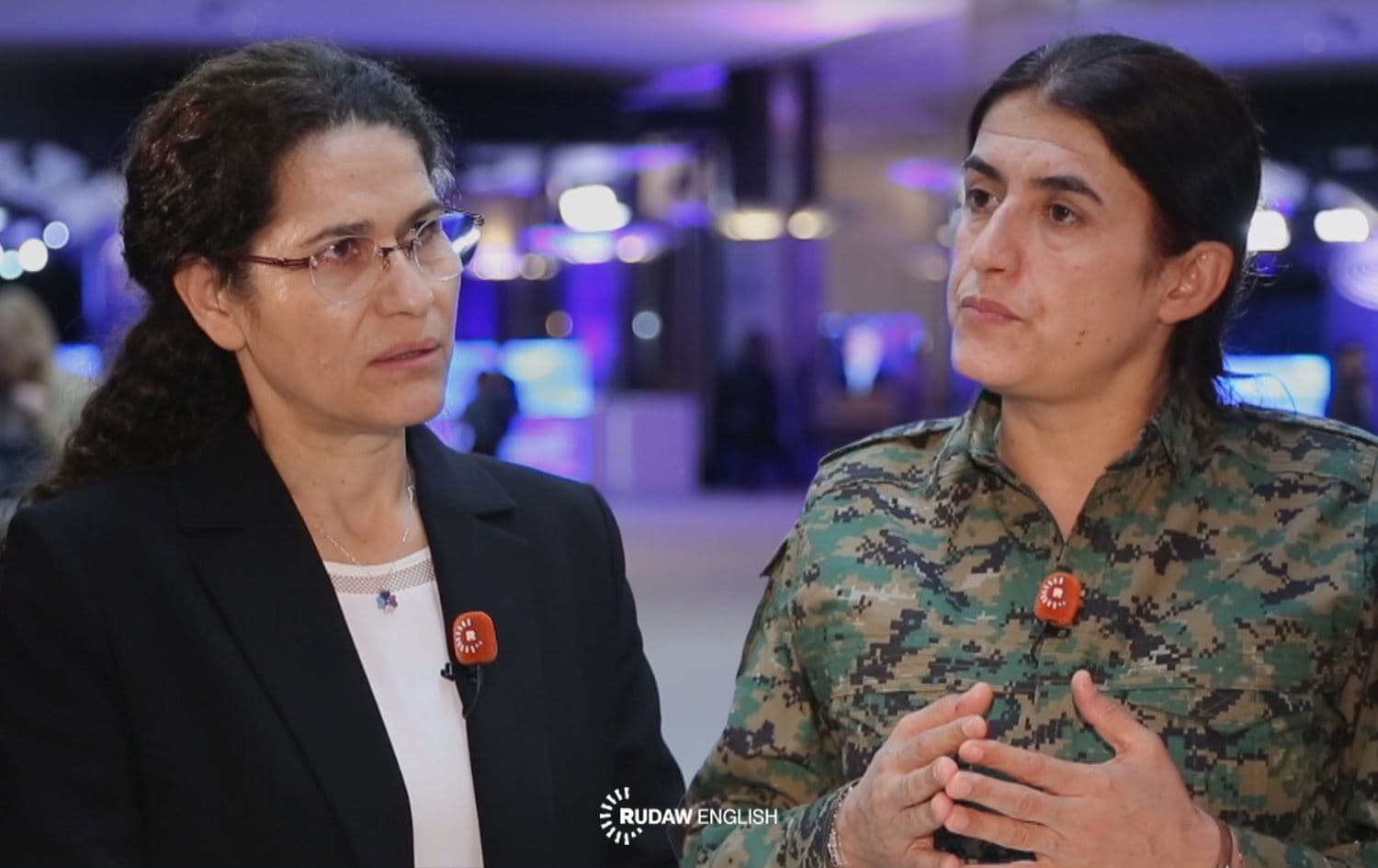
Speaking at the European Parliament in Brussels on Wednesday, Ilham Ahmad, foreign relations co-chair of the Kurdish-led Democratic Autonomous Administration of North and East Syria (DAANES), said Kurdish leaders and Damascus are moving forward to merge resources and institutions previously controlled by Kurdish authorities into the new Syrian government.
She warned, however, that major issues - including prisoner exchanges, the return of displaced families, language rights, and the status of Kurdish-led forces - remain unresolved.
“Some positive steps have been taken regarding the agreement; it is moving forward,” Ahmad said.
“There are still areas where there are difficulties and a need for more dialogue for things to proceed,” she added.
Kurdish leaders and Damascus are continuing to negotiate new power structures in Syria, where Kurdish-led governments and security forces in the northeast (Rojava) ran autonomously for a decade. Officials are working to implement a January 30 agreement that ended weeks of fighting between the Kurdish-led Syrian Democratic Forces (SDF) and Syrian forces with a pledge to incorporate Kurdish-led institutions into the federal government.
Key issues: Political appointments, security forces
Ahmad said key outstanding issues include the integration of Kurdish-led brigades, internal security forces in the northeast, and appointing a governor for Hasaka province, the DAANES stronghold in the northeast.
Ahmad said in addition to local officials, political appointments guaranteeing Kurdish representation in federal institutions and parliament remain unresolved. She said Kurdish groups are considering forming a unified political bloc to coordinate efforts before re-engaging with Damascus.
The most immediate concerns, Ahmad said, are the exchange of prisoners captured during the fighting and allowing people who were displaced to return home.
“The prisoners must be exchanged; this hasn't happened yet,” Ahmad said. “And the refugees have not returned yet.”
She noted that the total number of detainees remains unclear due to chaotic conditions during arrests and clashes.
Conditions in Kobane remain challenging after Syrian forces besieged the town bordering Turkey for weeks, Ahmad said. Authorities have attempted to help residents from Kurdish-majority villages return but many remain displaced, and the Syrian military cutting off access to the town during hostilities left Kobane with severe shortages of goods, electricity and water, she said.
People’s lives have been “greatly impacted,” she said.
Turkey’s ‘significant’ influence over Damascus
Ahmad also claimed Turkey has leveraged its influence over Syria’s interim government to pressure the SDF to disband.
Kurdish officials previously said Damascus agreed to create SDF-led brigades, providing some autonomy for forces in Kurdish-majority areas where trust of the central government remains low. Turkey, a major ally of the Syrian government, considers the SDF a branch of the Kurdistan Workers Party (PKK) and has demanded it disband entirely.
“Currently, Turkey’s role in the decisions made regarding Syria and Damascus is significant,” she said. “They always said the SDF must disband and lay down its arms. In that regard, we know that a lot of pressure has been put on Damascus.”
Language rights remain another core demand from the Kurds in Rojava, with the agreement laying out constitutional guarantees for Kurdish cultural and linguistic rights. Ahmad said it was agreed that student diplomas issued since 2011 would be certified but criticized a recent Syrian government decree that labels Kurdish as a foreign language.
“The issue of mother-tongue education - as the decree was issued - it’s treated like a foreign language,” she said, including making Kurdish optional with just two hours of instruction.
“This isn’t right,” she said. “The Kurdish language is the language of a great nation.”
Ahmed said negotiators are “struggling” for Kurdish to be recognized in the constitution, calling the demand for linguistic and other rights “non-negotiable.”
Key resources federalized
Ahmad reported that oil fields in the northeast will be federally controlled while other resources may be managed regionally. Borders and airports will also be centrally administered, but with local involvement.
“We have said that the people of the region should be included,” she said.
In a separate interview with Rudaw, Rohilat Afrin, commander-in-chief of the Women's Protection Units (YPJ), an all-female Kurdish SDF brigade, called on European lawmakers to support constitutional guarantees for Kurdish and women’s rights and to recognize the YPJ.
She insisted that the YPJ must be preserved when the SDF is brought under the military.
“Both as the YPJ and as the women of Rojava… we see the strength of the YPJ, the existence of the YPJ, and the struggle that has been waged as guarantees for our future protection,” she said.
Afrin said the YPJ, which fought the Islamic State (ISIS), lost 1,000 fighters with hundreds more wounded or disabled. She said the multi-ethnic force includes Arabs, Assyrians, Syriacs, and international volunteers.
While acknowledging ongoing negotiations with Damascus, Afrin said, “Remaining as an army is our goal.”
“A 13-year struggle was waged against ISIS forces,” Afrin said. “Through the struggle and the war fought against ISIS, the whole world was protected.”
She warned that ISIS remains a threat.
“Of course, the danger remains,” she said. “This fear has not ended, and we see it as a serious threat for the future.”
Both Ahmad and Afrin emphasized that they will continue to fight politically if Kurdish forces do not face renewed attacks, with Ahmad cautioning that basic rights are at stake.
“If an attack occurs, every nation will defend itself,” she said.