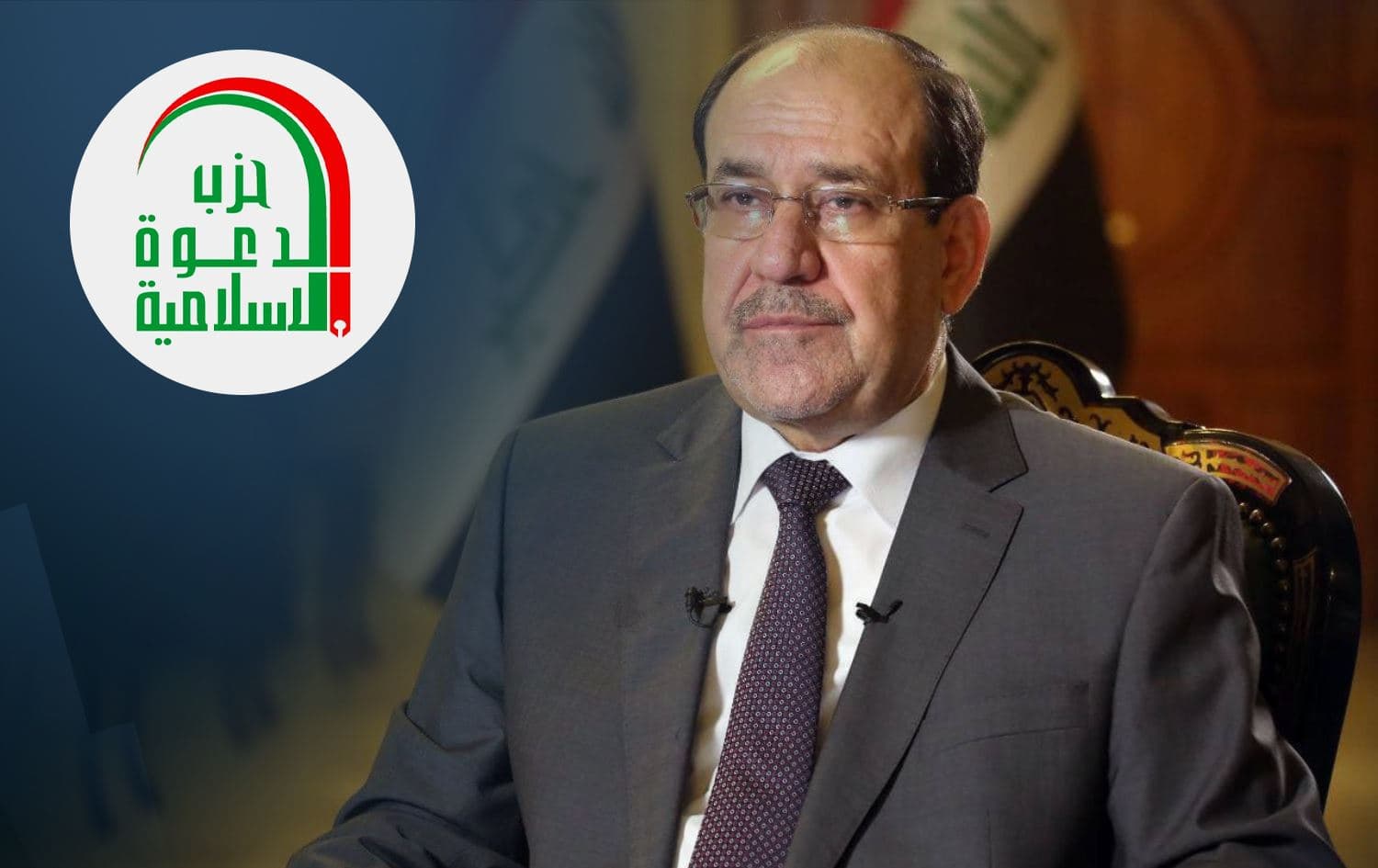

ERBIL, Kurdistan Region - The Islamic Dawa Party on Saturday formally announced that it has nominated its leader Nouri al-Maliki for the post of prime minister, hours after Maliki arrived in Erbil for talks with leaders of the ruling Kurdistan Democratic Party (KDP).
Maliki, head of the State of Law Coalition and a former prime minister, was the unanimous pick of the Dawa Party’s advisory council, which said in a statement that he has the “experience and capability to lead the country in this sensitive stage that requires wise management and political balance.”
The party deleted the statement later on Saturday evening.
Iraq held parliamentary elections on November 11. The Independent High Electoral Commission (IHEC) announced the final results on Monday. Maliki’s coalition won about 710,000 votes and secured 29 of parliament’s 329 seats.
Maliki served as prime minister from 2006 to 2014.
He arrived in Erbil on Saturday as negotiations over forming Iraq’s next government are intensifying. His media adviser Husham al-Rikabi said on X that Maliki traveled to the Kurdistan Region at the invitation of Kurdistan Democratic Party (KDP) leader Masoud Barzani.
After meeting with Fuad Hussein, a senior KDP figure and Iraq’s foreign minister, Maliki held talks with Barzani.
“Both sides discussed the results of the Iraqi Council of Representatives elections and the post-election phase, and emphasized that the election results must be put in the service of the Iraqi people,” according to a statement from Barzani’s office.
Maliki had a rocky relationship with Erbil when he was prime minister. He cut the Kurdistan Region’s share of the federal budget in early 2014 amid disputes over independent Kurdish oil exports to Turkey. During his tenure, he also deployed Iraqi forces to the Kurdistan Region’s borders twice and threatened the use of force to block Kurdish independence referendum in 2017, when Masoud Barzani was Kurdistan Region’s president.
Barzani’s office said that in their meeting on Saturday, both sides agreed to continue consultations with the various political parties.
The KDP won more than 1.1 million votes and 27 seats.
Maliki also met with Kurdistan Region Prime Minister Masrour Barzani, a KDP deputy leader.
The premier said in a statement that they discussed “the general situation in Iraq after the Council of Representatives election process and the efforts and dialogue of political parties to form the new federal government cabinet,” adding that both sides agreed on the need to resolve Erbil-Baghdad issues based on the constitution and existing agreements.
Kurdish leaders - particularly the KDP - repeatedly said throughout and after the election campaign that the Iraqi constitution has not been implemented properly and that Baghdad is acting in a centralized, rather than federal, manner.
Hours after the IHEC announced the election results on Monday, the ruling Shiite Coordination Framework said it had formed the largest parliamentary bloc - a key step toward naming the next prime minister. Maliki is a senior leader in the bloc.
Current Prime Minister Mohammed Shia’ al-Sudani’s Reconstruction and Development Coalition (RDC) won 46 seats with 1,317,446 votes.
In a recent statement, the Coordination Framework said it reviewed “criteria for selecting a prime minister” and formed two committees: one to negotiate “national entitlements” and another to interview candidates - widely seen as a sign that some in the bloc are reconsidering their support for Sudani, who is seeking a second term.
Former prime minister Mustafa al-Kadhimi is also a nominee, Fahd al-Jubouri of the Hikma Movement told Rudaw on Friday. Hikma is part of the Coordination Framework committee interviewing candidates.
Since 2003, Iraq’s informal power-sharing system has allocated the premiership to Shiites, the speaker of the parliament to Sunni Arabs, and the presidency to Kurds.
Under the constitution, the new parliament must convene with a two-thirds quorum in a session led by the eldest member, who serves as acting speaker. Lawmakers then elect a speaker, followed by a president in a secret ballot - requiring a two-thirds majority in the first round or a simple majority in a runoff. The largest bloc then nominates a prime minister-designate to form the government.
.webp&w=3840&q=75)