


Interview

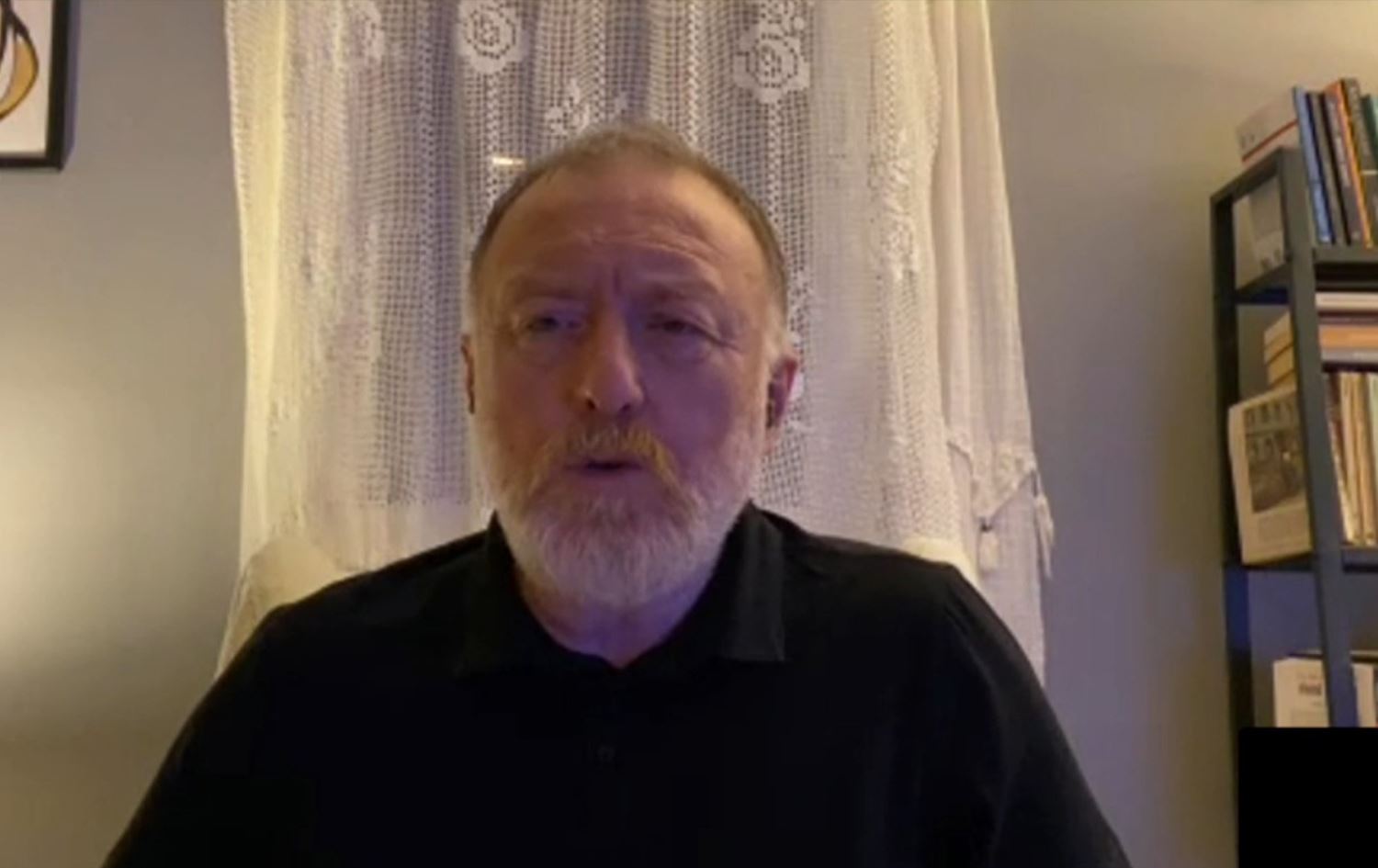
Sezai Temelli, a lawmaker from DEM Party during an interview with Rudaw on July 6, 2025. Photo: Screengrab/Rudaw
ERBIL, Kurdistan Region - As some members of the Kurdistan Workers’ Party (PKK) prepare to disarm, signaling a new phase in the peace process with the Turkish state, a lawmaker from Turkey’s main pro-Kurdish Peoples' Equality and Democracy Party (DEM Party) is urging Ankara to take concrete steps - chief among them, the formation of a parliamentary commission to draft a legal framework for the reintegration of PKK fighters.
In an interview with Rudaw, Sezai Temelli emphasized that while the PKK’s expected move to lay down arms represents a "very important stage," the “bird of peace cannot fly with one wing,” stressing that the Turkish state must reciprocate with meaningful action.
The DEM Party has been leading a months-long initiative aimed at resolving the four-decade-long conflict between the PKK and the Turkish government, which has claimed over 40,000 lives - mainly PKK fighters.
In May, the PKK announced its intention to dissolve and end its armed campaign, responding to a February appeal by their imprisoned leader, Abdullah Ocalan, who urged the group to lay down arms and seek a political path to securing Kurdish rights in Turkey.
Ankara has cautiously welcomed the PKK’s declaration but insists that disarmament must be followed by verifiable steps before it can be considered complete. The PKK, for its part, expects democratic reforms from the Turkish government in return.
The DEM Party is currently advocating for a series of key measures - foremost among them is the rapid establishment of a parliamentary commission.
“By establishing the commission and implementing the necessary legal guarantees and infrastructure, all required legal regulations can be put into practice,” Temelli said. He posed a critical question: “What will happen to those who put down their weapons?” - underscoring that this conflict cannot be resolved “merely by disarmament.”
In addition to the proposed commission, the DEM Party is placing its hopes in upcoming judicial reform packages expected in October, which would address the needs of the "very large population" negatively impacted by the decades-long conflict. These reforms aim to undo “all the injustices and bad practices created by the judiciary up until now,” Temelli noted, including addressing the situations of former combatants, political prisoners, and those in exile.
Temelli also highlighted the important role played by the Kurdistan Region in the peace process, particularly praising the contributions of preeminent Kurdish leader and Kurdistan Democratic Party (KDP) head Masoud Barzani, and Kurdistan Region President Nechirvan Barzani.
PKK leader Abdullah Ocalan himself has expressed gratitude for the leadership in the Kurdistan Region, emphasizing the importance of Kurdish "national unity, solidarity, brotherhood, and joint actions among the Kurds." Temelli echoed this sentiment, stressing that any positive development in one part of the broader geography can have a constructive impact on the whole.
Below is the full transcript of the interview with Temelli.
Rudaw: The peace process is now evolving into a new phase. What awaits Turkey and the process, especially after the PKK's push to lay down its arms, which is expected to begin to take place in the Kurdistan Region these coming days? What concrete steps do you expect to be taken by the government?
Sezai Temelli: Yes, the subject of the process evolving into a new phase has been discussed extensively. There have been intense comments on this, especially in the past week. After Mr. Ocalan's statement in his manifesto on February 27, after that historic step, Turkey, like the rest of the world, has actually been fixated on this subject. Many speculated on what would happen next, how the movement would react. Then on May 12, the PKK convened its congress and made its decision on this matter.
After that, there was another waiting period, and in Turkey, there was a very intense discussion of yes, the PKK made this decision, but will the weapons actually be laid down? From the recent statements made by the PKK and elsewhere, we understand that very soon there will be a laying down of weapons - a ceremony of sorts. We cannot yet specify the exact name clearly because the details have not been fully disclosed, but such a laying down of weapons will take place. This is, of course, a very important stage.
This development, expected initially on February 27, then May 12, and now in the coming days, clearly shows big, strong, and determined steps. It shows important progress. But you will remember there was an important discussion in Turkey: this bird of peace cannot fly with one wing. One wing is taking solid steps, changing history, making very important statements, but the other wing must also act. This is precisely where the answer to your question lies. In response to all these steps, there must be action in Turkish politics - in the government, the state, and politics as a whole - so that this bird of peace can spread both wings and fly.
As the DEM Party, we are particularly waiting for a few steps. As a requirement of democratic politics, these steps need to be taken. One of these is the establishment of this commission. By establishing the commission and putting it into practice, especially with legal guarantees and the necessary legal infrastructure, all required legal regulations can be implemented through this commission. This must be put into practice because, look, let’s say weapons are laid down - what will happen to those who put down their weapons? Politics must provide the answer to this question. This commission, parliament, government, and state will need to do what is necessary to answer it. Because this issue will not be resolved merely by disarmament. One side of the equation is complete, but what will happen next? The question of what comes next has actually been neglected and delayed until now, but we hope that after this move to lay down weapons, this delay will be compensated. The commission should be established as soon as possible to fulfill the legal requirements and begin its work immediately. No one can tolerate these delays anymore; no one wants to wait.
Secondly, regulations can be made regarding the judiciary in the field of democratic politics. As you know, the 10th judicial package was released in Turkey last month. It pleased no one and did not meet expectations. But the Ministry announced that the 11th and 12th judicial packages will come in October. We hope that with these judicial packages, for those who lay down their arms, those in prison, those in exile, and those negatively affected by this long conflict period - which involves a very large population - all the injustices and bad practices created by the judiciary up to now will be eliminated. Turkey will truly end the conflicts, gain the opportunity to build peace, and ensure social peace. All of these issues are interconnected.
This development, expected initially on February 27, then May 12, and now in the coming days, clearly shows big, strong, and determined steps. It shows important progress. But you will remember there was an important discussion in Turkey: this bird of peace cannot fly with one wing. One wing is taking solid steps, changing history, making very important statements, but the other wing must also act. This is precisely where the answer to your question lies. In response to all these steps, there must be action in Turkish politics - in the government, the state, and politics as a whole - so that this bird of peace can spread both wings and fly.
As the DEM Party, we are particularly waiting for a few steps. As a requirement of democratic politics, these steps need to be taken. One of these is the establishment of this commission. By establishing the commission and putting it into practice, especially with legal guarantees and the necessary legal infrastructure, all required legal regulations can be implemented through this commission. This must be put into practice because, look, let’s say weapons are laid down - what will happen to those who put down their weapons? Politics must provide the answer to this question. This commission, parliament, government, and state will need to do what is necessary to answer it. Because this issue will not be resolved merely by disarmament. One side of the equation is complete, but what will happen next? The question of what comes next has actually been neglected and delayed until now, but we hope that after this move to lay down weapons, this delay will be compensated. The commission should be established as soon as possible to fulfill the legal requirements and begin its work immediately. No one can tolerate these delays anymore; no one wants to wait.
Secondly, regulations can be made regarding the judiciary in the field of democratic politics. As you know, the 10th judicial package was released in Turkey last month. It pleased no one and did not meet expectations. But the Ministry announced that the 11th and 12th judicial packages will come in October. We hope that with these judicial packages, for those who lay down their arms, those in prison, those in exile, and those negatively affected by this long conflict period - which involves a very large population - all the injustices and bad practices created by the judiciary up to now will be eliminated. Turkey will truly end the conflicts, gain the opportunity to build peace, and ensure social peace. All of these issues are interconnected.
One of the most curious topics among the public is the situation of PKK members who have laid down their weapons. In your opinion, what kind of legal steps should be taken for the reintegration of these people into society?
Yes, no steps have been taken so far. It is necessary to ensure that these steps are taken by the commission. Until today, there has been a legal, judicial, and political system shaped by the period of conflict and war. Now, if the conflicts are ending and peace is coming, then the legal system, judiciary, and politics must change and transform accordingly. Otherwise, it is impossible to continue on our path with the old understanding of law and the old judicial system. Therefore, this commission must work rapidly on these issues in particular. Those who lay down their weapons and end this struggle will now continue their struggle within democratic politics. They will do politics.
Now, this right to do politics and political freedoms, along with new regulations regarding the judiciary, are needed. How can it be otherwise? All of these questions need answers. Right now, there are no answers to these questions in Turkey yet, because Turkey has not yet seriously discussed these issues politically. Our hope is to discuss these through this commission. Thousands of people are in prison, hundreds of thousands in exile, past grievances remain, and the future of the armed forces is uncertain. There are many issues, and we cannot afford to lose any more time. The government, executive, and parliament should act responsibly and start their work through this commission as soon as possible.
Many AKP officials we spoke to mentioned the difficulties of "doing politics under the shadow of weapons" and therefore the challenges in taking steps towards the Kurdish issue. How will the PKK laying down its weapons facilitate your political arena as the largest party representing the Kurds?
We are already a party in the field of democratic politics, and we have fought for peace and democratization until today. We will continue this struggle. When weapons are laid down, neither peace nor democracy will come automatically. Yes, after weapons are laid down, we must wage a much stronger struggle in democratic politics so that this peace, the silencing of these weapons, leads to permanent peace, and of course, Turkey becomes democratic. During times of weapons and conflict, the difficulties and shadows of this fell not only on us but limited all politics seriously. Why? Because the government has constantly brought this issue to the forefront - as all governments have until today - not to advance peace, democracy, or human rights, but rather the opposite.
Today, an opportunity has been created. That’s why Mr. Ocalan’s statement on February 27 is a very important step in terms of democratic politics and democracy. Therefore, if the guns fall silent and peace comes, it will only be possible in a democratic republic, a democratized country, with permanent peace. We must do what is necessary for this. That’s why greater responsibilities now fall on democratic politics. More important tasks fall on us. I hope we can achieve this together.
In recent days, you and Ms. Gulistan Kilic Kocyigit held a series of meetings with both the Turkish justice minister and parliament speaker. What was discussed in these meetings? Is there a new message you would like to convey to the public through us at this stage of the process?
Yes, our meetings with the justice minister have focused on current practices. There are very serious problems stemming from these practices: issues related to sick prisoners, sentence delays/extensions, and serious problems caused by prison monitoring boards. Looking at all of this, it is quite possible to take steps to eliminate these negative effects. No new law is needed for these; the justice ministry can take steps within the current legal framework. We discussed this in particular. Previously, our meetings focused on judicial packages, and of course, we expressed our expectations regarding them on every occasion.
Regarding the parliament speaker, we discussed the establishment of this commission. We presented our suggestions, and he also looks favorably upon the establishment of the commission as soon as possible. We agreed that it would be implemented quickly and work would begin before the parliament closes.
As is known, the situation of PKK leader Abdullah Ocalan, the issue of “political prisoners” and former HDP Co-Chairs Selahattin Demirtas and Figen Yuksekdag, are among the important agenda items of the process. Have these issues been discussed in your meetings with AKP officials, and has any consensus been reached?
Yes, important topics include sick prisoners, sentence extensions/denials, and conspiracy cases, because as you know, Figen Yuksektag, Selahattin Demirtas and many of our friends are imprisoned due to the Kobani conspiracy case. We have raised this issue frequently. Shortly after we did, the court announced the reasoned decision. The reasoned decision consists of 32,000 pages - a record. However, when we took a quick look, we saw there was no evidence in it. It’s essentially a grab bag. I even called it a rubbish verdict. This case has no jurisdiction anymore. The case had been dropped long ago, but this judgment confirmed that. We have called for the release of our friends as soon as possible and continue to raise this issue because there is serious injustice, and our friends are literally prisoners now. This issue remains on our agenda and will not change.
As a step in the peace process, could the release of Selahattin Demirtas and Figen Yuksekdag be on the agenda in the future? What was the attitude of government officials on this issue in your meetings? Did you see any positive signals or approaches?
Of course, our wish is for them to regain their freedom and all their rights as soon as possible. However, we have not received any information or explanation from them. They say the issue is in court, so they offer no further explanation or information.
The establishment of a commission in parliament is on the agenda. At what stage is this commission currently? Have you submitted your suggestions as a party? What will be the terms of reference of the commission and when is it expected to become operational?
We have presented our suggestions. After the suggestions from other parties reach the parliament speaker and are compiled, the speaker will propose a commission model with the broadest possible consensus based on general suggestions. He will call on the parties, the parties will appoint members, and the commission will hold its first meeting to determine its working method and content. At this stage, suggestions have been conveyed.
Of course, our suggestions include that the commission be established as soon as possible, work during the summer vacation, and be legally established. We proposed a size of around 35 members, which we believe is optimal for effective and efficient work.
The commission should rapidly establish sub-commissions, especially in the areas of legal regulations, the Turkish Penal Code, delayed/extended sentencing laws, human rights, and discrimination issues. We suggested topics such as legal security after disarmament, the legal status of those who disarmed, those in prison, and victims including those in exile, aligning with our demands.
We believe a democratic solution to the Kurdish issue is possible through the work done both in this commission and other areas because the entire society must participate. We emphasized the importance of the commission’s connection to society - receiving opinions, suggestions, and information from various segments of the public. The commission must be open and public-facing, always listening to society.
We know there are discussions on the name of the commission to be established in parliament. The government’s naming of this process as “Terror-Free Turkey” has been criticized by the public and different circles. Does the DEM Party have a name to suggest? Have you reached any consensus with AKP officials on a common name?
We have, of course, established a peace and democratic society. While the commission may not be named exactly for this purpose, it will emphasize peace and democracy, peace and democratic society, peace and democratic republic, and social peace. We believe a suitable name will be agreed upon. We already knew that working with concepts like “terror-free Turkey” would be difficult. I don’t think there will be an insistence on that issue. The aim is really to implement the steps necessary for peace and democracy in Turkey. I do not expect much debate or tension regarding the name. A suitable name will emerge at the first meeting or call of the commission.
There is also the issue of the constitution. Are the process and the new constitution work connected or will they run in parallel? Will the new constitution be part of the resolution process? What concrete guarantees for Kurdish rights can be included in the new constitution?
There is no constitutional work that has started yet. The government is working internally. The ruling party has formed a commission and is discussing internally, but there is no constitutional commission work in parliament at this time. However, the need for a constitution is often mentioned, and it is said that a civil constitution is needed.
We need everything to be civilianized; we need to rid ourselves of the militaristic and authoritarian mindset. But this work will proceed on a separate track. The commission we hope to implement regarding the democratic solution of the Kurdish issue and the constitutional commission will not be intertwined - they will proceed separately.
Of course, we hope they feed and support each other positively. If constitutional work is to be implemented, its strategy must be discussed first. Will it target social peace, broad consensus, a new social contract, or proceed with minor patch-ups as before? This strategy is more important than the text itself. A constitution is not written, it is made - it does not fall from the sky. It must be connected to the participation of everyone in society. I hope the constitution-making process will begin with such a democratic understanding, but it is too early for that now.
It seems the process is progressing positively. Is this positive atmosphere also reflected in parliamentary dialogue? Recently, there was a heated debate between you and the Chairman of the Justice Committee from the AKP over the Kobani case. How would you describe the general atmosphere of dialogue in parliament?
That discussion was important in its own right because the Chairman of the Justice Commission is an expert on justice, a constitutional lawyer and professor, but unfortunately, he had not reviewed the reasoned decision before speaking. He spoke without being informed, leading to serious misinformation and perception management. We responded accordingly to enlighten the public.
Generally, since Devlet Bahçeli from the MHP benches came over to our benches and shook hands with us on October 1, I can say the general atmosphere in parliament is increasingly based on dialogue - with the ruling party, its partner, and opposition parties.
Tensions arise occasionally due to the nature of daily politics, but putting aside the rigid stances of one or two parties on the democratic solution of the Kurdish issue, in general, the issue must be resolved. This step taken is very important and valuable. The idea that the PKK should take necessary steps in politics after laying down arms is gaining dominance, but we are still working to overcome blockages in taking this step. I hope the commission will succeed.
The DEM Party Imrali delegation is expected to meet with the Turkish President on Monday. What will be your main demands from Mr. Erdogan as the DEM Party?
I hope so. Our DEM Party Imrali delegation has been making statements before, during, and after this work to inform the public, so I leave this part to them. They will hold a meeting on the ninth and will provide appropriate statements about their demands, what was discussed, and what will follow. Afterwards, our delegation will go to İmralı. I hope all meetings will be positive.
So far, no negative statements have come from anywhere. I hope it continues like this.
How do you evaluate the contribution of the Kurdistan Region, especially the preeminent Kurdish leader and head of Kurdistan Democratic Party (KDP) head Masoud Barzani and Kurdistan Region President Nechirvan Barzani, to the process?
Mr. Ocalan has already emphasized in his statement how important national unity, solidarity, brotherhood, and joint actions among the Kurds are. I share this belief. All developments across the four parts of the broader Kurdish geography are interconnected. A positive development in one region has the potential to impact the others positively.
Therefore, this peace process will bring positive effects across the entire region. We are grateful for everyone’s efforts, and I believe that all parties will contribute as strongly as possible. Mr. Barzani and other leaders are key figures in this regard. This is our collective struggle for freedom, peace, and democracy. We will continue forward with this spirit of solidarity and mutual understanding. This is of great importance, and our observations indicate that meaningful progress is indeed being made in this direction. I hope this momentum continues.
Therefore, this peace process will bring positive effects across the entire region. We are grateful for everyone’s efforts, and I believe that all parties will contribute as strongly as possible. Mr. Barzani and other leaders are key figures in this regard. This is our collective struggle for freedom, peace, and democracy. We will continue forward with this spirit of solidarity and mutual understanding. This is of great importance, and our observations indicate that meaningful progress is indeed being made in this direction. I hope this momentum continues.
Finally, it is known that PKK leader Abdullah Ocalan requested a meeting with the preeminent Kurdish leader Masoud Barzani and the Kurdish-led Syrian Democratic Forces (SDF) chief Mazloum Abdi. Have there been any concrete steps taken toward this meeting? How is the government approaching this request?
I sincerely hope it happens. However, we have not received any concrete information on this matter. In other words, no official updates have been shared with us so far. Still, we remain hopeful. We hope that these meetings will take place and that the current government and the state will recognize how important such dialogue and relationships are for addressing the Kurdish issue and building a shared future. I truly hope these talks will materialize.


Comments
Rudaw moderates all comments submitted on our website. We welcome comments which are relevant to the article and encourage further discussion about the issues that matter to you. We also welcome constructive criticism about Rudaw.
To be approved for publication, however, your comments must meet our community guidelines.
We will not tolerate the following: profanity, threats, personal attacks, vulgarity, abuse (such as sexism, racism, homophobia or xenophobia), or commercial or personal promotion.
Comments that do not meet our guidelines will be rejected. Comments are not edited – they are either approved or rejected.
Post a comment