


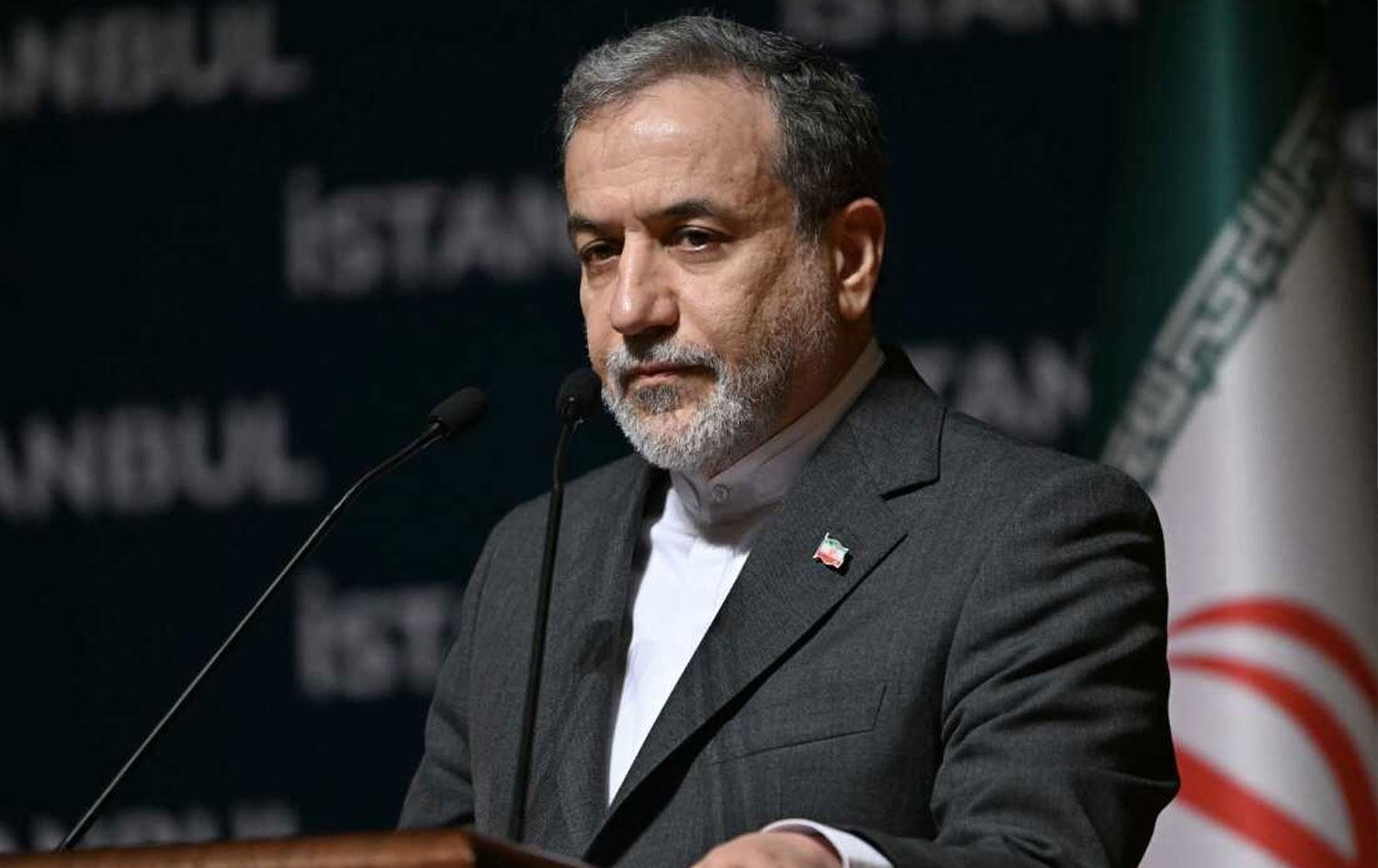
ERBIL, Kurdistan Region - Iran has urged the United Nations chief and the Security Council to take action against the United States and Israel over what it called “gross violations” of international law, citing recent remarks by the US President Donald Trump as “clear evidence” of Washington’s involvement in attacks on Iranian territory. Tehran added that Trump and other US officials involved should bear “individual criminal responsibility.”
In a letter dated November 11 and circulated to UN Secretary General Antonio Guterres and the UNSC, Iran’s Foreign Minister Abbas Araghchi urged the world body to ensure that both Washington and Tel Aviv “are held accountable for crimes against international peace and security” committed against his country during the 12-day war between Iran and Israel.
Araghchi referenced Trump’s statement last Thursday, in which he said, “Israel attacked [Iran] first. That attack was very, very powerful. I was very much in charge of that.” He argued that the remarks constitute “clear evidence of the direction and control of the United States” over Israel’s military action against Iran.
The Iranian chief diplomat further claimed that Trump and other US officials involved should bear “individual criminal responsibility” for what he said were “grave breaches of international humanitarian law,” including “directing deliberate attacks against civilians … targeting senior military officers outside hostilities,” and “launching willful attacks against civilian objects including hospitals and ambulances.”
On June 13, Israel launched a series of airstrikes on Iranian territory, targeting nuclear facilities and killing several high-ranking military commanders and nuclear scientists. Tehran retaliated with missile and drone strikes against Israeli targets.
Tensions escalated further when the US conducted airstrikes on June 22 against Iran’s Fordow, Isfahan, and Natanz nuclear sites. In response, Iran fired ballistic missiles at the US-operated al-Udeid Air Base in Qatar. A ceasefire, brokered by Washington on June 24, has since been in effect.
Araghchi described the US and Israeli strikes as “brazen acts of aggression” that violated Iran’s sovereignty and territorial integrity, resulting in the deaths of “more than 1,100 innocent people” and the destruction of civilian infrastructure, including “Iranian peaceful nuclear facilities” safeguarded by the UN’s nuclear watchdog - the International Atomic Energy Agency (IAEA).
Citing Article 2(4) of the UN Charter, which prohibits the use of force against the territorial integrity or political independence of any state, Araghchi demanded that the UN ensure accountability for the US and Israel, including “bringing the perpetrators to justice.”
“The United States is under an obligation to make full reparation for the harm caused by the said violations against Iran and its citizens,” he added, calling for reparations that include “any damage, material and moral.”
Araghchi concluded that Iran “reserves its full and unimpeachable right to pursue, through all available legal means, the establishment of accountability for the responsible States and individuals.”
Notably, the Israeli strikes on Iranian territory began just two days ahead of the sixth session of nuclear talks between Iran and the US, after the two sides had been engaged in Oman-mediated, indirect nuclear negotiations since April 12. However, talks have since stalled.
During a mid-October visit to Israel Trump stated, “It would be great if we made a peace deal with them [Tehran]. Wouldn’t it be nice? I think they want to.”
IAEA chief Rafael Grossi lauded the remarks as “encouraging” and indicative of the US president’s belief in a diplomatic path.
However, Iran’s Supreme Leader Ayatollah Ali Khamenei rebuffed Trump’s offer of renewed talks, stating, "Trump says he is a dealmaker, but if a deal is accompanied by coercion and its outcome is predetermined, it is not a deal but rather an imposition and bullying.”
Araghchi echoed this view on Sunday, saying Tehran has not seen any “positive or constructive attitude” from the American side, adding, “Negotiations are possible whenever Americans are ready for equitable negotiations for both sides.”


Comments
Rudaw moderates all comments submitted on our website. We welcome comments which are relevant to the article and encourage further discussion about the issues that matter to you. We also welcome constructive criticism about Rudaw.
To be approved for publication, however, your comments must meet our community guidelines.
We will not tolerate the following: profanity, threats, personal attacks, vulgarity, abuse (such as sexism, racism, homophobia or xenophobia), or commercial or personal promotion.
Comments that do not meet our guidelines will be rejected. Comments are not edited – they are either approved or rejected.
Post a comment