


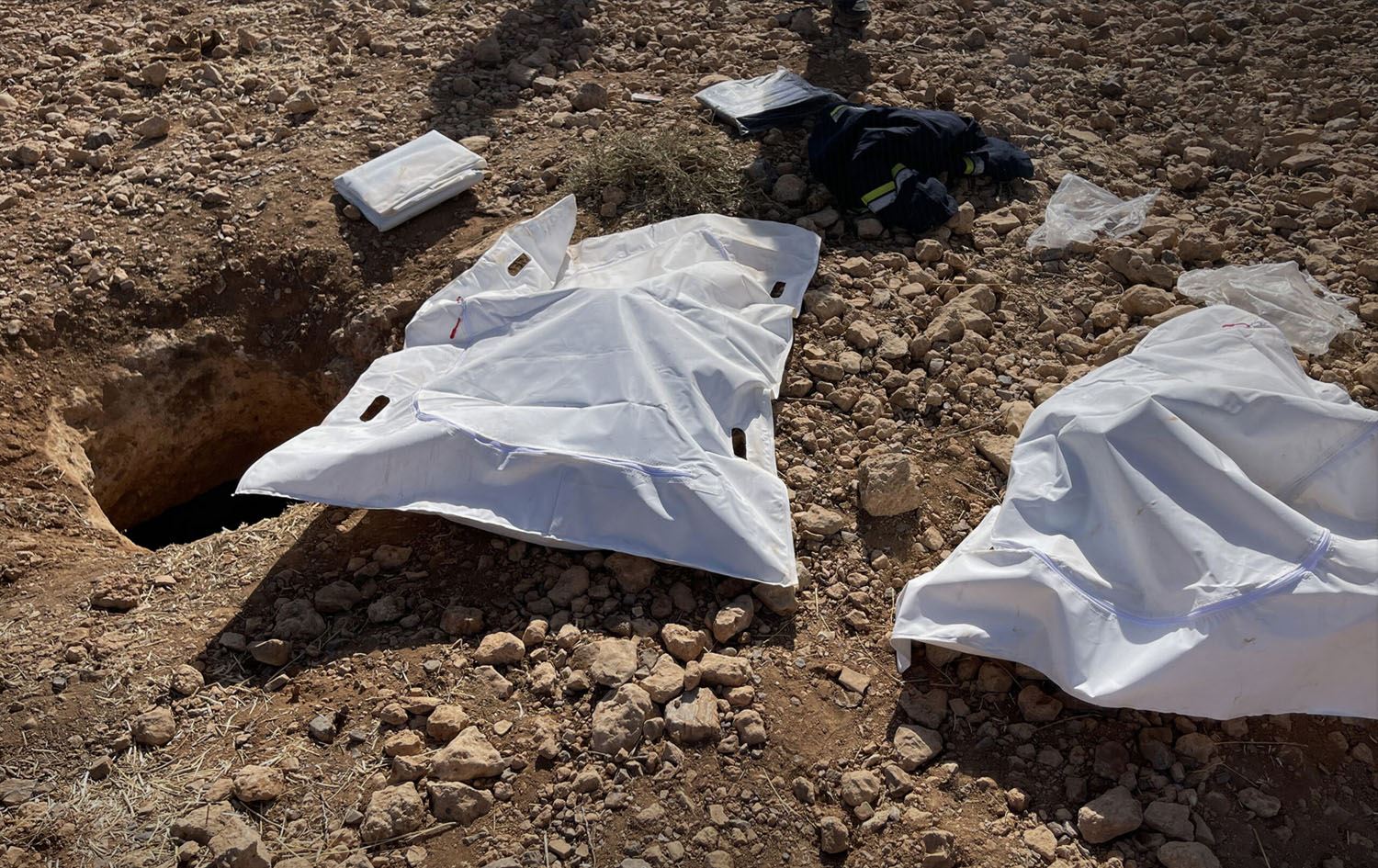
ERBIL, Kurdistan Region - Damascus authorities have discovered several mass graves containing the remains of around 16 unidentified individuals in the eastern Homs province, state media reported on Saturday.
According to the Syrian Arab News Agency (SANA), the graves were found in the village of Abu Hakfa al-Shamali, al-Mukharram area in Homs’ northeastern countryside, after a local shepherd alerted authorities.
Following the report, a patrol was dispatched to the site where six graves were discovered inside some caves in the area, SANA cited Mustafa Mohammed, a checkpoint official in Mukharram, as saying.
Civil defense and forensic teams have begun the process of recovering and identifying the bodies.
The area had previously been under the control of the former regime’s National Defense Forces (NDF). The NDF was a pro-government paramilitary group that fought alongside forces loyal to ousted dictator Bashar al-Assad.
The remains in one of the caves included three people - a man in his thirties, a woman in her twenties, and a child around three years old, forensic physician Ahmed al-Khalil told the state media.
According to the physician, the deaths occurred roughly ten years ago, adding that specialized teams are still uncovering additional remains in nearby caves.
Syria’s ongoing war has been marked by widespread human rights violations committed by both the Assad regime and the Islamic State (ISIS), many of which amount to crimes against humanity. The regime has long been accused of torture, extrajudicial killings, and enforced disappearances, with victims buried in clandestine mass graves to conceal evidence of atrocities.
ISIS, which captured vast territories in Syria in 2014 and declared its so-called “caliphate” with Raqqa as its capital, also carried out mass executions and genocidal acts, leaving behind numerous mass grave sites.
Efforts to uncover and identify victims continue across the country.


Comments
Rudaw moderates all comments submitted on our website. We welcome comments which are relevant to the article and encourage further discussion about the issues that matter to you. We also welcome constructive criticism about Rudaw.
To be approved for publication, however, your comments must meet our community guidelines.
We will not tolerate the following: profanity, threats, personal attacks, vulgarity, abuse (such as sexism, racism, homophobia or xenophobia), or commercial or personal promotion.
Comments that do not meet our guidelines will be rejected. Comments are not edited – they are either approved or rejected.
Post a comment