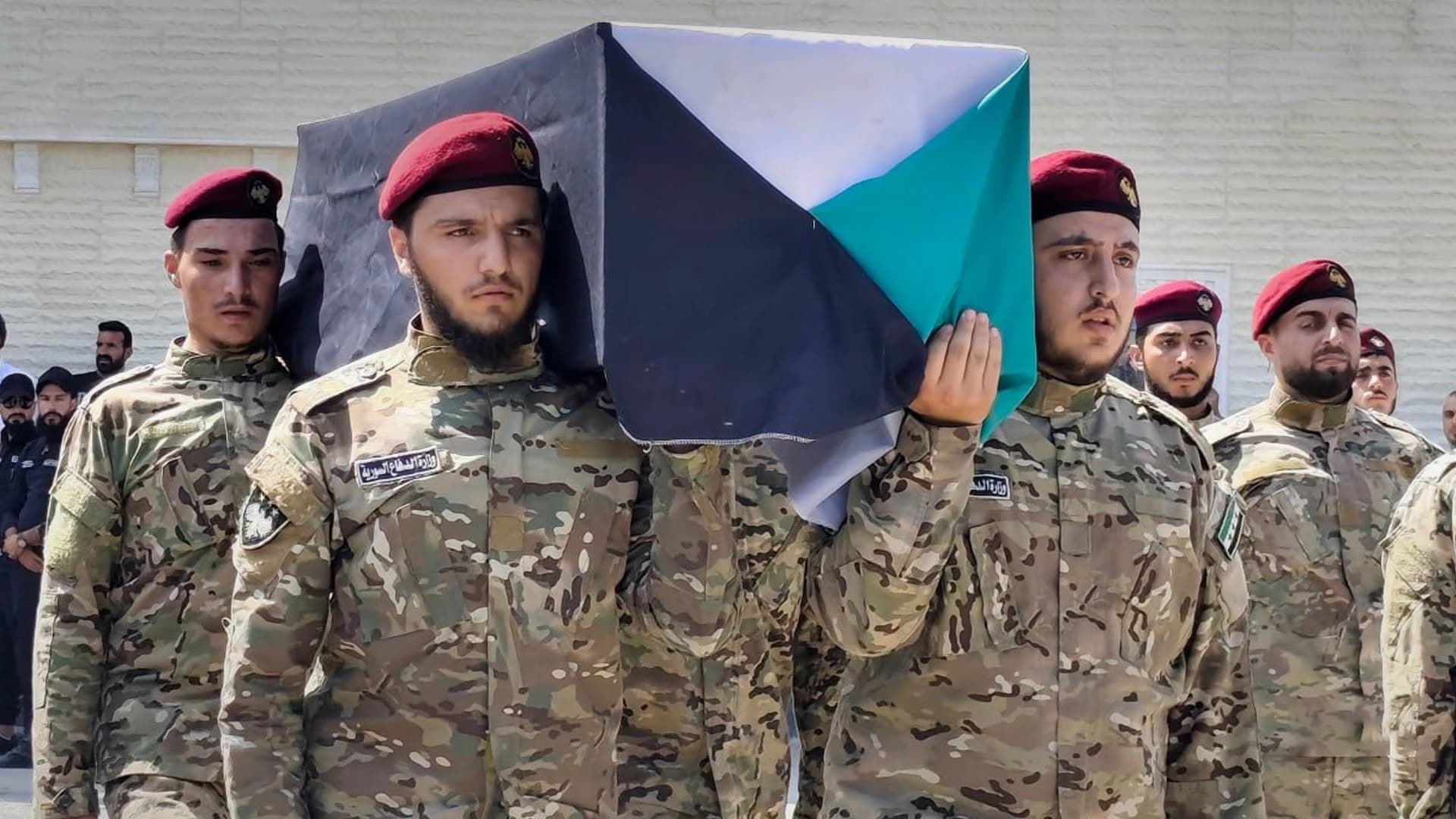
ERBIL, Kurdistan Region - Human Rights Watch on Wednesday warned of a “serious humanitarian situation” unfolding in the Kurdish city of Kobane in northwest Syria, as well as the repercussions of the “massive displacement” of civilians from northeast Syria (Rojava) triggered by the latest Syrian military offensive to retake areas held by the Kurdish-led Syrian Democratic Forces (SDF).
Adam Coogle, deputy Middle East director at Human Rights Watch, told Rudaw that “the situation in Kobane is very concerning,” citing reports from residents of “serious shortages of humanitarian aid, water, and food,” as well as ongoing electricity cuts that have persisted “for several days.”
He noted that Kobane “is also the site where many displaced people have ended up from other parts of Syria,” adding that “there is certainly a serious humanitarian situation there.” Coogle urged “whoever is responsible” to “ensure that electricity and basic services return,” and called on all sides to the conflict “to refrain from any unlawful attacks, including shelling that would constitute a disproportionate attack on civilian areas.”
“There should be a place where civilians can go to be safe,” he stressed.
In mid-January, the Syrian Arab Army and affiliated armed groups launched a large-scale offensive to seize territories held by the SDF in eastern Aleppo, Deir ez-Zor, Raqqa, and areas near Rojava’s eastern Hasaka province.
The SDF serve as the de facto military force in Rojava and a key ally of the US-led Global Coalition to Defeat the Islamic State (ISIS). The areas retaken by Damascus and its affiliated forces were territories the Kurdish-led forces had previously liberated from ISIS and continued to hold in order to prevent the extremist group from making a comeback.
A US-brokered ceasefire was extended to 15 days on Saturday, temporarily halting the Syrian offensive.
Rula Amin, spokesperson for the United Nations High Commissioner for Refugees (UNHCR) for the Middle East and North Africa, told Rudaw on Monday that more than 100,000 people are estimated to have been displaced by the escalation. She noted that “more than 4,000 families are sheltering in collective centers in [Rojava’s eastern] Hasaka province alone,” while thousands more are staying with relatives or in host communities.
For his part, Coogle stressed the importance of ensuring that aid convoys - including those dispatched under Rudaw’s Ranj Campaign - continue to reach affected areas “so that the basic needs of the population can be met.”
He emphasized that “those responsible for the well-being of civilians must allow aid to reach them, whether from the Rudaw convoy, the UN, or other humanitarian providers,” including essentials such as “food, shelter, water, and basic services.”
Coogle also highlighted that “there are missing people who haven’t been accounted for,” raising serious concerns for both the displaced and those who have disappeared. Coogle stressed that “it is imperative that all sides take every possible action to protect these people, ensure they receive aid, and provide civilians with a safe place to go.”
Prior to their mid-January offensive, the Syrian army and affiliated armed groups had launched a military operation earlier that month to retake control of the Kurdish-majority neighborhoods of Ashrafiyeh and Sheikh Maqsood in northern Aleppo from the Kurdish Internal Security Forces (Asayish), an affiliate of the SDF. The Asayish had been securing the two quarters for nearly a decade, since the rise of ISIS’s so-called Caliphate in Syria and Iraq.
The violence left at least 82 people dead, including 43 civilians, according to a Sunday report by the UK-based Syrian Observatory for Human Rights (SOHR), and displaced approximately 150,000 others, the Erbil-based Barzani Charity Foundation (BCF) told Rudaw.
Asked about human rights violations amid the Syrian forces’ military escalations in January, Coogle said, “We have seen very concerning videos emerge. There are allegations of serious abuses by both [Syrian and Kurdish] sides.” He described the footage as “concerning,” adding that while HRW has “not been able to independently verify [them], we will continue to investigate any allegations of unlawful attacks, extrajudicial killings, or other abuses.”
In a report released Sunday, Coogle warned that recent developments in northern and northeast Syria “have opened a Pandora’s box of complications—not just associated with the failure to resolve post-ISIS issues, but also broader crises regarding the transitional authorities’ ability to protect minority communities in Syria.”
“So long as these questions remain unresolved, we can continue to expect instability in Syria,” he stressed.